
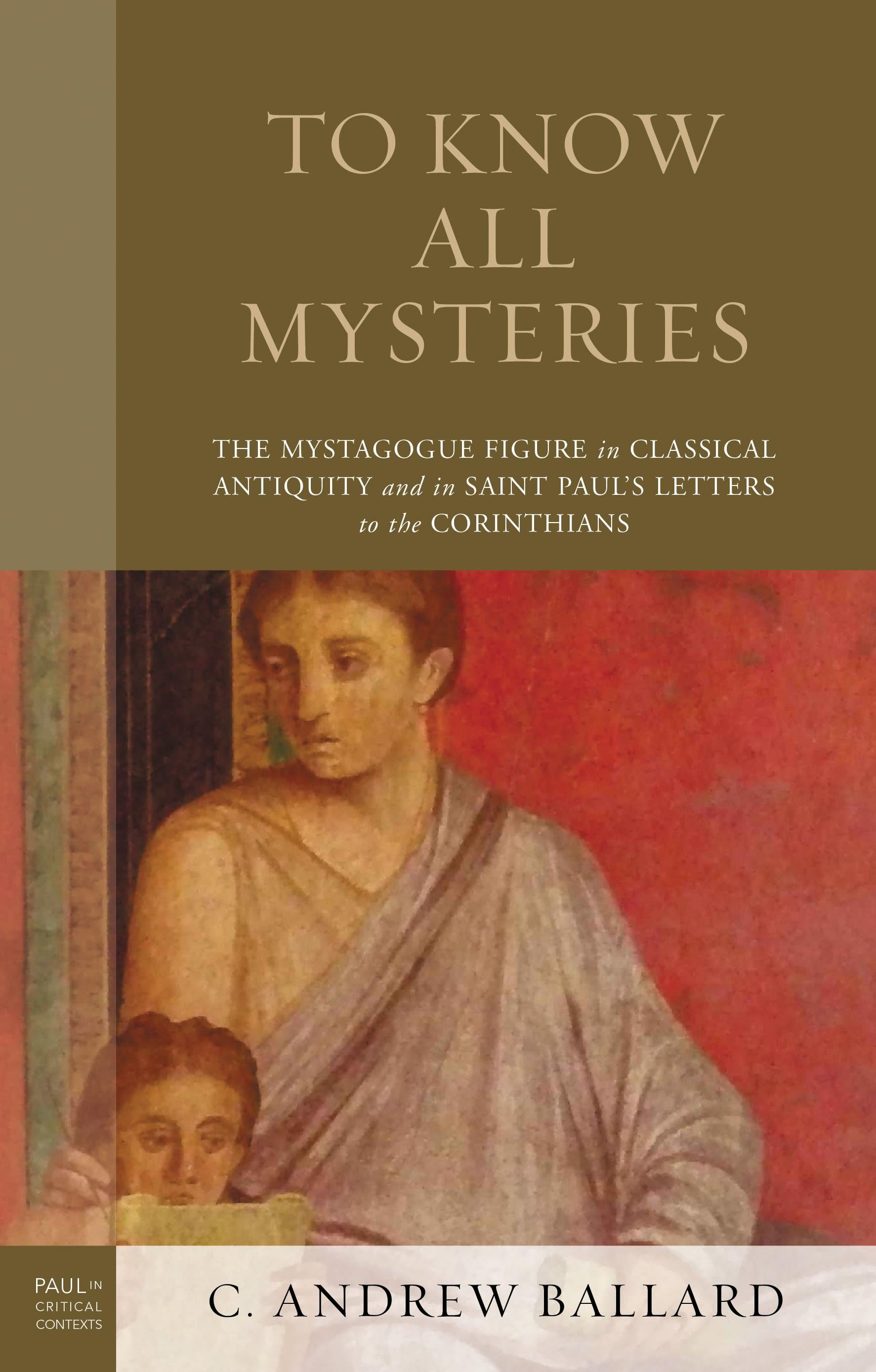
This book examines the way that Paul presents himself as a guide into mysteries, a “mystagogue,” in 1–2 Corinthians. By describing himself as a type of mystagogue for the community, Paul was following a precedent in both Jewish and non-Jewish sources for invoking mystagogic language to engage in polemics with a rival. In opposition to the precedent, however, Paul understands the mystagogue to be a bi-partite figure—comprised of both foolishness and wisdom simultaneously. C. Andrew Ballard argues that ancient mystagogues were often described in two disparate ways: figures of power, and figures of weakness and foolishness. Paul synthesizes both aspects of the mystagogue in his self-presentation to the Corinthians. The figure of the mystagogue, as a wise-fool, was useful to Paul because it was descriptive not only of his own experience as a suffering yet authoritative apostle, but also of the experience of his deity, the suffering and glorified Christ. By presenting himself as both a powerful and foolish mystagogue, Paul could argue that he was a more authentic imitator of Christ than his opponents in Corinth, who boasted in self-exaltation instead of self-humility. In this way, Paul used the character of the mystagogue as a strategic rhetorical tool in his communication with the Corinthians.
Sivuja: 404
Kategoria: Religion & Teologi
e-ISBN: 9781978711112
Lähetyspaino: 1.2 kg
Toimitusaika: 1-2 päivää
Maksa helposti kortilla, Klarnalla, Apple Paylla tai Google Paylla. Etkö ole tyytyväinen? Sinulla on aina 14 päivän palautusoikeus. Lue lisää ehdoistamme. Jos sinulla on kysyttävää, lähetä meille sähköpostia osoitteeseen hello@memmo.org.
Memmo tekee opiskelusta helpompaa – missä päin maailmaa ikinä oletkin. Meillä yhdistät kurssikirjat ja fiksut opiskelutyökalut yhteen paikkaan: tiivistelmät, visat, podcastit ja muistikortit. Ja sitten Ted, opiskelukaverisi, joka vastaa kaikkeen, mitä ikinä mietitkin. Yli 50 000 opiskelijaa opiskelee jo täällä – rakennettu auttamaan sinua oppimaan nopeammin ja stressaamaan vähemmän.