
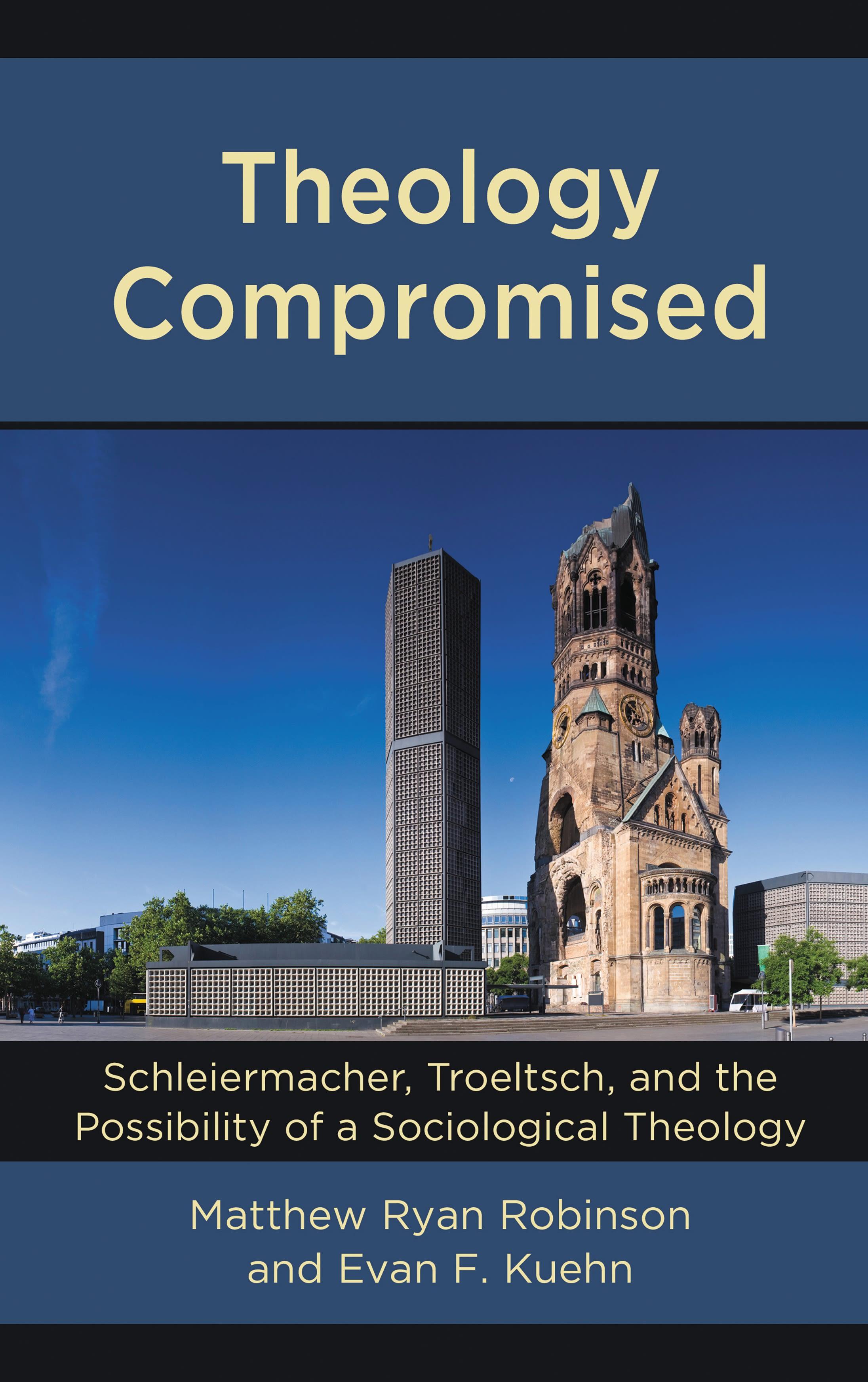
Theological work, whatever else it may be, is always a reflection on social transformations. Not only pastors but also theologians work with the sources of the Christian traditions in one hand and a newspaper in the other. But how are we to understand the relationship between social transformations and the continuously “compromised” development of Christian ideals, as these are measured by doctrinal formulations? And how might a more deeply sociological perspective on this relationship inform theological work?
Matthew Ryan Robinson and Evan F. Kuehn approach this question, not by reconstructing a history of ideas, but rather by telling a story about the development of churches and theological institutions. They take the turbulent and dynamic ecclesiological situation of nineteenth-century Germany as a representative case, focusing on the sociological methodological orientation of Friedrich Schleiermacher and Ernst Troeltsch in the context of the rise of theological liberalism, the history of religions, and the German churches’ confrontation with social and political challenges. Robinson and Kuehn then connect this orientation with the sociology of religion of Hans Joas and Niklas Luhmann, arguing for a functional focus in theological research on what doctrines do rather than what the reality behind or in any particular doctrine is.
Matthew Ryan Robinson and Evan F. Kuehn approach this question, not by reconstructing a history of ideas, but rather by telling a story about the development of churches and theological institutions. They take the turbulent and dynamic ecclesiological situation of nineteenth-century Germany as a representative case, focusing on the sociological methodological orientation of Friedrich Schleiermacher and Ernst Troeltsch in the context of the rise of theological liberalism, the history of religions, and the German churches’ confrontation with social and political challenges. Robinson and Kuehn then connect this orientation with the sociology of religion of Hans Joas and Niklas Luhmann, arguing for a functional focus in theological research on what doctrines do rather than what the reality behind or in any particular doctrine is.
Maksa helposti kortilla, Klarnalla, Apple Paylla tai Google Paylla. Etkö ole tyytyväinen? Sinulla on aina 14 päivän palautusoikeus. Lue lisää ehdoistamme. Jos sinulla on kysyttävää, lähetä meille sähköpostia osoitteeseen hello@memmo.org.
Memmo tekee opiskelusta helpompaa – missä päin maailmaa ikinä oletkin. Meillä yhdistät kurssikirjat ja fiksut opiskelutyökalut yhteen paikkaan: tiivistelmät, visat, podcastit ja muistikortit. Ja sitten Ted, opiskelukaverisi, joka vastaa kaikkeen, mitä ikinä mietitkin. Yli 50 000 opiskelijaa opiskelee jo täällä – rakennettu auttamaan sinua oppimaan nopeammin ja stressaamaan vähemmän.