
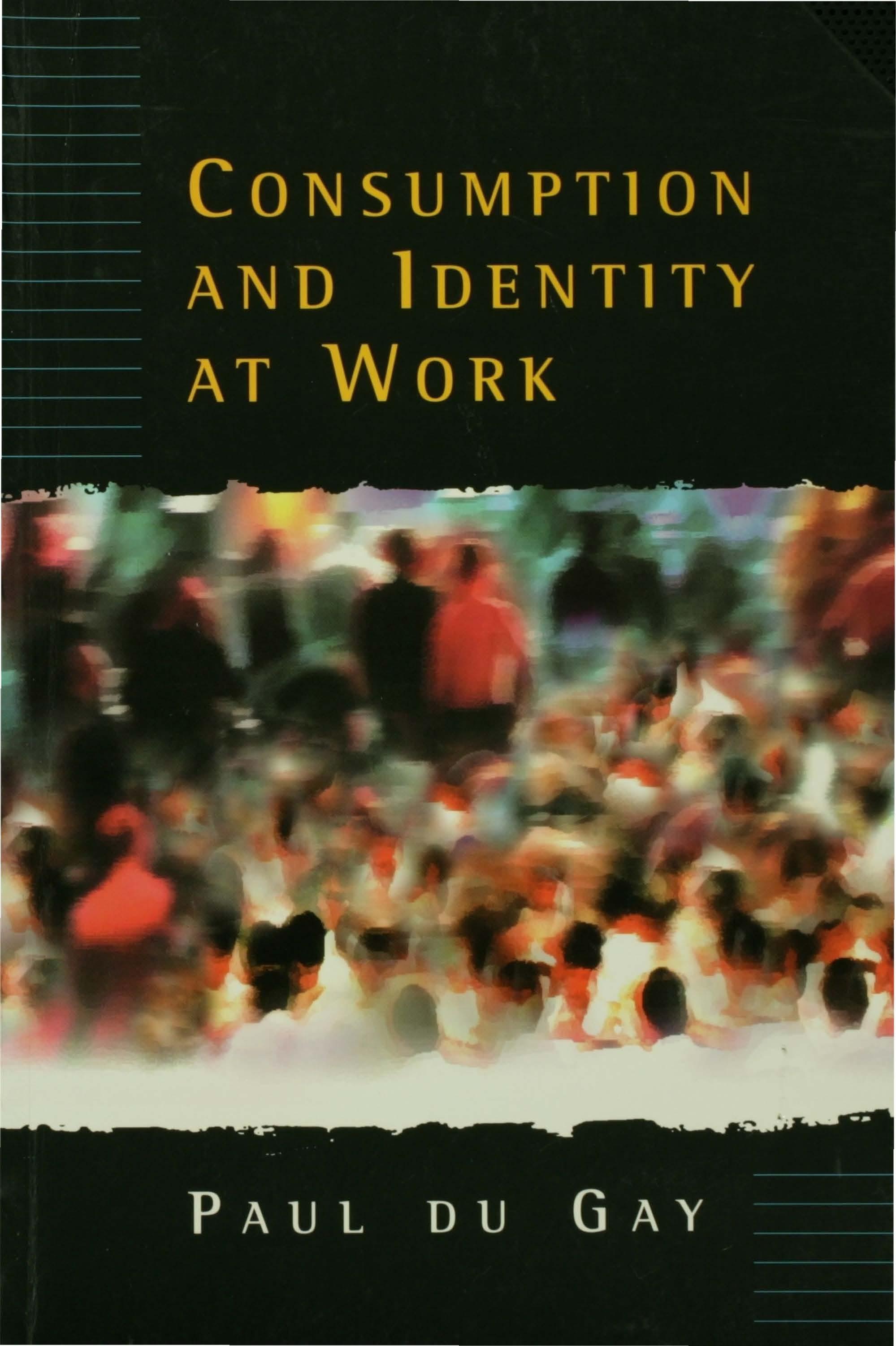
In particular, Paul du Gay shows how the capacities and predispositions required of consumers and those required of employees are increasingly difficult to distinguish. Both consumers and employees are represented as autonomous, responsible, calculating individuals. They are constituted as such in the language of consumer cultures and the all-pervasive discourses of enterprise whereby persons are required to be entrepreneurs of the self, at work, at play and in all aspects of their lives.
The first part of the book explores certain limitations in traditional approaches to the analysis of work identity. It presents an alternative, discursive framework in which to address contemporary `re-imaginings′ of organizational life within the `cult(ure)′ of the consumer. Part Two develops the analysis by looking at an arena where the blurring of the boundaries between work and consumption identities is most pronounced - retailing. The author builds a sophisticated picture of how discourses of reform take hold in particular contexts, how they construct particular subject positions for employees to occupy, and how employees negotiate these identities in their everyday working lives. He concludes by considering the ethical and other issues of `setting limits to enterprise′.
Maksa helposti kortilla, Klarnalla, Apple Paylla tai Google Paylla. Etkö ole tyytyväinen? Sinulla on aina 14 päivän palautusoikeus. Lue lisää ehdoistamme. Jos sinulla on kysyttävää, lähetä meille sähköpostia osoitteeseen hello@memmo.org.
Memmo tekee opiskelusta helpompaa – missä päin maailmaa ikinä oletkin. Meillä yhdistät kurssikirjat ja fiksut opiskelutyökalut yhteen paikkaan: tiivistelmät, visat, podcastit ja muistikortit. Ja sitten Ted, opiskelukaverisi, joka vastaa kaikkeen, mitä ikinä mietitkin. Yli 50 000 opiskelijaa opiskelee jo täällä – rakennettu auttamaan sinua oppimaan nopeammin ja stressaamaan vähemmän.