
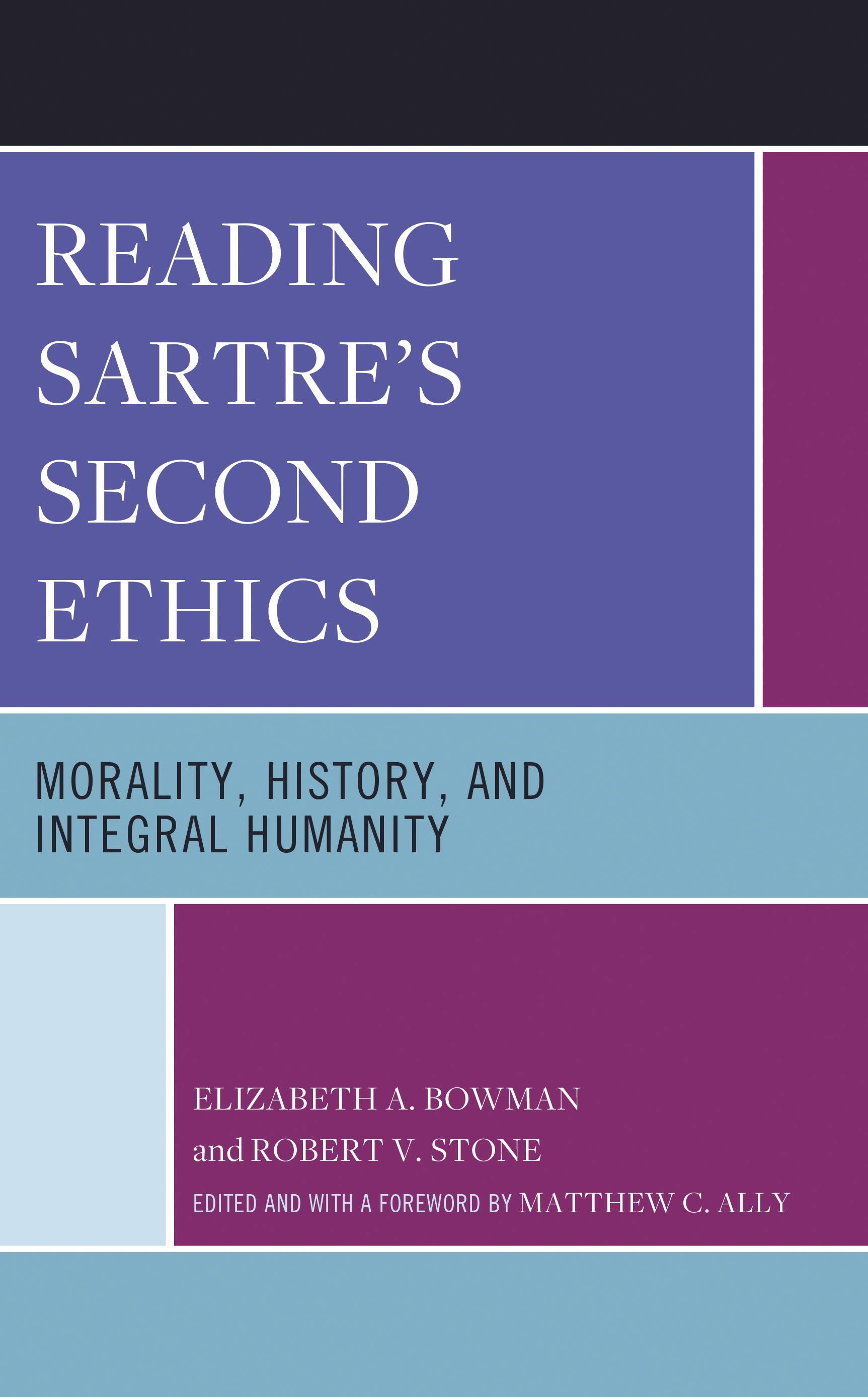
In Reading Sartre’s Second Ethics, Elizabeth A. Bowman and Robert V. Stone provide a comprehensive, reconstructive, and critical interpretation of Jean-Paul Sartre’s mature dialectical ethics. The key Sartrean texts are two posthumously published lectures, one delivered at the Gramsci Institute in Rome in 1964, the other scheduled to be delivered at Cornell University in 1965 but cancelled by Sartre in protest of U.S. foreign policy. Though different in content, method, and intended audience, Sartre gave both lectures the shared title “Morality and History.” As Bowman and Stone argue, these texts comprise a single, systematic ethic in two parts. The Cornell lecture focuses primarily on a regressive and phenomenological analysis of normativity and its ambiguous place in lived moral experience; the Rome lecture focuses primarily on a progressive and dialectical synthesis of the ends or goals of historical conduct. Taken together, the two texts demonstrate that “integral humanity” is always possible because the means to it can always be freely invented.
Maksa helposti kortilla, Klarnalla, Apple Paylla tai Google Paylla. Etkö ole tyytyväinen? Sinulla on aina 14 päivän palautusoikeus. Lue lisää ehdoistamme. Jos sinulla on kysyttävää, lähetä meille sähköpostia osoitteeseen hello@memmo.org.
Memmo tekee opiskelusta helpompaa – missä päin maailmaa ikinä oletkin. Meillä yhdistät kurssikirjat ja fiksut opiskelutyökalut yhteen paikkaan: tiivistelmät, visat, podcastit ja muistikortit. Ja sitten Ted, opiskelukaverisi, joka vastaa kaikkeen, mitä ikinä mietitkin. Yli 50 000 opiskelijaa opiskelee jo täällä – rakennettu auttamaan sinua oppimaan nopeammin ja stressaamaan vähemmän.