
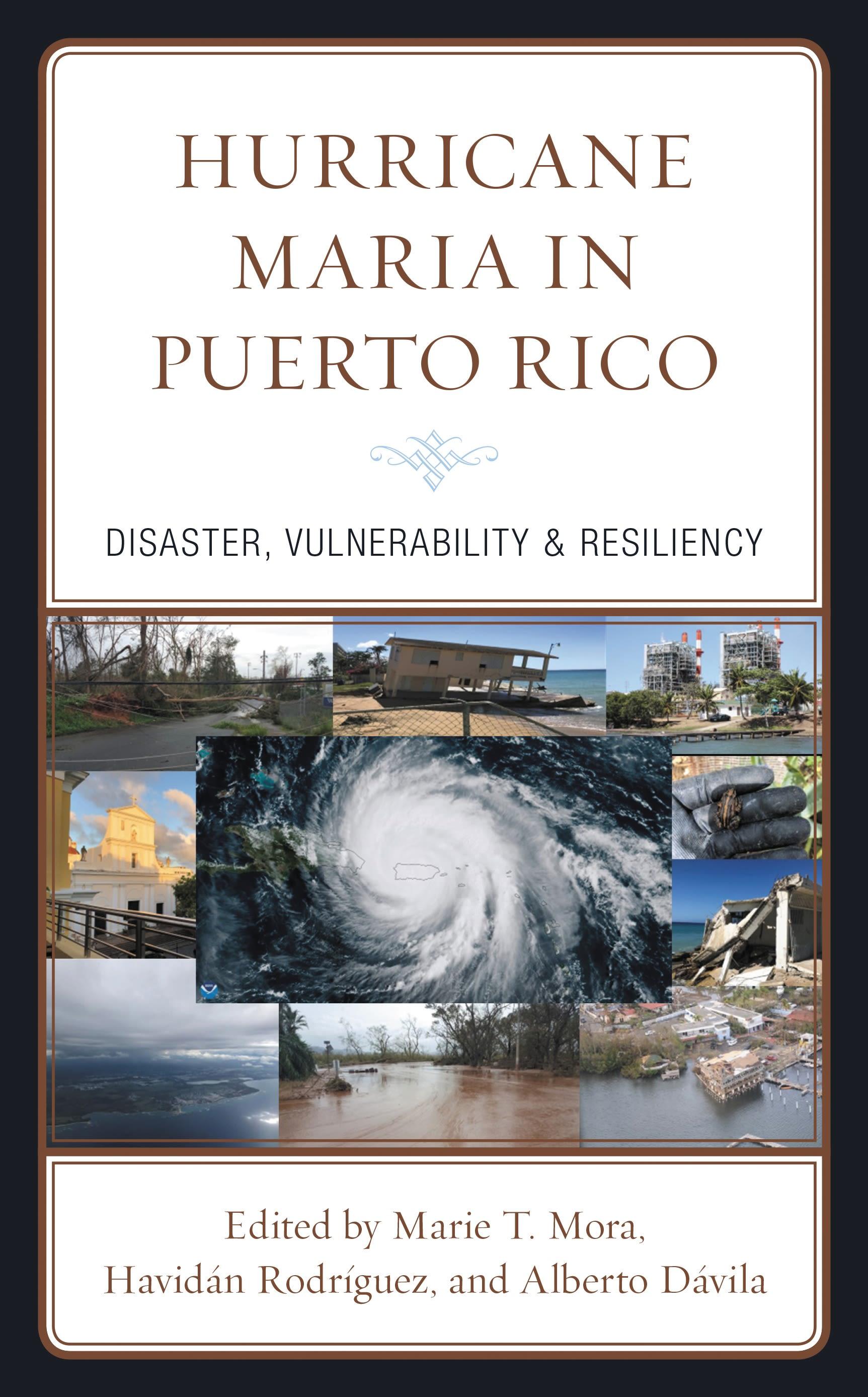
Hurricane Maria in Puerto Rico
Tekijä: Ruth Enid Zambrana, Rebecca Sanchez, Alberto Dávila, Marie T. Mora, Havidán Rodríguez, Carlos Rivera Santana, Michael A. Alfultis, Veronica Arroyo Rodriguez, José Caraballo-Cueto, Sally Crimmins Villela, María E. Enchautegui, Zadia M. Feliciano, Jose M. Fernandez, Antonio Flores, Mark Hugo Lopez, Mark Lichtenstein, Shao Lin, Jens Manuel Krogstad, Amy Nitza, Rosaura Orengo-Aguayo, Cecilio Ortiz-García, Marla D. Pérez-Lugo, Bettina Pérez-Martínez, Valeria Quiñones, Fernando I. Rivera, María Rolón-Martínez, Adriana Solla, Joy Lynn Suárez-Kindy, Didier Valdés, Havidán Rodriguez
Kustantaja: Bloomsbury Publishing
Painos: 1
Julkaisuvuosi: 2021
ISBN: 9781793603074
With its 155 mile-per-hour sustained windspeeds, the near-Category 5 Hurricane Maria brought catastrophic devastation and destruction as it diagonally crossed the Commonwealth of Puerto Rico from the southeast to the northwest on September 20, 2017. The official death toll estimate of 2,975 lost lives means this record storm became one of the most devasting hurricanes not only for Puerto Rico but for the U.S. Many of these deaths, as well as the prolonged human suffering, were attributed to what was described as inadequate disaster response and slow restoration of basic services (including running water, electricity, and the provision and distribution of food and medicine), and not to the direct impact of the hurricane itself.
At the same time, Hurricane Maria made landfall when Puerto Rico had been confronting a severe economic crisis surging for over a decade. This crisis, referred to as La Crisis Boricua, was characterized by a significant loss of industry and jobs, a deteriorating infrastructure, record net outmigration, a shrinking and rapidly aging population, rising healthcare under-coverage, a bankrupt government, and federal legislation restricting fiscal policy decisions made by elected officials on the island. Thus, Hurricane Maria exacerbated the effects of La Crisis Boricua on the socioeconomic, health, and demographic outcomes affecting Puerto Ricans on the island and U.S. mainland.
Bringing together scholars from a wide variety of disciplines (including economics, sociology, demography, health, psychology, disaster research, political science, education, the arts, and others), this volume represents one of the first interdisciplinary sets of studies dedicated to analyzing the effects of Hurricane Maria on island and stateside Puerto Ricans. Specific topics cover Hurricane Maria’s impact on labor market outcomes, including wages and employment by industry; health implications, including mental health; changes in artistic expression; civic engagement; and disaster response and recovery. A common thread through many of the chapters was the destruction of Puerto Rico’s electrical grid and the prolonged restoration of electricity and other essential services that resulted in the loss of thousands of lives.
At the same time, Hurricane Maria made landfall when Puerto Rico had been confronting a severe economic crisis surging for over a decade. This crisis, referred to as La Crisis Boricua, was characterized by a significant loss of industry and jobs, a deteriorating infrastructure, record net outmigration, a shrinking and rapidly aging population, rising healthcare under-coverage, a bankrupt government, and federal legislation restricting fiscal policy decisions made by elected officials on the island. Thus, Hurricane Maria exacerbated the effects of La Crisis Boricua on the socioeconomic, health, and demographic outcomes affecting Puerto Ricans on the island and U.S. mainland.
Bringing together scholars from a wide variety of disciplines (including economics, sociology, demography, health, psychology, disaster research, political science, education, the arts, and others), this volume represents one of the first interdisciplinary sets of studies dedicated to analyzing the effects of Hurricane Maria on island and stateside Puerto Ricans. Specific topics cover Hurricane Maria’s impact on labor market outcomes, including wages and employment by industry; health implications, including mental health; changes in artistic expression; civic engagement; and disaster response and recovery. A common thread through many of the chapters was the destruction of Puerto Rico’s electrical grid and the prolonged restoration of electricity and other essential services that resulted in the loss of thousands of lives.
Sivuja: 246
Kategoria: Samhällsvetenskap
e-ISBN: 9781793603081
Lähetyspaino: 1.2 kg
Toimitusaika: 1-2 päivää
Maksa helposti kortilla, Klarnalla, Apple Paylla tai Google Paylla. Etkö ole tyytyväinen? Sinulla on aina 14 päivän palautusoikeus. Lue lisää ehdoistamme. Jos sinulla on kysyttävää, lähetä meille sähköpostia osoitteeseen hello@memmo.org.
Memmo tekee opiskelusta helpompaa – missä päin maailmaa ikinä oletkin. Meillä yhdistät kurssikirjat ja fiksut opiskelutyökalut yhteen paikkaan: tiivistelmät, visat, podcastit ja muistikortit. Ja sitten Ted, opiskelukaverisi, joka vastaa kaikkeen, mitä ikinä mietitkin. Yli 50 000 opiskelijaa opiskelee jo täällä – rakennettu auttamaan sinua oppimaan nopeammin ja stressaamaan vähemmän.