
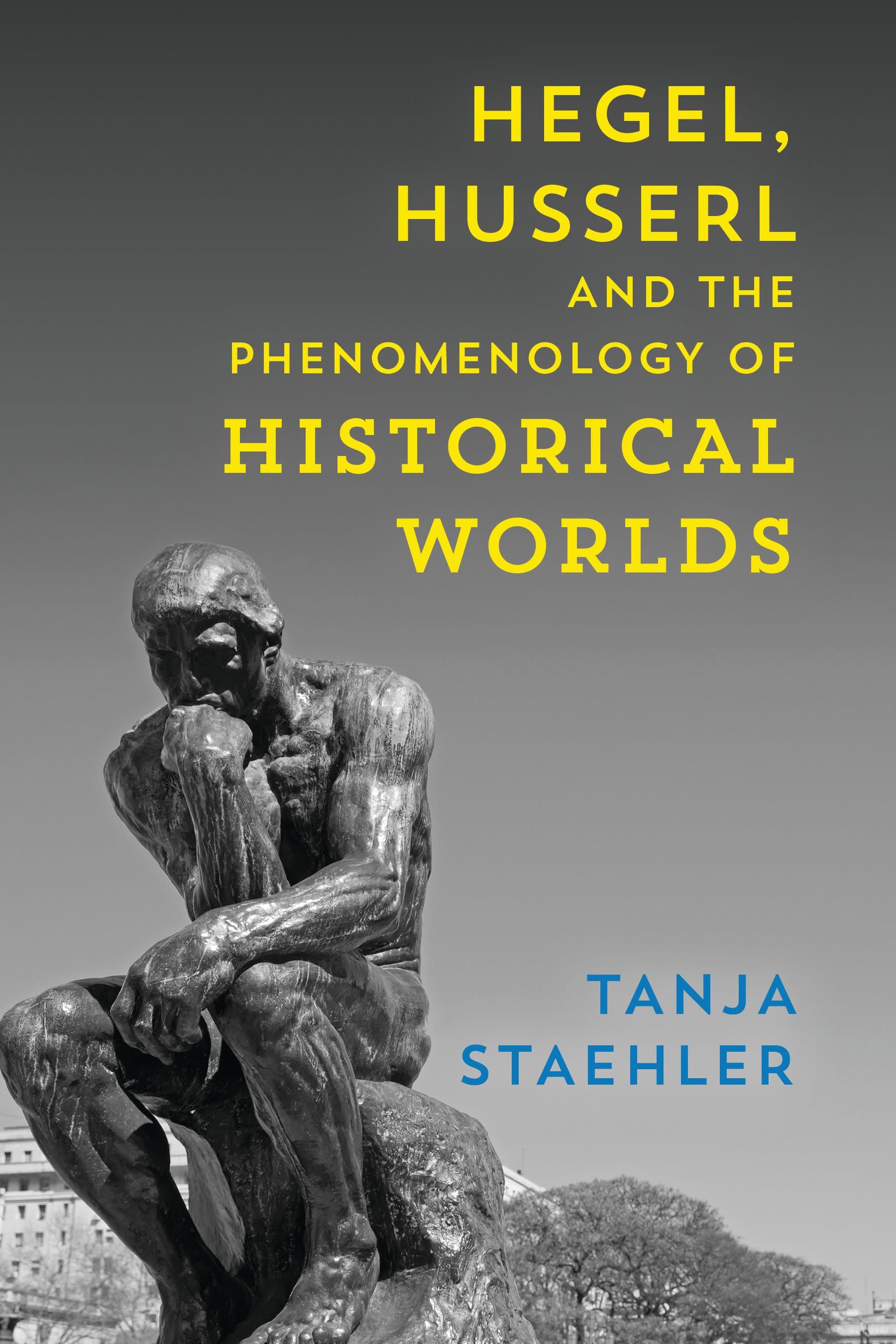
GWF Hegel famously described philosophy as 'its own time apprehended in thoughts', reflecting a desire that we increasingly experience, namely, the desire to understand our complex and fast-changing world. But how can we philosophically describe the world we live in? When Hegel attempted his systematic account of the historical world, he needed to conceive of history as rational progress to allow for such description. After the events of the twentieth century, we are rightfully doubtful about such progress.
However, in the twentieth century, another German philosopher, Edmund Husserl, attempted a similar project when he realised that a philosophical account of our human experience requires attending to the historical world we live in. According to Husserl, the Western world is a world in crisis. In this book, Tanja Staehler explores how Husserl thus radicalises Hegel’s philosophy by providing an account of historical movement as open. Husserl’s phenomenology allows thinking of historical worlds in the plural, without hierarchy, determined by ethics and aesthetics. Staehler argues that, through his radicalization of Hegel’s philosophy, Husserl provides us with a historical phenomenology and a coherent concept of a culture that points to the future for phenomenology as a philosophy that provides the methodological grounding for a variety of qualitative approaches in the humanities and social sciences.
However, in the twentieth century, another German philosopher, Edmund Husserl, attempted a similar project when he realised that a philosophical account of our human experience requires attending to the historical world we live in. According to Husserl, the Western world is a world in crisis. In this book, Tanja Staehler explores how Husserl thus radicalises Hegel’s philosophy by providing an account of historical movement as open. Husserl’s phenomenology allows thinking of historical worlds in the plural, without hierarchy, determined by ethics and aesthetics. Staehler argues that, through his radicalization of Hegel’s philosophy, Husserl provides us with a historical phenomenology and a coherent concept of a culture that points to the future for phenomenology as a philosophy that provides the methodological grounding for a variety of qualitative approaches in the humanities and social sciences.
Maksa helposti kortilla, Klarnalla, Apple Paylla tai Google Paylla. Etkö ole tyytyväinen? Sinulla on aina 14 päivän palautusoikeus. Lue lisää ehdoistamme. Jos sinulla on kysyttävää, lähetä meille sähköpostia osoitteeseen hello@memmo.org.
Memmo tekee opiskelusta helpompaa – missä päin maailmaa ikinä oletkin. Meillä yhdistät kurssikirjat ja fiksut opiskelutyökalut yhteen paikkaan: tiivistelmät, visat, podcastit ja muistikortit. Ja sitten Ted, opiskelukaverisi, joka vastaa kaikkeen, mitä ikinä mietitkin. Yli 50 000 opiskelijaa opiskelee jo täällä – rakennettu auttamaan sinua oppimaan nopeammin ja stressaamaan vähemmän.