
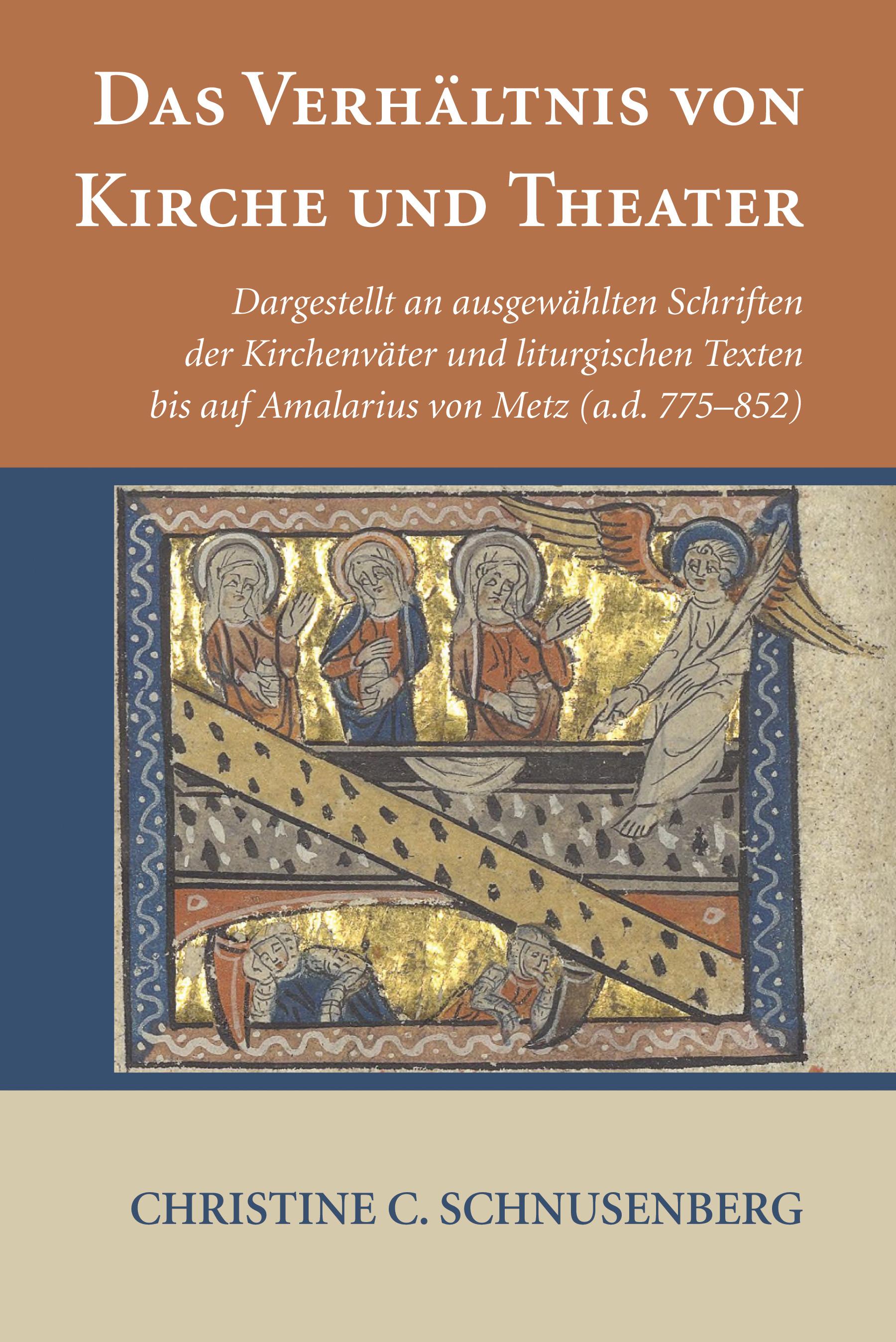
This work has grown out of the question regarding the negative relationship of the Church Fathers toward the Roman theatre and the apparent subsequent theatre vacuum of over 400 years (ca. 530 AD to 930 AD). This is considered to be the time which lies between the end of the Roman theatre and the appearance of the quem quaeritis tropes. This work moves between these two poles: on the one hand, between the polemics against the pagan Roman theatre which the Church Fathers described as a theatrum daemonicum and on the other hand, the appearances of dramatic-liturgical configurations in the Christian Church. This work attempts to connect these two opposite poles instead of separating them. This study begins with an examination of documents dealing with the patristic polemic. This is followed by an examination in chronological sequence of the development of the liturgical dramatic manifestations from Jerusalem to Amalarius of Metz. It also examines the allegorical method connected with this development. In conclusion the argument is maintained that aside the theatrum daemonicum, a theatrum infictitium et sapirituale is beginning to develop.
Maksa helposti kortilla, Klarnalla, Apple Paylla tai Google Paylla. Etkö ole tyytyväinen? Sinulla on aina 14 päivän palautusoikeus. Lue lisää ehdoistamme. Jos sinulla on kysyttävää, lähetä meille sähköpostia osoitteeseen hello@memmo.org.
Memmo tekee opiskelusta helpompaa – missä päin maailmaa ikinä oletkin. Meillä yhdistät kurssikirjat ja fiksut opiskelutyökalut yhteen paikkaan: tiivistelmät, visat, podcastit ja muistikortit. Ja sitten Ted, opiskelukaverisi, joka vastaa kaikkeen, mitä ikinä mietitkin. Yli 50 000 opiskelijaa opiskelee jo täällä – rakennettu auttamaan sinua oppimaan nopeammin ja stressaamaan vähemmän.
Saatat pitää myös näistä
Osta kirja0