
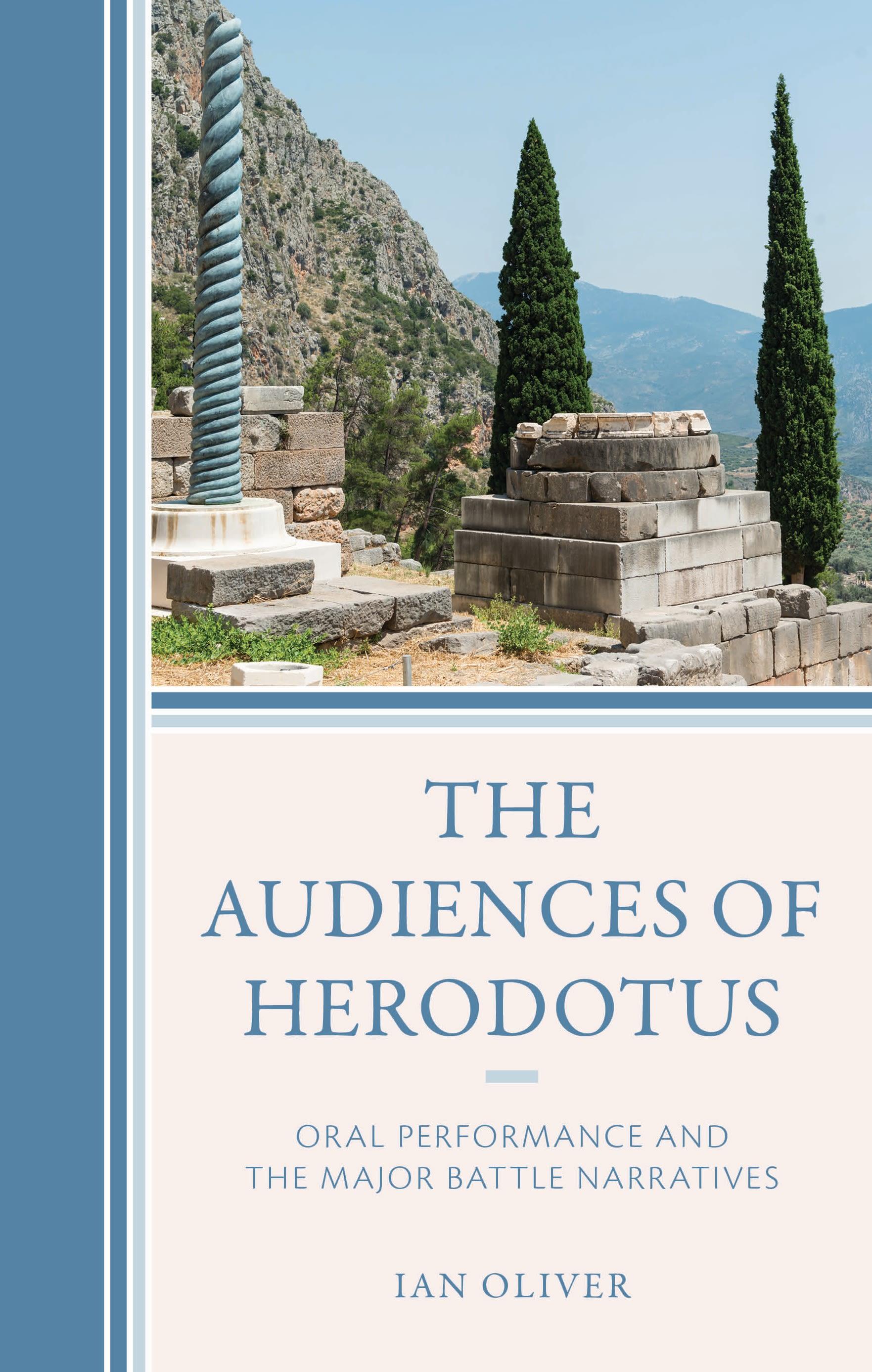
By recognizing the pervasive influence that Herodotus’s career as an oral performer had on his composition of the Histories, The Audiences of Herodotus: Oral Performance and the Battle Narratives argues that the Histories’ versions of the three most important battles in the Persian Wars—the battles of Thermopylae, Salamis, and Plataea—persistently and disproportionately advance the interests, biases, and political agendas of distinct audiences in the mid-fifth century, well before Herodotus assembled his famous work of history as it survives to us. The Salamis and Plataea narratives reflect a mid-century audience of Athenians and their allies; the Thermopylae narrative reflects an Amphictyonic audience gathered at the Pythian Festival. Ian Oliver concludes that, as a participant in a culture of wisdom performance (epideixis), Herodotus originally composed short, ideologically motivated performance pieces that he intended to promote tendentious reinterpretations of these momentous events, then relied on these narratives when he composed his final text: the unitary Histories.
Maksa helposti kortilla, Klarnalla, Apple Paylla tai Google Paylla. Etkö ole tyytyväinen? Sinulla on aina 14 päivän palautusoikeus. Lue lisää ehdoistamme. Jos sinulla on kysyttävää, lähetä meille sähköpostia osoitteeseen hello@memmo.org.
Memmo tekee opiskelusta helpompaa – missä päin maailmaa ikinä oletkin. Meillä yhdistät kurssikirjat ja fiksut opiskelutyökalut yhteen paikkaan: tiivistelmät, visat, podcastit ja muistikortit. Ja sitten Ted, opiskelukaverisi, joka vastaa kaikkeen, mitä ikinä mietitkin. Yli 50 000 opiskelijaa opiskelee jo täällä – rakennettu auttamaan sinua oppimaan nopeammin ja stressaamaan vähemmän.