
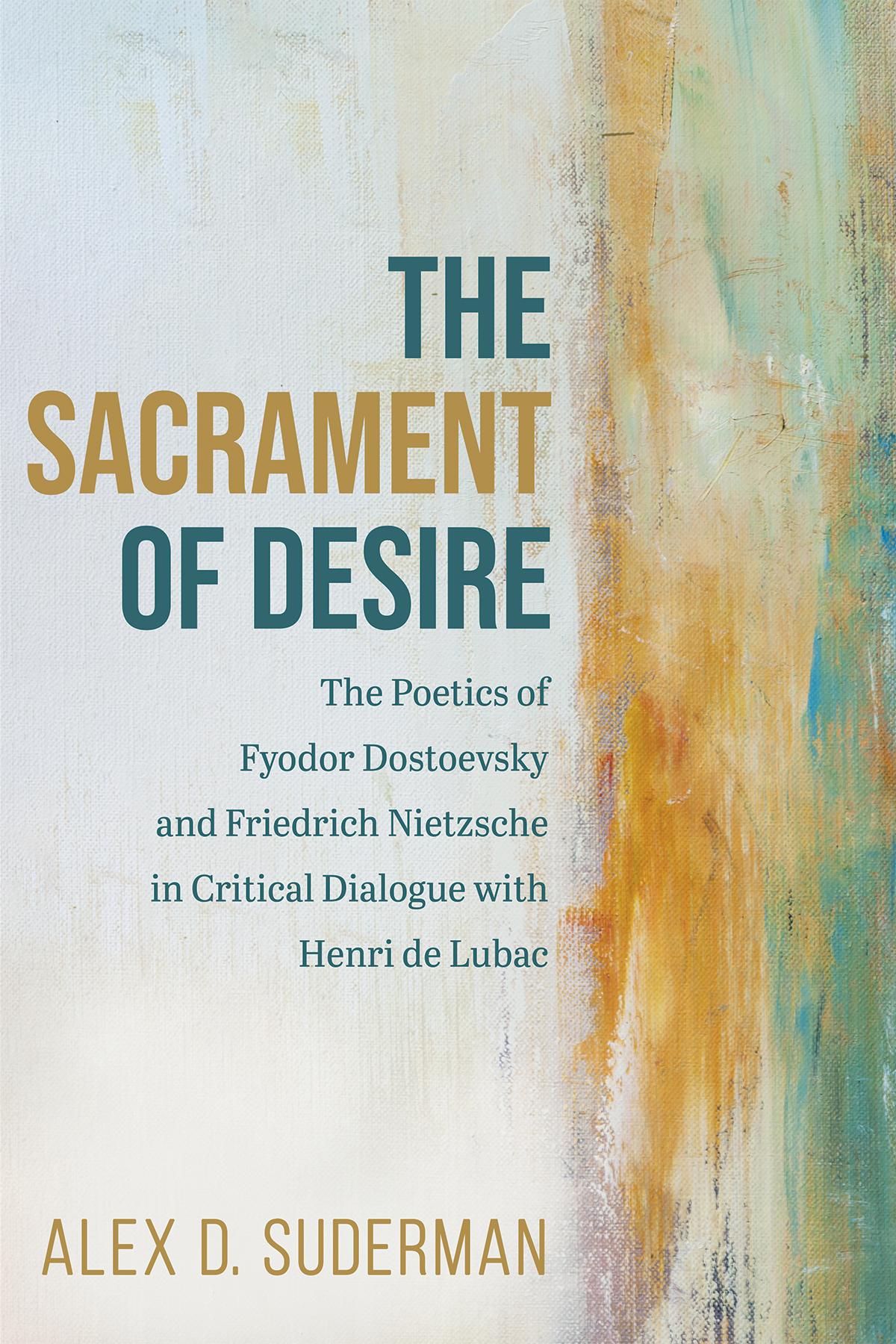
This book explores the political-theological implications of sacramental desire in Fyodor Dostoevsky`s The Brothers Karamazov with Friedrich Nietzsche's Thus Spoke Zarathustra in critical dialogue with Henri de Lubac. Suderman demonstrates how the work of de Lubac, Dostoevsky, and Nietzsche address a transcendent desire for a higher social and political unity in late-modern Western cultures and the imperialistic and coercive tendencies latent within it, concretely expressed in the Western church and the modern state. Specifically, this book investigates how Dostoevsky and Nietzsche envision new forms of political embodiment that are neither escapist nor imperialist. Through a detailed examination of Zarathustra's dramatic discovery of the eternal return and Alyosha's mystical experience of the resurrection, Suderman demonstrates the metaphysical significance of their respective political ethics. While the intent of de Lubac is to recover the social implications of the sacraments of Roman Catholicism, Nietzsche and Dostoevsky espouse alternative articulations of community and the sacramental desire necessary for such embodiment, a desire rooted in their respective perceptions of God.
Maksa helposti kortilla, Klarnalla, Apple Paylla tai Google Paylla. Etkö ole tyytyväinen? Sinulla on aina 14 päivän palautusoikeus. Lue lisää ehdoistamme. Jos sinulla on kysyttävää, lähetä meille sähköpostia osoitteeseen hello@memmo.org.
Memmo tekee opiskelusta helpompaa – missä päin maailmaa ikinä oletkin. Meillä yhdistät kurssikirjat ja fiksut opiskelutyökalut yhteen paikkaan: tiivistelmät, visat, podcastit ja muistikortit. Ja sitten Ted, opiskelukaverisi, joka vastaa kaikkeen, mitä ikinä mietitkin. Yli 50 000 opiskelijaa opiskelee jo täällä – rakennettu auttamaan sinua oppimaan nopeammin ja stressaamaan vähemmän.
Saatat pitää myös näistä
Osta kirja0