
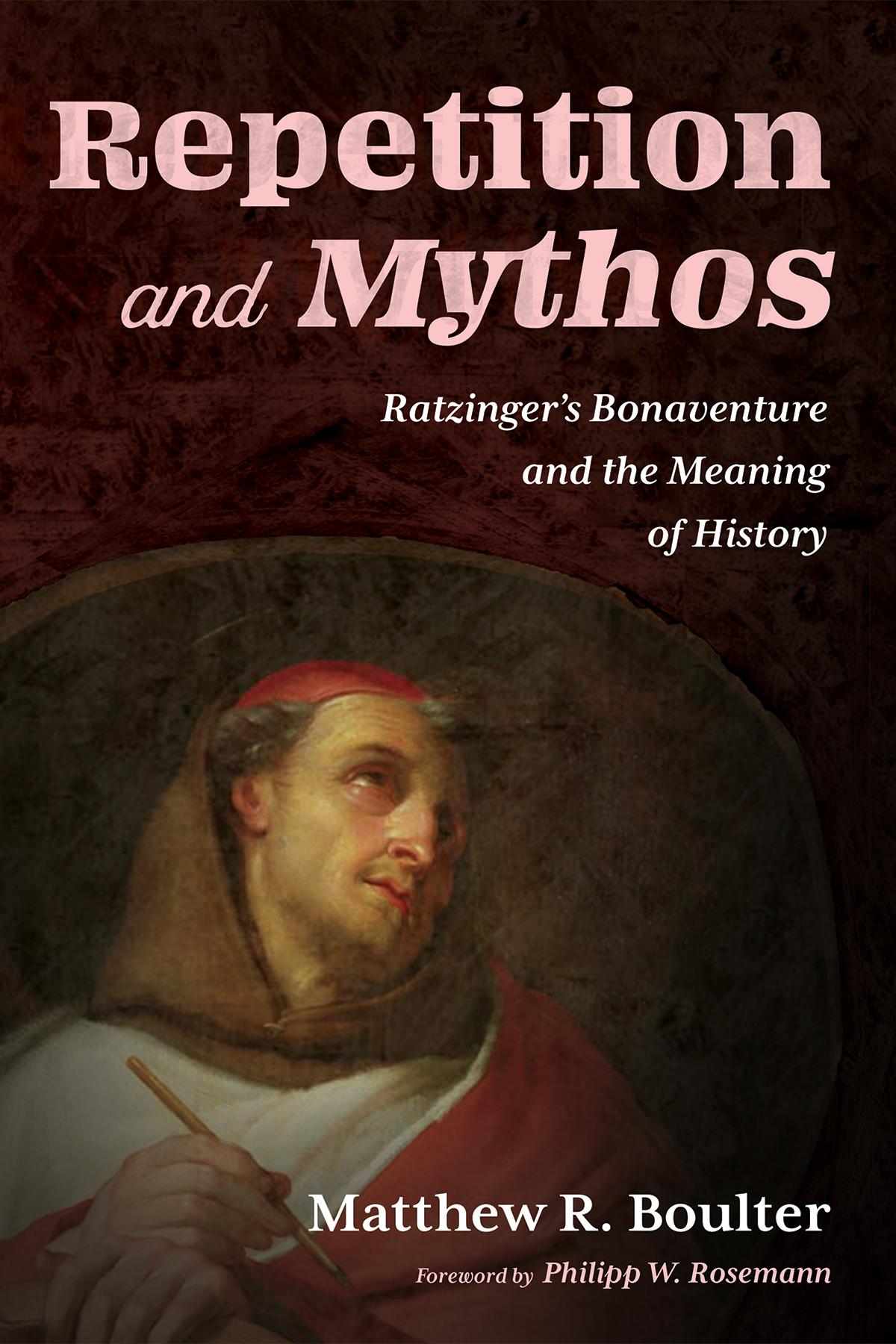
Writing his Habilitationsschrift as a young man in the late 1950s, future Pontiff Joseph Ratzinger argues that, when St. Bonaventure composed his Collationes in Hexaemeron in the spring of 1273, not since St. Augustine's De Civitate Dei contra Paganos had the world seen such a ground-breaking work on the logos of history. Indeed, for Ratzinger's Bonaventure, history is "first philosophy." The thirteenth-century Franciscan rails against the widespread assumption, rooted the newly "rediscovered" Aristotle, of history's unintelligibility. For Bonaventure, mythos mediates the difference between science and history, yielding a non-positivistic approach to the latter. Building on the dynamics of Plato's Line, Boulter show that the days of creation, narrated by Bonaventure, structure both history and thought. Because, like a story, it has beginning and end, history as a whole can be grasped. Hence, eschatological knowledge of the end of the world is possible. Yet this work also shows how the false "progress myths" of modernity are counterfeit versions of true, spiritual advancement of the kind embodied by saints such as Francis and Bonaventure himself. What is the logos of history? It turns out that it is mythos.
Maksa helposti kortilla, Klarnalla, Apple Paylla tai Google Paylla. Etkö ole tyytyväinen? Sinulla on aina 14 päivän palautusoikeus. Lue lisää ehdoistamme. Jos sinulla on kysyttävää, lähetä meille sähköpostia osoitteeseen hello@memmo.org.
Memmo tekee opiskelusta helpompaa – missä päin maailmaa ikinä oletkin. Meillä yhdistät kurssikirjat ja fiksut opiskelutyökalut yhteen paikkaan: tiivistelmät, visat, podcastit ja muistikortit. Ja sitten Ted, opiskelukaverisi, joka vastaa kaikkeen, mitä ikinä mietitkin. Yli 50 000 opiskelijaa opiskelee jo täällä – rakennettu auttamaan sinua oppimaan nopeammin ja stressaamaan vähemmän.
Saatat pitää myös näistä
Osta kirja0