
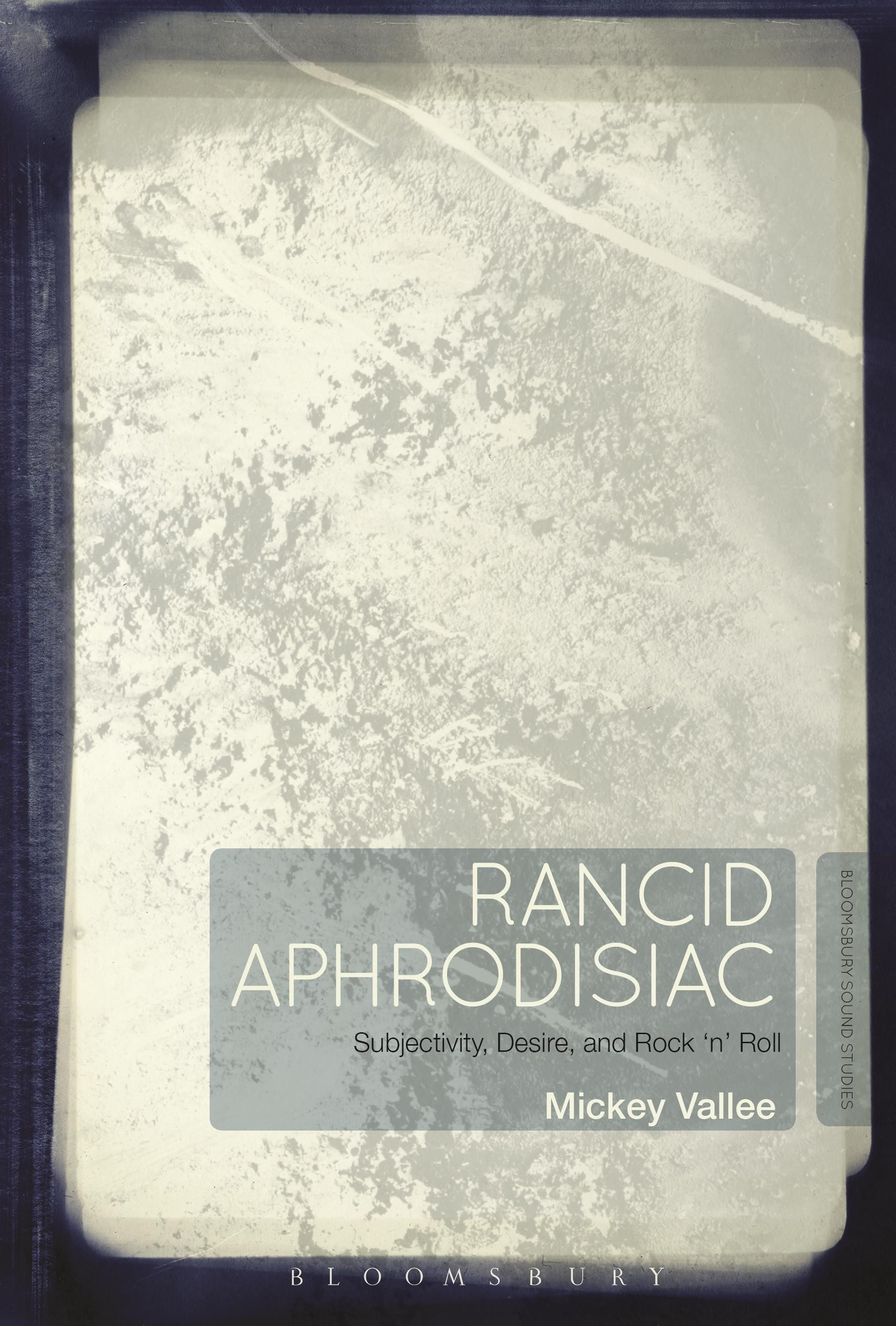
It has been sixty years since Rock 'n' Roll exploded into the mainstream, yet we remain limited in our understanding of how its bawdy excesses absorbed into the annals of mass popularity in such a short amount of time. Mickey Vallee asks: what if the Rock 'n' Roll eruption was nothing less than postwar consumer capitalism at its very best, precisely because it was taken as its very worst?
Vallee explores the emergence of Rock 'n' Roll's from an entirely new theoretical disposition in order to answer this question, drawing mainly from Lacanian cultural psychoanalysis to reveal that Rock 'n' Roll was far more conformist than we are generally led to believe; namely, that it was conformist with emerging liberal principles of freedom from the tyranny of the state. Vallee supports this proposition with detailed analyses of familiar (and not-so-familiar) characters and texts in Rock 'n' Roll to suggest that the disruption of our symbolic economy was symptomatic of a new cultural logic of economic freedom.
While not denying Rock 'n' Roll's role in the pre-civil rights movement, Vallee refuses the possibility to deny that Rock 'n' Roll's symbolic efficacy ultimately coordinated a neoliberal foundation to the ideology of individualism in its rhythm, instrumentation, lyrics, and vocals, where its power was at its most effective and affective.
Vallee explores the emergence of Rock 'n' Roll's from an entirely new theoretical disposition in order to answer this question, drawing mainly from Lacanian cultural psychoanalysis to reveal that Rock 'n' Roll was far more conformist than we are generally led to believe; namely, that it was conformist with emerging liberal principles of freedom from the tyranny of the state. Vallee supports this proposition with detailed analyses of familiar (and not-so-familiar) characters and texts in Rock 'n' Roll to suggest that the disruption of our symbolic economy was symptomatic of a new cultural logic of economic freedom.
While not denying Rock 'n' Roll's role in the pre-civil rights movement, Vallee refuses the possibility to deny that Rock 'n' Roll's symbolic efficacy ultimately coordinated a neoliberal foundation to the ideology of individualism in its rhythm, instrumentation, lyrics, and vocals, where its power was at its most effective and affective.
Sivuja: 160
Kategoria: Film- & Medievetenskap
e-ISBN: 9781623560140
Lähetyspaino: 1.2 kg
Toimitusaika: 1-2 päivää
Maksa helposti kortilla, Klarnalla, Apple Paylla tai Google Paylla. Etkö ole tyytyväinen? Sinulla on aina 14 päivän palautusoikeus. Lue lisää ehdoistamme. Jos sinulla on kysyttävää, lähetä meille sähköpostia osoitteeseen hello@memmo.org.
Memmo tekee opiskelusta helpompaa – missä päin maailmaa ikinä oletkin. Meillä yhdistät kurssikirjat ja fiksut opiskelutyökalut yhteen paikkaan: tiivistelmät, visat, podcastit ja muistikortit. Ja sitten Ted, opiskelukaverisi, joka vastaa kaikkeen, mitä ikinä mietitkin. Yli 50 000 opiskelijaa opiskelee jo täällä – rakennettu auttamaan sinua oppimaan nopeammin ja stressaamaan vähemmän.