
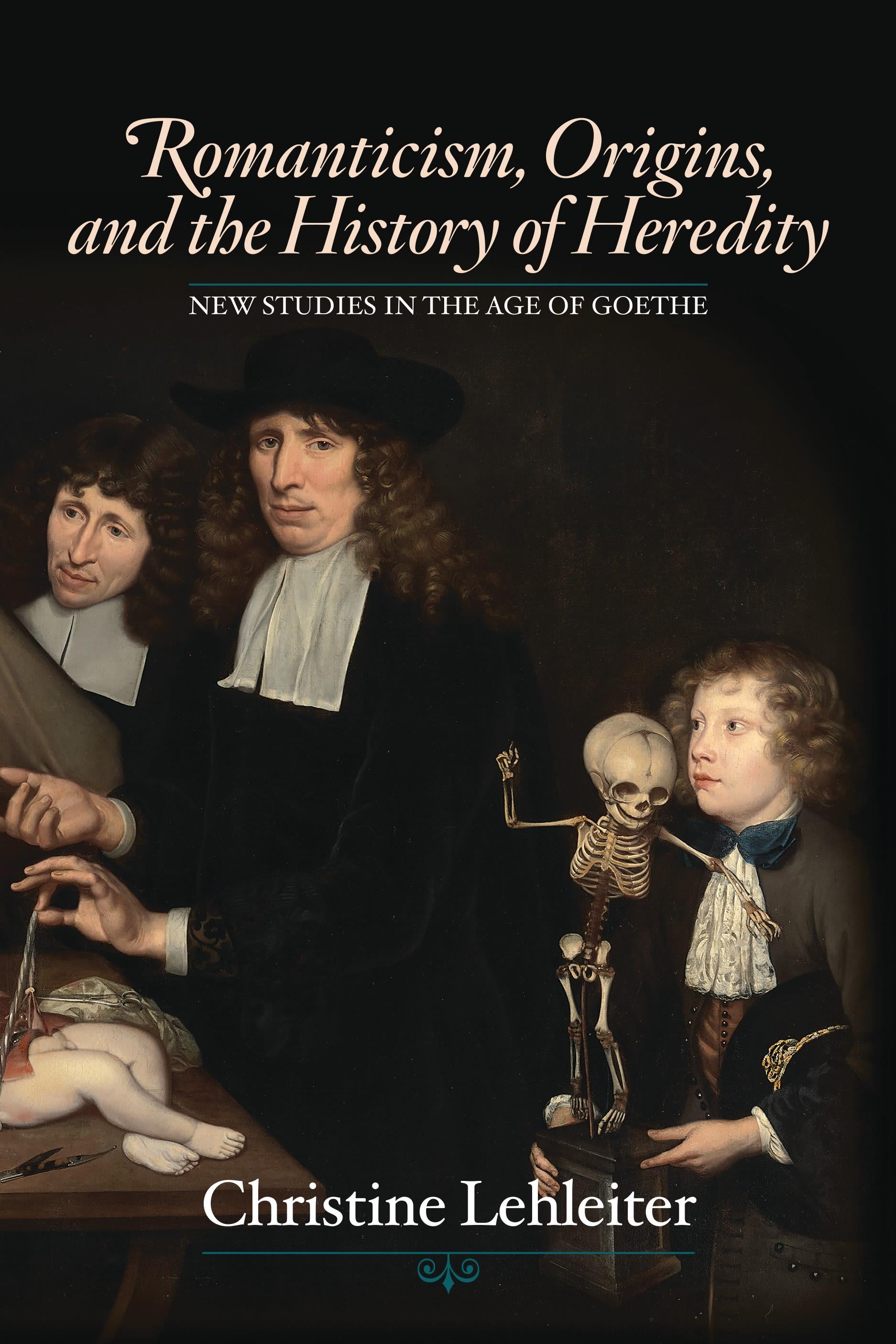
At the turn of the eighteenth century, selfhood was understood as a “tabularasa” to be imprinted in the course of an individual’s life. By the middle of the nineteenth-century, however, the individual had become defined as determined by heredity already from birth. Examining novels by Goethe, Jean Paul, and E.T.A. Hoffmann, studies on plant hybridization, treatises on animal breeding, and anatomical collections, Romanticism, Origins, and the History of Heredity delineates how romantic authors imagined the ramifications of emerging notions of heredity for the conceptualization of selfhood. Focusing on three fields of inquiry—inbreeding and incest, cross-breeding and bastardization, evolution and autopoiesis—Christine Lehleiter proposes that the notion of selfhood for which Romanticism has become known was not threatened by considerations of determinism and evolution, but was in fact already a result of these very considerations. Romanticism, Origins and the History of Heredity will be of interest for literary scholars, historians of science, and all readers fascinated by the long durée of subjectivity and evolutionary thought.
Maksa helposti kortilla, Klarnalla, Apple Paylla tai Google Paylla. Etkö ole tyytyväinen? Sinulla on aina 14 päivän palautusoikeus. Lue lisää ehdoistamme. Jos sinulla on kysyttävää, lähetä meille sähköpostia osoitteeseen hello@memmo.org.
Memmo tekee opiskelusta helpompaa – missä päin maailmaa ikinä oletkin. Meillä yhdistät kurssikirjat ja fiksut opiskelutyökalut yhteen paikkaan: tiivistelmät, visat, podcastit ja muistikortit. Ja sitten Ted, opiskelukaverisi, joka vastaa kaikkeen, mitä ikinä mietitkin. Yli 50 000 opiskelijaa opiskelee jo täällä – rakennettu auttamaan sinua oppimaan nopeammin ja stressaamaan vähemmän.