
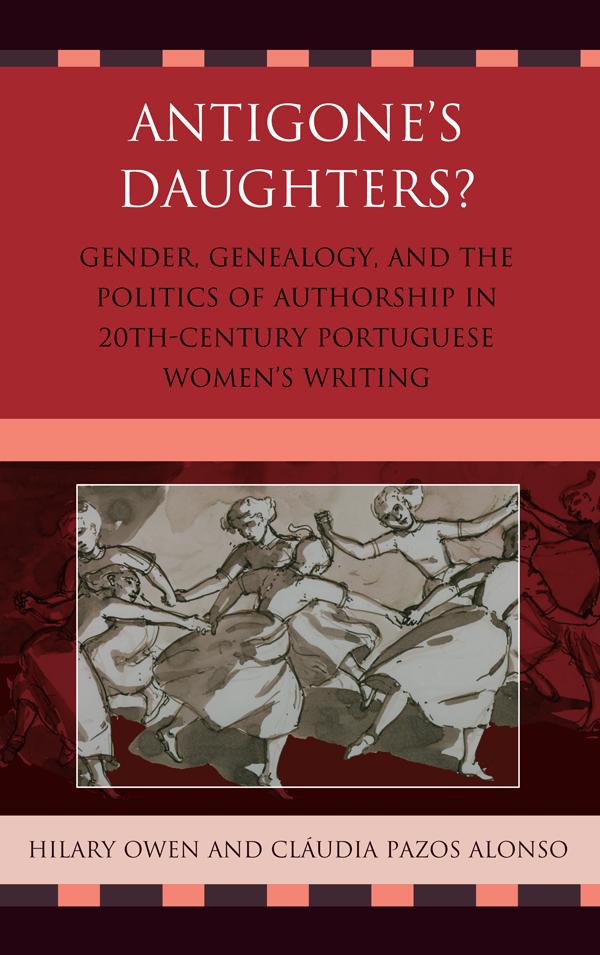
Antigone's Daughters? provides the first detailed discussion in English of six well-known Portuguese women writers, working across a wide range of genres: Florbela Espanca (1894-1930), Irene Lisboa (1892-1958), Agustina Bessa Luís, (1923- ), Natália Correia (1923-93), Hélia Correia (1949 -) and Lídia Jorge (1946 - ). Together they cover the span of the 20th century and afford historical insights into the complex gender politics of achieving institutional acceptance and validation in the Portuguese national canon at different points in the 20th century.
Although a patrilinear evolutionary model visibly structures national literary history in Portugal to the present day, women writers and critics have not generally sought to replace this with a matrilinear feminist counter-history. The unifying metaphor that the authors adopt here for the purpose of discussing Portuguese women's ambivalent response to female genealogy is the classical figure of Antigone, who paradoxically sacrifices her own genealogical continuity in the name of defending family and kinship, while resisting the patriarchal pragmatics of state-building. Should women writers, faced with the absence of a female tradition, posit a woman-centred place outside the jurisdiction of male genealogy, however strategically essentialist that place may be, or should they primarily eschew fixed sexual identity to act as unnameable saboteurs, undoing the law of patriarchal tradition from within?
Although a patrilinear evolutionary model visibly structures national literary history in Portugal to the present day, women writers and critics have not generally sought to replace this with a matrilinear feminist counter-history. The unifying metaphor that the authors adopt here for the purpose of discussing Portuguese women's ambivalent response to female genealogy is the classical figure of Antigone, who paradoxically sacrifices her own genealogical continuity in the name of defending family and kinship, while resisting the patriarchal pragmatics of state-building. Should women writers, faced with the absence of a female tradition, posit a woman-centred place outside the jurisdiction of male genealogy, however strategically essentialist that place may be, or should they primarily eschew fixed sexual identity to act as unnameable saboteurs, undoing the law of patriarchal tradition from within?
Maksa helposti kortilla, Klarnalla, Apple Paylla tai Google Paylla. Etkö ole tyytyväinen? Sinulla on aina 14 päivän palautusoikeus. Lue lisää ehdoistamme. Jos sinulla on kysyttävää, lähetä meille sähköpostia osoitteeseen hello@memmo.org.
Memmo tekee opiskelusta helpompaa – missä päin maailmaa ikinä oletkin. Meillä yhdistät kurssikirjat ja fiksut opiskelutyökalut yhteen paikkaan: tiivistelmät, visat, podcastit ja muistikortit. Ja sitten Ted, opiskelukaverisi, joka vastaa kaikkeen, mitä ikinä mietitkin. Yli 50 000 opiskelijaa opiskelee jo täällä – rakennettu auttamaan sinua oppimaan nopeammin ja stressaamaan vähemmän.