
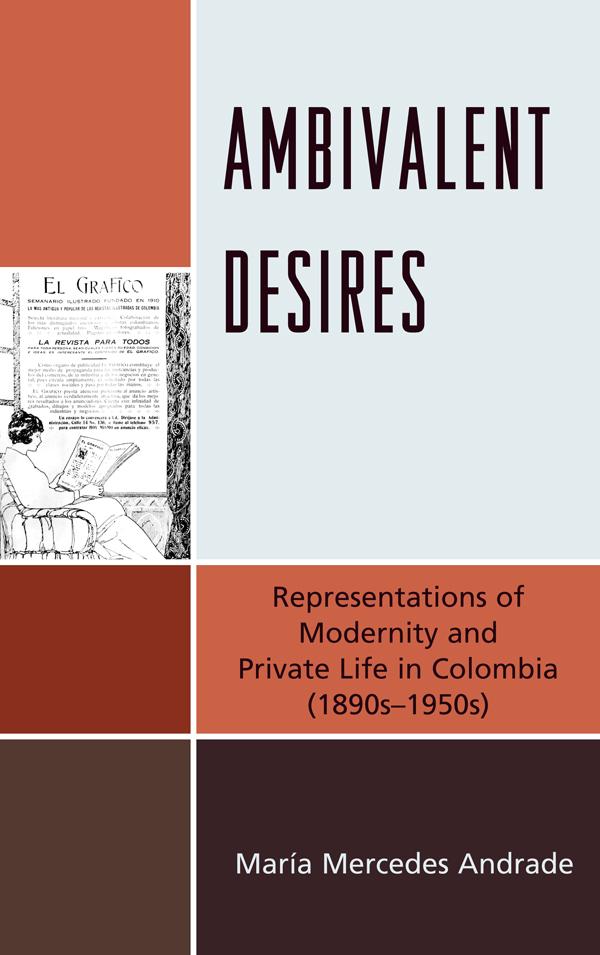
Ambivalent Desires: Representations of Modernity and Private Life in Colombia (1890s-1950s) is a literary and cultural study of the reception of modernity in Colombia. Unlike previous studies of Latin American modernization, which have usually focused on the public aspect of the process, this book discusses the intersection between modernity and the private sphere. It analyzes canonical and noncanonical works that reflect the existing ambivalence toward the modernizing project being implemented in the country at the time, and it discusses how the texts in question reinterpret, adapt, and even reject the ideology of modernity. The focus of the study is how the understanding of the relationship between modernity and private life relates to the project of constructing a modern nation, and the discontinuities and contradictions that appear in the process.
The question of what modernity is, its implications for everyday life, and its desirability or undesirability as a new cultural paradigm were central issues in Colombian texts from the end of the nineteenth century through the first half of the twentieth. At stake was the definition of the nation's identity and the project of breaking away from the cultural patterns of the colonial past. Considering that the apparently peaceful process of modernization in Colombia was interrupted in the 1950s by the eruption of political violence across the country, this study situates itself on the eve of a crisis and asks how representations of modernity in texts from the period evidence the social fragmentation that may have led to it.
The question of what modernity is, its implications for everyday life, and its desirability or undesirability as a new cultural paradigm were central issues in Colombian texts from the end of the nineteenth century through the first half of the twentieth. At stake was the definition of the nation's identity and the project of breaking away from the cultural patterns of the colonial past. Considering that the apparently peaceful process of modernization in Colombia was interrupted in the 1950s by the eruption of political violence across the country, this study situates itself on the eve of a crisis and asks how representations of modernity in texts from the period evidence the social fragmentation that may have led to it.
Maksa helposti kortilla, Klarnalla, Apple Paylla tai Google Paylla. Etkö ole tyytyväinen? Sinulla on aina 14 päivän palautusoikeus. Lue lisää ehdoistamme. Jos sinulla on kysyttävää, lähetä meille sähköpostia osoitteeseen hello@memmo.org.
Memmo tekee opiskelusta helpompaa – missä päin maailmaa ikinä oletkin. Meillä yhdistät kurssikirjat ja fiksut opiskelutyökalut yhteen paikkaan: tiivistelmät, visat, podcastit ja muistikortit. Ja sitten Ted, opiskelukaverisi, joka vastaa kaikkeen, mitä ikinä mietitkin. Yli 50 000 opiskelijaa opiskelee jo täällä – rakennettu auttamaan sinua oppimaan nopeammin ja stressaamaan vähemmän.