
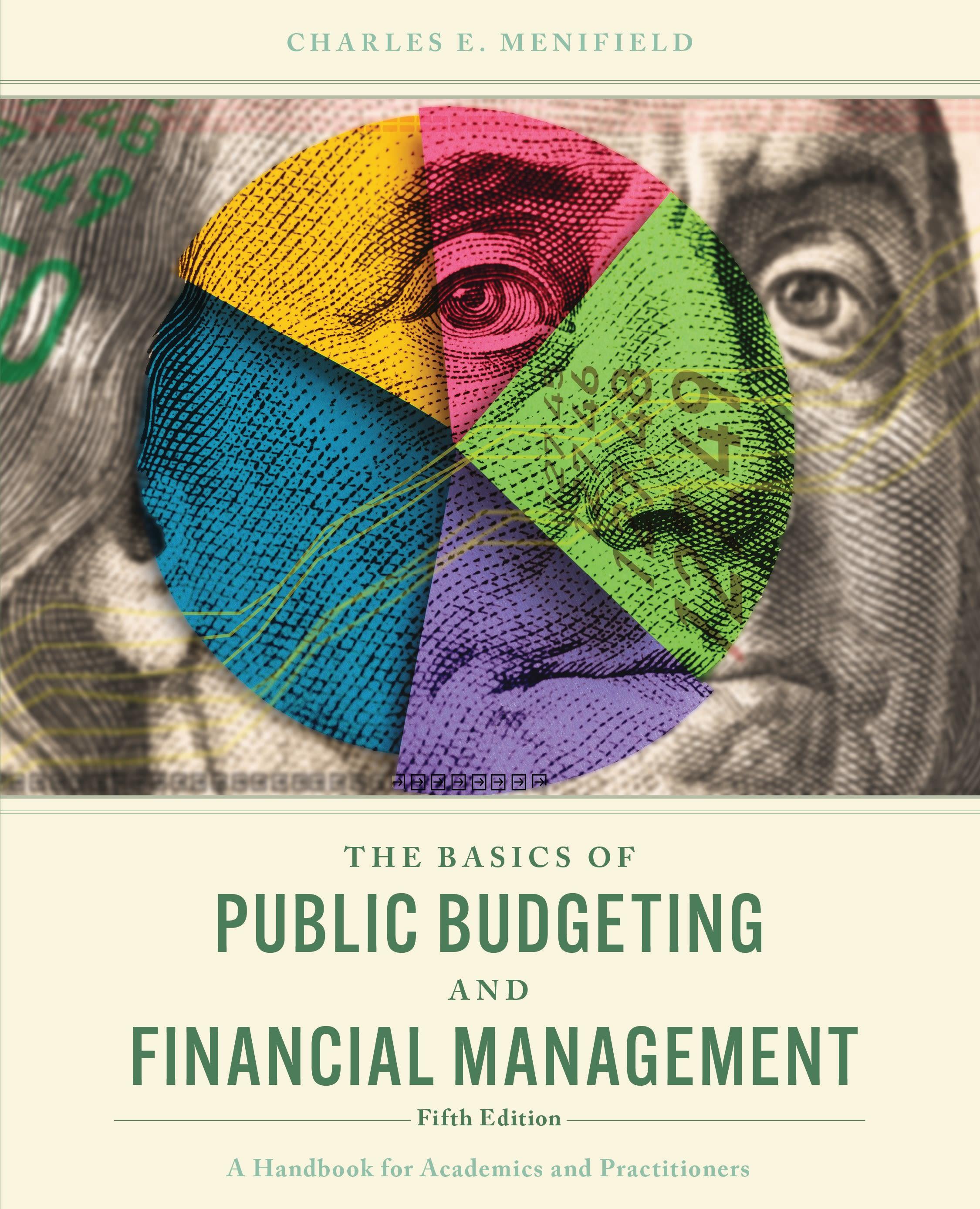
Connecting budgetary theory with practical tools, Charles E. Menifield carefully examines the key areas that every budgeting and financial management student needs to know in order to be a successful budgeteer in a local government, nonprofit, or state-level budget office. From the perspective of a bureaucrat, students examine various concepts and then work through in-class and out-of-class exercises and problems to reinforce those concepts and ideas through practical applications.
Menifield provides an overview of the basic budgeting concepts, types, and techniques to orient students, along with discussion of budget cycles and the actors involved in the process. Chapters unfold to present personal services, operating, and capital budgets, as well as the various ways to fund public budgets. Students will gain an understanding of budgeting techniques and analytical models, but also how these methods are useful in answering important policy questions. Other topics include cash management, risk management, procurement, debt management, incentivizing economic development, and cutback management strategies. Menifield concludes with an examination of different data sources, data quality and appropriateness, and the different ways to communicate budget data effectively using charts, graphs, and slides.
Each chapter provides the student with a list of important terms, phrases, and exercises that require the students to apply what they have learned in each chapter using only basic office applications. The Fifth Edition of the book provides in-class exercises for each chapter, allowing students not only to compare their responses to their peers in small groups, but also to present those responses to the entire class with the goal of improving their presentation skills. This book blends budgetary theory and practice in a volume that is easy to understand by both undergraduate and graduate students alike.
Menifield provides an overview of the basic budgeting concepts, types, and techniques to orient students, along with discussion of budget cycles and the actors involved in the process. Chapters unfold to present personal services, operating, and capital budgets, as well as the various ways to fund public budgets. Students will gain an understanding of budgeting techniques and analytical models, but also how these methods are useful in answering important policy questions. Other topics include cash management, risk management, procurement, debt management, incentivizing economic development, and cutback management strategies. Menifield concludes with an examination of different data sources, data quality and appropriateness, and the different ways to communicate budget data effectively using charts, graphs, and slides.
Each chapter provides the student with a list of important terms, phrases, and exercises that require the students to apply what they have learned in each chapter using only basic office applications. The Fifth Edition of the book provides in-class exercises for each chapter, allowing students not only to compare their responses to their peers in small groups, but also to present those responses to the entire class with the goal of improving their presentation skills. This book blends budgetary theory and practice in a volume that is easy to understand by both undergraduate and graduate students alike.
Sivuja: 250
Kategoria: Statsvetenskap & Politik
e-ISBN: 9781538184042
Lähetyspaino: 1.2 kg
Toimitusaika: 1-2 päivää
Maksa helposti kortilla, Klarnalla, Apple Paylla tai Google Paylla. Etkö ole tyytyväinen? Sinulla on aina 14 päivän palautusoikeus. Lue lisää ehdoistamme. Jos sinulla on kysyttävää, lähetä meille sähköpostia osoitteeseen hello@memmo.org.
Memmo tekee opiskelusta helpompaa – missä päin maailmaa ikinä oletkin. Meillä yhdistät kurssikirjat ja fiksut opiskelutyökalut yhteen paikkaan: tiivistelmät, visat, podcastit ja muistikortit. Ja sitten Ted, opiskelukaverisi, joka vastaa kaikkeen, mitä ikinä mietitkin. Yli 50 000 opiskelijaa opiskelee jo täällä – rakennettu auttamaan sinua oppimaan nopeammin ja stressaamaan vähemmän.