
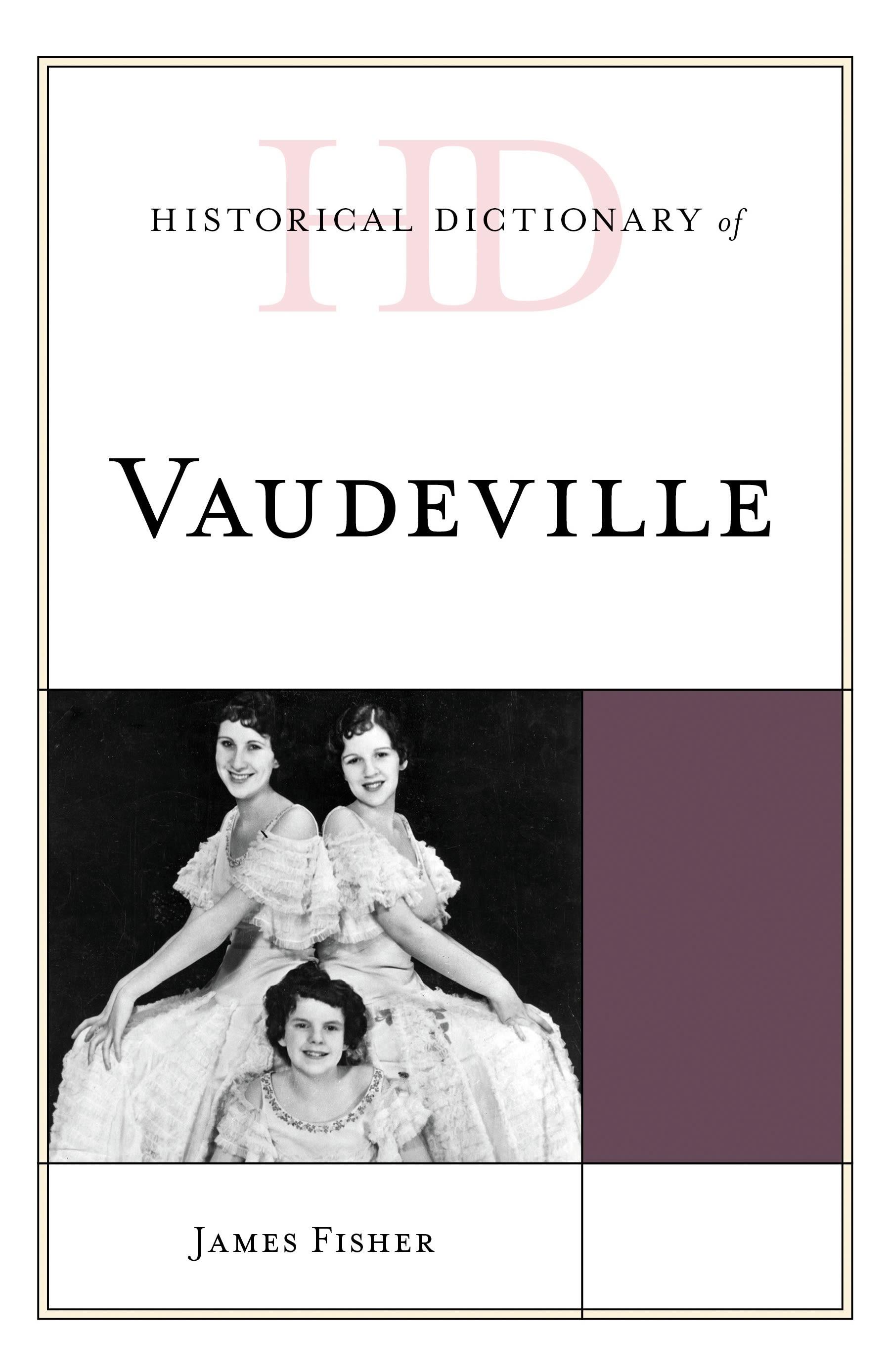
Vaudeville, as it is commonly known today, began as a response to scandalous variety performances appealing mostly to adult, male patrons. When former minstrel performer and balladeer Tony Pastor opened the Fourteenth Street Theatre in New York in 1881, he was guided by a mission to provide family-friendly variety shows in hopes of drawing in that portion of the audience – women and children – otherwise inherently excluded from variety bills prior to 1881. There he perfected a framework for family-oriented amusements of the highest obtainable quality and style.
Historical Dictionary of Vaudeville contains a chronology, an introduction, an extensive bibliography, and the dictionary section has more than 1,000 cross-referenced entries on performing artists, managers and agents, theatre facilities, and the terminology central to the history of vaudeville. This book is an excellent resource for students, researchers, and anyone wanting to know more about vaudeville.
Historical Dictionary of Vaudeville contains a chronology, an introduction, an extensive bibliography, and the dictionary section has more than 1,000 cross-referenced entries on performing artists, managers and agents, theatre facilities, and the terminology central to the history of vaudeville. This book is an excellent resource for students, researchers, and anyone wanting to know more about vaudeville.
Maksa helposti kortilla, Klarnalla, Apple Paylla tai Google Paylla. Etkö ole tyytyväinen? Sinulla on aina 14 päivän palautusoikeus. Lue lisää ehdoistamme. Jos sinulla on kysyttävää, lähetä meille sähköpostia osoitteeseen hello@memmo.org.
Memmo tekee opiskelusta helpompaa – missä päin maailmaa ikinä oletkin. Meillä yhdistät kurssikirjat ja fiksut opiskelutyökalut yhteen paikkaan: tiivistelmät, visat, podcastit ja muistikortit. Ja sitten Ted, opiskelukaverisi, joka vastaa kaikkeen, mitä ikinä mietitkin. Yli 50 000 opiskelijaa opiskelee jo täällä – rakennettu auttamaan sinua oppimaan nopeammin ja stressaamaan vähemmän.