
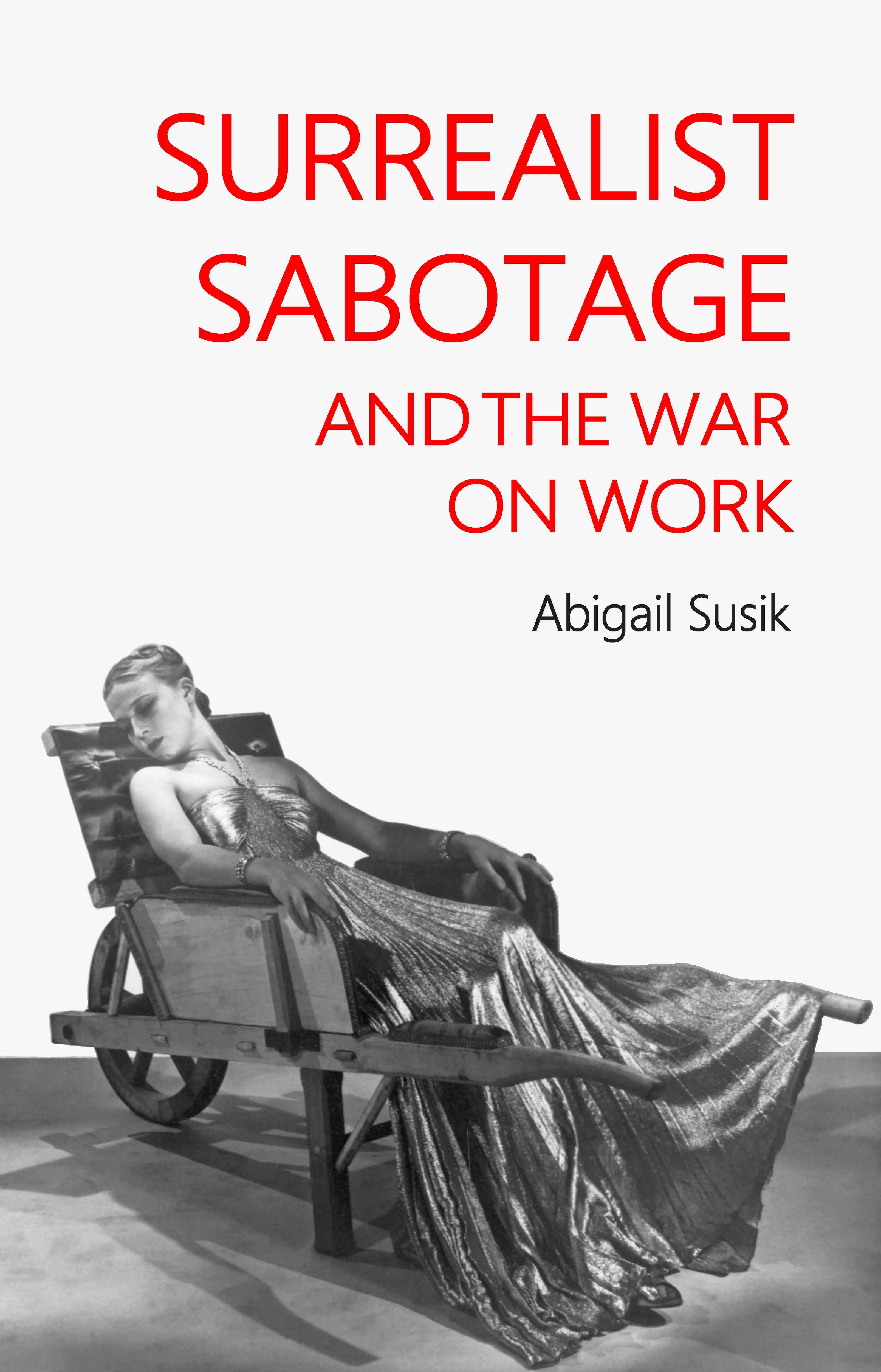
In Surrealist sabotage and the war on work, art historian Abigail Susik uncovers the expansive parameters of the international surrealist movement’s ongoing engagement with an aesthetics of sabotage between the 1920s and the 1970s, demonstrating how surrealists unceasingly sought to transform the work of art into a form of unmanageable anti-work. In four case studies devoted to surrealism’s transatlantic war on work, Susik analyses how artworks and texts by Man Ray, André Breton, Simone Breton, André Thirion, Óscar Domínguez, Konrad Klapheck, and the Chicago surrealists, among others, were pivotally impacted by the intransigent surrealist concepts of principled work refusal, permanent strike, and autonomous pleasure. Underscoring surrealism’s profound relevance for readers engaged in ongoing debates about gendered labour and the wage gap, endemic over-work and exploitation, and the vicissitudes of knowledge work and the gig economy, Surrealist sabotage and the war on work reveals that surrealism’s creative work refusal retains immense relevance in our wired world.
Maksa helposti kortilla, Klarnalla, Apple Paylla tai Google Paylla. Etkö ole tyytyväinen? Sinulla on aina 14 päivän palautusoikeus. Lue lisää ehdoistamme. Jos sinulla on kysyttävää, lähetä meille sähköpostia osoitteeseen hello@memmo.org.
Memmo tekee opiskelusta helpompaa – missä päin maailmaa ikinä oletkin. Meillä yhdistät kurssikirjat ja fiksut opiskelutyökalut yhteen paikkaan: tiivistelmät, visat, podcastit ja muistikortit. Ja sitten Ted, opiskelukaverisi, joka vastaa kaikkeen, mitä ikinä mietitkin. Yli 50 000 opiskelijaa opiskelee jo täällä – rakennettu auttamaan sinua oppimaan nopeammin ja stressaamaan vähemmän.
Saatat pitää myös näistä
Osta kirja0