
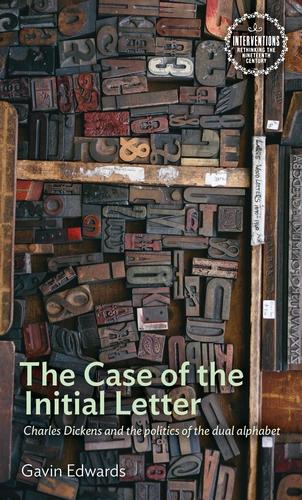
The book analyses attempts by Dickens and other nineteenth-century writers to challenge established ways of using the distinction between upper and lower case letters, in the interests of a wider radicalism. It discusses Dickens’s satire - on ‘Shares’ in Our Mutual Friend, on Paul Dombey’s position as the ‘Son’ of Dombey and Son - alongside the proto-modernist typography of suffragist poet Augusta Webster and the work of Marx’s translators transforming German conventions of capitalisation into English under the influence of Dickens and Carlyle. Placing these innovations within the history of the dual alphabet from its invention by Carolingian scribes to its rejection by modernist poets and the Bauhaus printers, the book tracks the dual alphabet through Dickens’s manuscripts, corrected proofs, and the ‘prompt copies’ for his public Readings, highlighting distinct ways in which writing, printing and speech produce meaning.
Maksa helposti kortilla, Klarnalla, Apple Paylla tai Google Paylla. Etkö ole tyytyväinen? Sinulla on aina 14 päivän palautusoikeus. Lue lisää ehdoistamme. Jos sinulla on kysyttävää, lähetä meille sähköpostia osoitteeseen hello@memmo.org.
Memmo tekee opiskelusta helpompaa – missä päin maailmaa ikinä oletkin. Meillä yhdistät kurssikirjat ja fiksut opiskelutyökalut yhteen paikkaan: tiivistelmät, visat, podcastit ja muistikortit. Ja sitten Ted, opiskelukaverisi, joka vastaa kaikkeen, mitä ikinä mietitkin. Yli 50 000 opiskelijaa opiskelee jo täällä – rakennettu auttamaan sinua oppimaan nopeammin ja stressaamaan vähemmän.
Saatat pitää myös näistä
Osta kirja0