
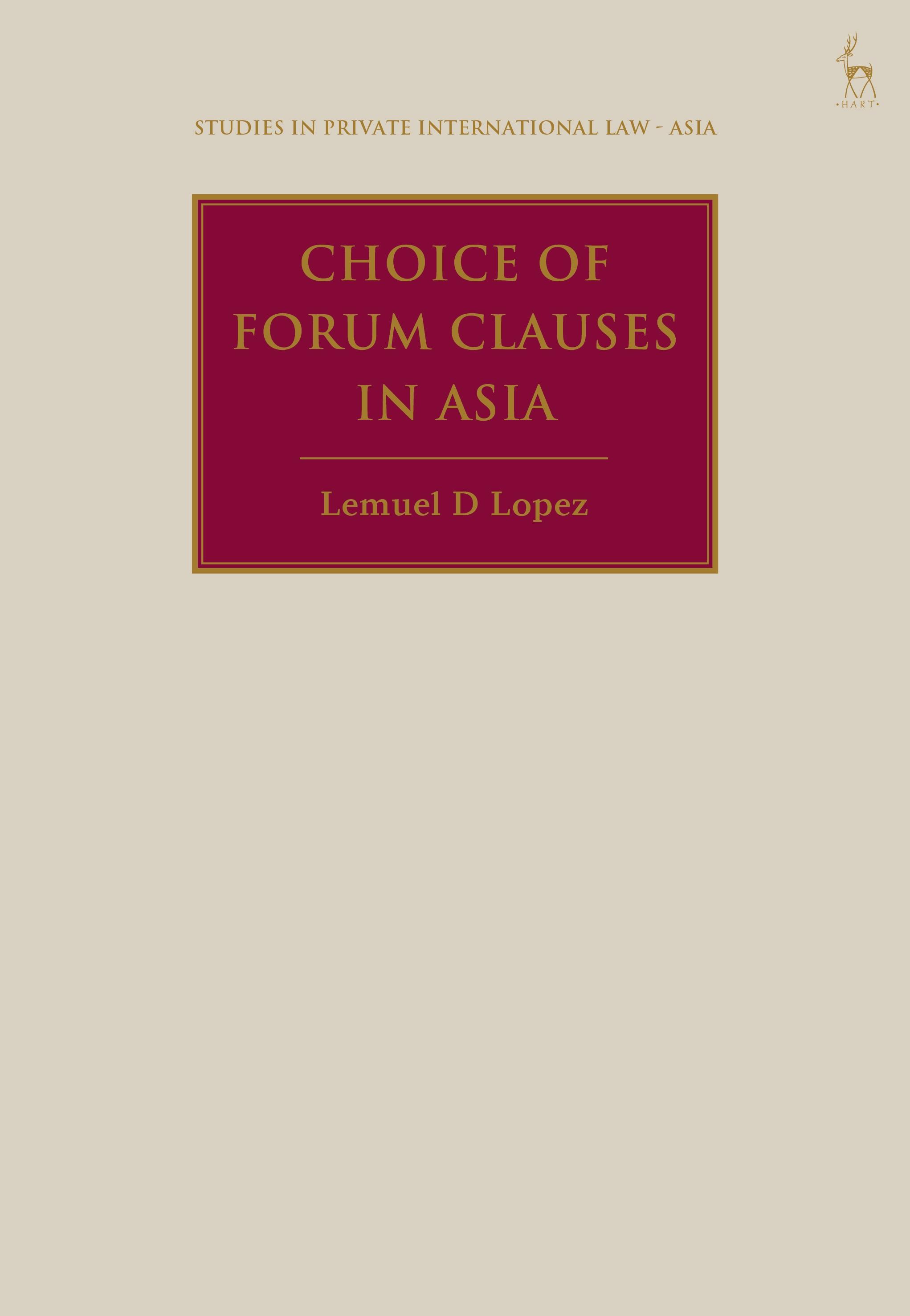
This book compares and explains the approaches taken by Asian courts when choice of forum clauses in international commercial contracts are challenged in litigation.
It examines key common law jurisdictions (Singapore, Hong Kong and Malaysia), civil law jurisdictions (China, Japan, and Indonesia), and hybrid jurisdictions (the Philippines).
With Asia's ascent in cross-border trade and investment, alongside a corresponding increase in cross-border litigation, understanding how Asian courts address choice of forum clauses in international commercial contracts has never been more critical. Employing a comparative law method, the book identifies and explains the relief and remedies used by Asian courts in enforcing choice of forum clauses, analysing how their classification as either contractual or procedural in nature shapes judicial approaches. It further distinguishes choice of forum clauses from arbitration agreements and explores their interaction with other contractual provisions. Party autonomy – as the parties' freedom to determine the contents of the choice of forum clause and the freedom to control the flow of litigation – is also critically scrutinised.
Furthermore, the book investigates the factors courts consider in resolving key choice of forum clause issues (ie, enforceability; specific relief to be granted; existence, validity, interpretation of choice of forum clauses; role of mandatory rules, public policy, and international interests) and explores the prospects for future development of this area of law in Asia.
Crucially, the book highlights the unique approaches of Asian courts, while underscoring the differences and similarities among common law, civil law, and hybrid jurisdictions.
It examines key common law jurisdictions (Singapore, Hong Kong and Malaysia), civil law jurisdictions (China, Japan, and Indonesia), and hybrid jurisdictions (the Philippines).
With Asia's ascent in cross-border trade and investment, alongside a corresponding increase in cross-border litigation, understanding how Asian courts address choice of forum clauses in international commercial contracts has never been more critical. Employing a comparative law method, the book identifies and explains the relief and remedies used by Asian courts in enforcing choice of forum clauses, analysing how their classification as either contractual or procedural in nature shapes judicial approaches. It further distinguishes choice of forum clauses from arbitration agreements and explores their interaction with other contractual provisions. Party autonomy – as the parties' freedom to determine the contents of the choice of forum clause and the freedom to control the flow of litigation – is also critically scrutinised.
Furthermore, the book investigates the factors courts consider in resolving key choice of forum clause issues (ie, enforceability; specific relief to be granted; existence, validity, interpretation of choice of forum clauses; role of mandatory rules, public policy, and international interests) and explores the prospects for future development of this area of law in Asia.
Crucially, the book highlights the unique approaches of Asian courts, while underscoring the differences and similarities among common law, civil law, and hybrid jurisdictions.
Maksa helposti kortilla, Klarnalla, Apple Paylla tai Google Paylla. Etkö ole tyytyväinen? Sinulla on aina 14 päivän palautusoikeus. Lue lisää ehdoistamme. Jos sinulla on kysyttävää, lähetä meille sähköpostia osoitteeseen hello@memmo.org.
Memmo tekee opiskelusta helpompaa – missä päin maailmaa ikinä oletkin. Meillä yhdistät kurssikirjat ja fiksut opiskelutyökalut yhteen paikkaan: tiivistelmät, visat, podcastit ja muistikortit. Ja sitten Ted, opiskelukaverisi, joka vastaa kaikkeen, mitä ikinä mietitkin. Yli 50 000 opiskelijaa opiskelee jo täällä – rakennettu auttamaan sinua oppimaan nopeammin ja stressaamaan vähemmän.