
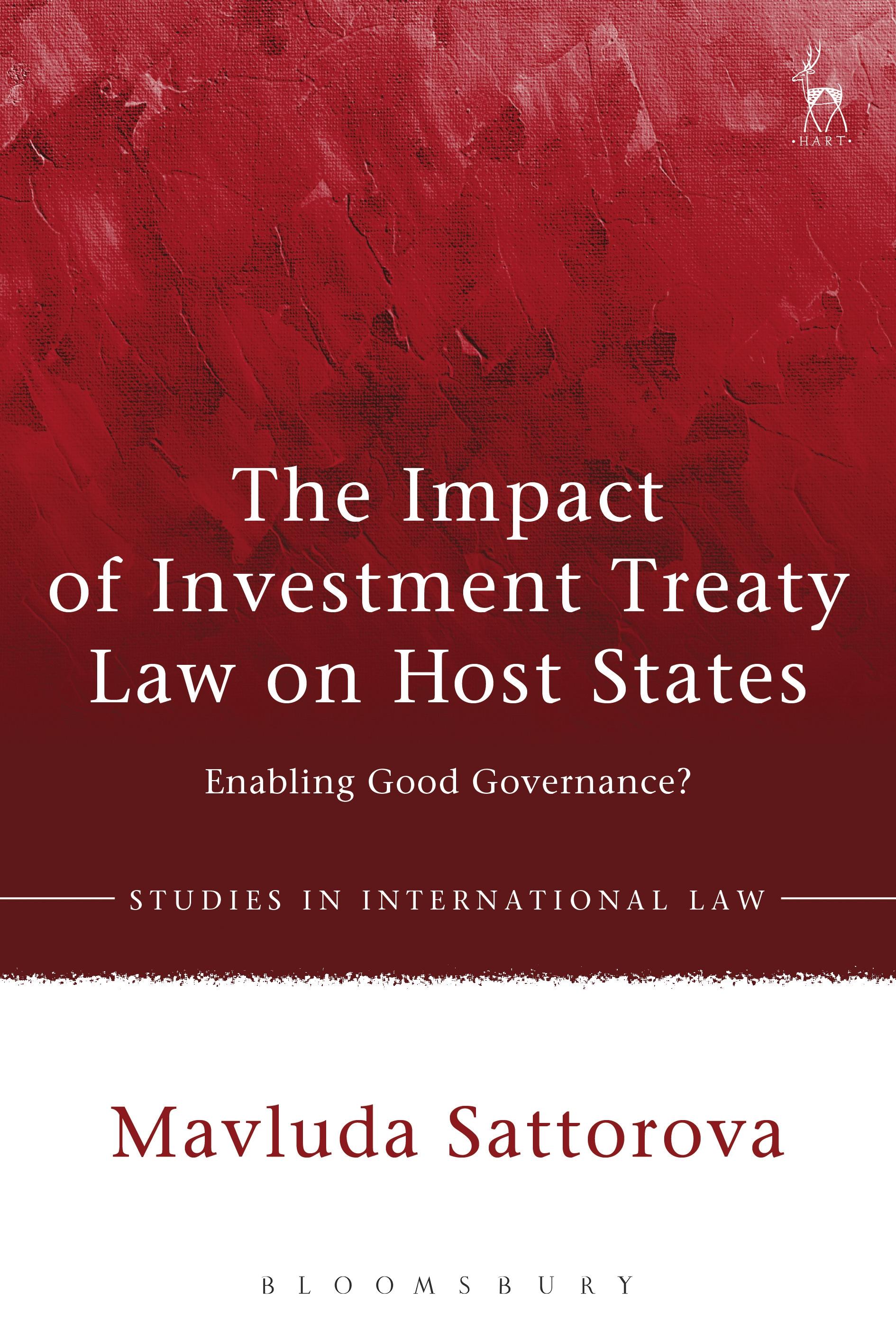
Traditionally, international investment law was conceptualised as a set of norms aiming to ensure good governance for foreign investors, in exchange for their capital and know-how. However, the more recent narratives postulate that investment treaties and investor–state arbitration can lead to better governance not just for foreign investors but also for host state communities. Investment treaty law can arguably foster good governance by holding host governments liable for a failure to ensure transparency, stability, predictability and consistency in their dealings with foreign investors.
The recent proliferation of such narratives in investment treaty practice, arbitral awards and academic literature raises questions as to their juridical, conceptual and empirical underpinnings. What has propelled good governance from a set of normative ideals to enforceable treaty standards? Does international investment law possess the necessary characteristics to inspire changes at the national level? How do host states respond to investment treaty law? The overarching objective of this monograph is to unpack existing assumptions concerning the effects of international investment law on host states. By combining doctrinal, empirical, comparative analysis and unveiling the emerging 'nationally felt' responses to international investment norms, the book aims to facilitate a more informed understanding of the present contours and the nature of the interplay between international investment norms and national realities.
The recent proliferation of such narratives in investment treaty practice, arbitral awards and academic literature raises questions as to their juridical, conceptual and empirical underpinnings. What has propelled good governance from a set of normative ideals to enforceable treaty standards? Does international investment law possess the necessary characteristics to inspire changes at the national level? How do host states respond to investment treaty law? The overarching objective of this monograph is to unpack existing assumptions concerning the effects of international investment law on host states. By combining doctrinal, empirical, comparative analysis and unveiling the emerging 'nationally felt' responses to international investment norms, the book aims to facilitate a more informed understanding of the present contours and the nature of the interplay between international investment norms and national realities.
Maksa helposti kortilla, Klarnalla, Apple Paylla tai Google Paylla. Etkö ole tyytyväinen? Sinulla on aina 14 päivän palautusoikeus. Lue lisää ehdoistamme. Jos sinulla on kysyttävää, lähetä meille sähköpostia osoitteeseen hello@memmo.org.
Memmo tekee opiskelusta helpompaa – missä päin maailmaa ikinä oletkin. Meillä yhdistät kurssikirjat ja fiksut opiskelutyökalut yhteen paikkaan: tiivistelmät, visat, podcastit ja muistikortit. Ja sitten Ted, opiskelukaverisi, joka vastaa kaikkeen, mitä ikinä mietitkin. Yli 50 000 opiskelijaa opiskelee jo täällä – rakennettu auttamaan sinua oppimaan nopeammin ja stressaamaan vähemmän.