
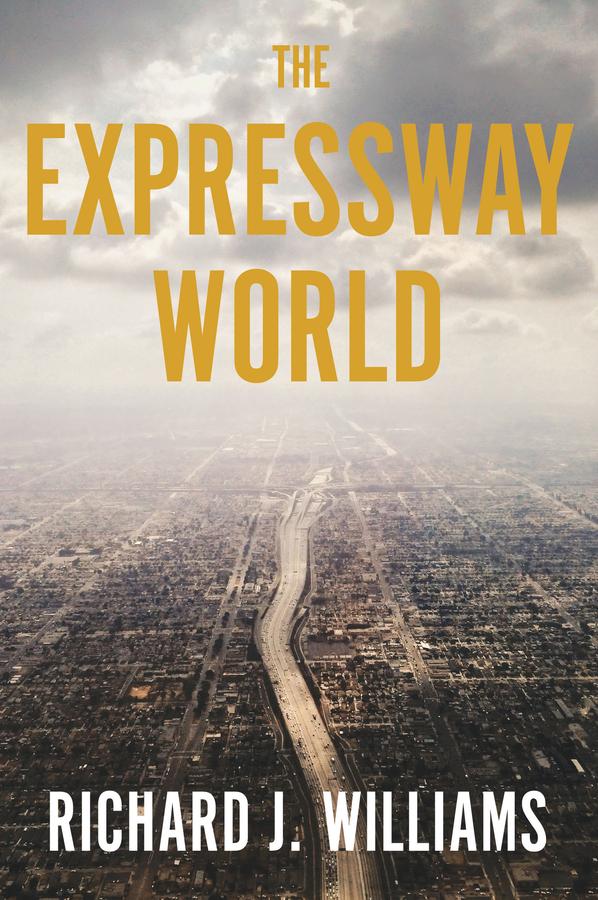
In the demonology of the contemporary city, is there anything more toxic than the expressway? Dividing neighbourhoods, depressing land values, concentrating atmospheric pollutants, the mammoth infrastructure of the expressway is now increasingly crumbling into the ground.
How did we build the expressway world in the first place? And what are we going to do now with it now?
This eye-opening book explores these questions partly through the great expressway abolitions of recent years, such as Boston’s Central Artery (buried and covered by a park) and Seoul’s Cheonggyecheon (replaced with an artificial river). But the book also uncovers the hidden stories of expressways that have become weird attractions in their own right, from London’s Westway to São Paulo’s Minhocão, celebrated in art and literature. Above all, the book proposes, counterintuitively, that we find ways to live with the expressway world and to adapt it to a different future, inspired by the many examples where people have already reinvented this challenging legacy on their own terms.
Engaging with case studies across the world and recent thinking in the environmental humanities and architectural theory, this is a thought-provoking invitation to reconsider the most maligned structures of the recent urban past.
How did we build the expressway world in the first place? And what are we going to do now with it now?
This eye-opening book explores these questions partly through the great expressway abolitions of recent years, such as Boston’s Central Artery (buried and covered by a park) and Seoul’s Cheonggyecheon (replaced with an artificial river). But the book also uncovers the hidden stories of expressways that have become weird attractions in their own right, from London’s Westway to São Paulo’s Minhocão, celebrated in art and literature. Above all, the book proposes, counterintuitively, that we find ways to live with the expressway world and to adapt it to a different future, inspired by the many examples where people have already reinvented this challenging legacy on their own terms.
Engaging with case studies across the world and recent thinking in the environmental humanities and architectural theory, this is a thought-provoking invitation to reconsider the most maligned structures of the recent urban past.
Maksa helposti kortilla, Klarnalla, Apple Paylla tai Google Paylla. Etkö ole tyytyväinen? Sinulla on aina 14 päivän palautusoikeus. Lue lisää ehdoistamme. Jos sinulla on kysyttävää, lähetä meille sähköpostia osoitteeseen hello@memmo.org.
Memmo tekee opiskelusta helpompaa – missä päin maailmaa ikinä oletkin. Meillä yhdistät kurssikirjat ja fiksut opiskelutyökalut yhteen paikkaan: tiivistelmät, visat, podcastit ja muistikortit. Ja sitten Ted, opiskelukaverisi, joka vastaa kaikkeen, mitä ikinä mietitkin. Yli 50 000 opiskelijaa opiskelee jo täällä – rakennettu auttamaan sinua oppimaan nopeammin ja stressaamaan vähemmän.
Saatat pitää myös näistä
Osta kirja0