
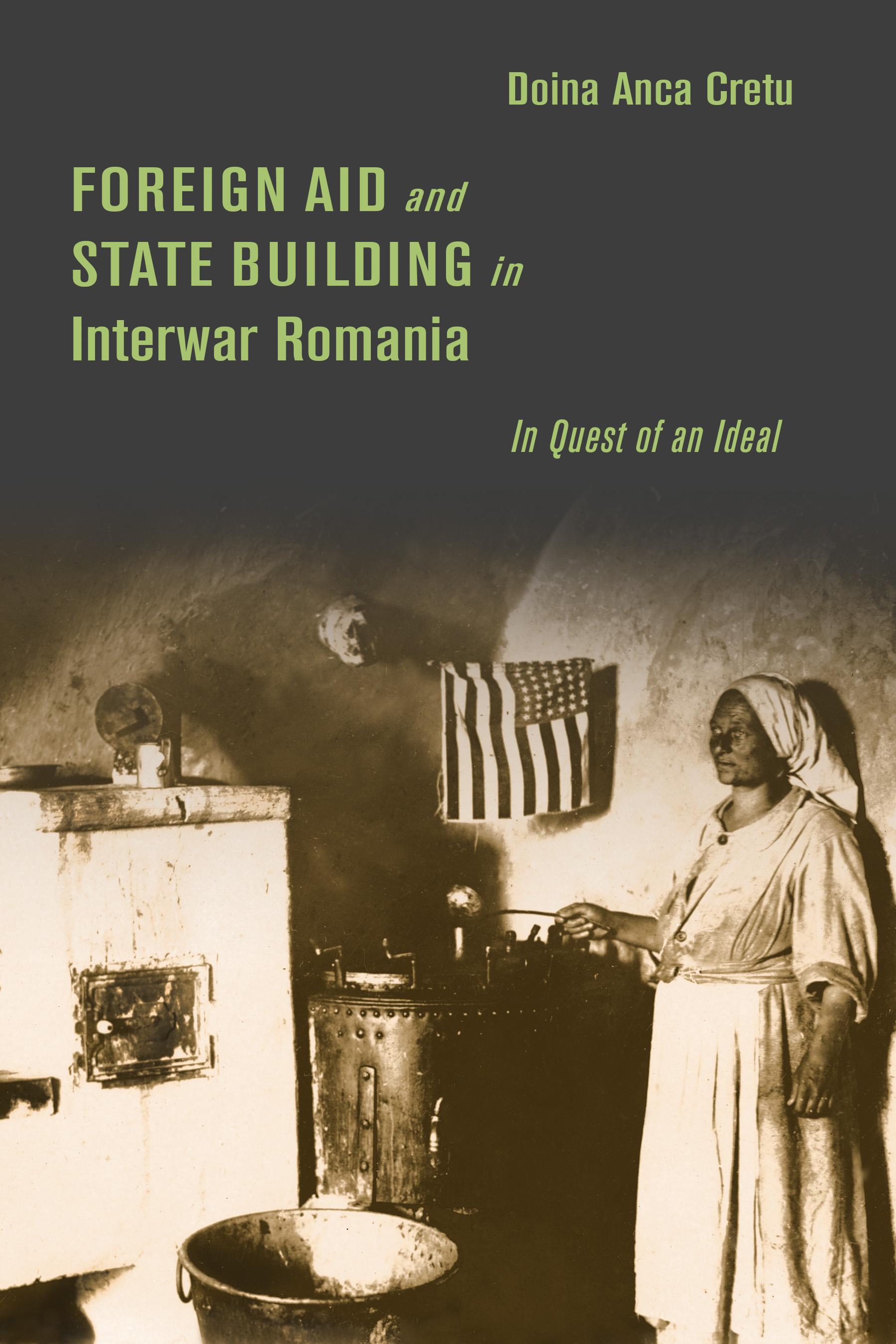
The decades following World War I were a period of political, social, and economic transformation for Central and Eastern Europe. This book considers the role of foreign aid in Romania between 1918 and 1940, offering a new history of the interrelation between state building and nongovernmental humanitarianism and philanthropy in the interwar period. Doina Anca Cretu argues that Romania was a laboratory for transnational intervention, as various state builders actively pursued, accessed, and often instrumentalized American assistance in order to accelerate reconstructive and modernizing projects after World War I.
At its core, this is a study of how local views, ambitions, and practical agendas framed trajectories of humanitarian and philanthropic endeavors in postimperial Central and Eastern Europe. Conversely, it is a reflection on the ways that architects and practitioners of foreign aid sought to transfer notions of democracy, civilization, and modernity within shifting local and national contexts in the aftermath of the war and after the collapse of European empires. At the intersection of the history of interwar Europe and international philanthropy and humanitarianism, this book's innovative and explicitly transnational approach provides a new framework for understanding the contours of European nationalism in the twentieth century.
Maksa helposti kortilla, Klarnalla, Apple Paylla tai Google Paylla. Etkö ole tyytyväinen? Sinulla on aina 14 päivän palautusoikeus. Lue lisää ehdoistamme. Jos sinulla on kysyttävää, lähetä meille sähköpostia osoitteeseen hello@memmo.org.
Memmo tekee opiskelusta helpompaa – missä päin maailmaa ikinä oletkin. Meillä yhdistät kurssikirjat ja fiksut opiskelutyökalut yhteen paikkaan: tiivistelmät, visat, podcastit ja muistikortit. Ja sitten Ted, opiskelukaverisi, joka vastaa kaikkeen, mitä ikinä mietitkin. Yli 50 000 opiskelijaa opiskelee jo täällä – rakennettu auttamaan sinua oppimaan nopeammin ja stressaamaan vähemmän.