
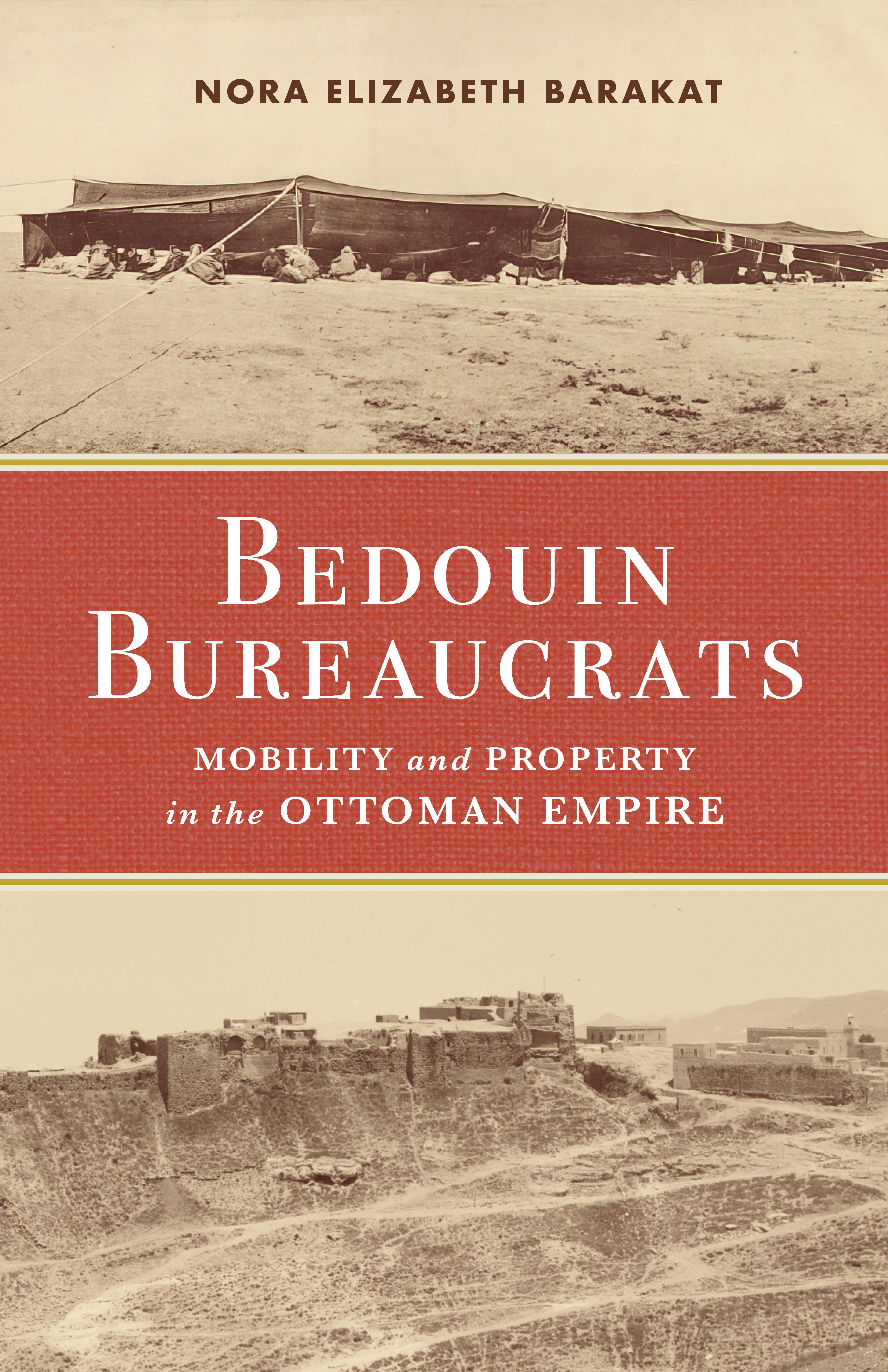
In the late nineteenth century, the Ottoman government sought to fill landscapes they legally defined as "empty." Both land and people were incorporated into territorially bounded grids of administrative law. Bedouin Bureaucrats examines how tent-dwelling, seasonally migrating Bedouin engaged in these processes of Ottoman state transformation on local, imperial, and global scales. As the "tribe" became a category of Ottoman administration, Bedouin in the Syrian interior used this category both to gain political influence and to organize community resistance to maintain control over land.
Narrating the lives of Bedouin individuals involved in Ottoman administration, Nora Elizabeth Barakat brings this population to the center of modern state-making, from their involvement in the pilgrimage administration in the eighteenth century and their performance of land registration and taxation as the Ottoman bureaucracy expanded in the nineteenth, to their eventual rejection of Ottoman attempts to reallocate the "empty land" they inhabited in the twentieth. She places the Syrian interior in a global context of imperial expansion into regions formerly deemed marginal, especially in relation to American and Russian empires. Ultimately, the book illuminates Ottoman state formation attempts within Bedouin communities and the unique trajectory of Bedouin in Syria, who maintained their control over land.
Maksa helposti kortilla, Klarnalla, Apple Paylla tai Google Paylla. Etkö ole tyytyväinen? Sinulla on aina 14 päivän palautusoikeus. Lue lisää ehdoistamme. Jos sinulla on kysyttävää, lähetä meille sähköpostia osoitteeseen hello@memmo.org.
Memmo tekee opiskelusta helpompaa – missä päin maailmaa ikinä oletkin. Meillä yhdistät kurssikirjat ja fiksut opiskelutyökalut yhteen paikkaan: tiivistelmät, visat, podcastit ja muistikortit. Ja sitten Ted, opiskelukaverisi, joka vastaa kaikkeen, mitä ikinä mietitkin. Yli 50 000 opiskelijaa opiskelee jo täällä – rakennettu auttamaan sinua oppimaan nopeammin ja stressaamaan vähemmän.