
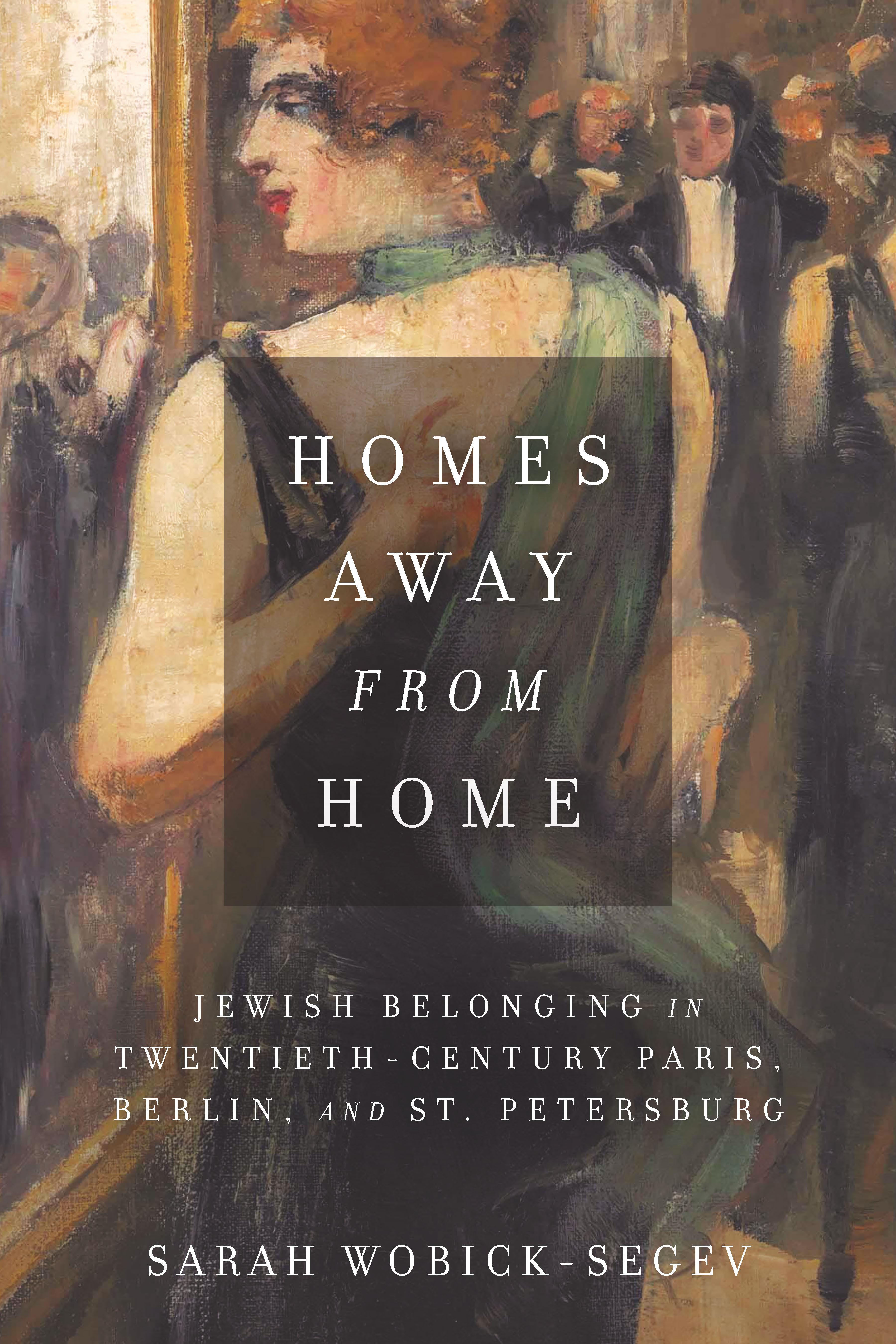
How did Jews go from lives organized by synagogues, shul, and mikvehs to lives that—if explicitly Jewish at all—were conducted in Hillel houses, JCCs, Katz's, and even Chabad? In pre-emancipation Europe, most Jews followed Jewish law most of the time, but by the turn of the twentieth century, a new secular Jewish identity had begun to take shape.
Homes Away From Home tells the story of Ashkenazi Jews as they made their way in European society in the late nineteenth and twentieth centuries, focusing on the Jewish communities of Paris, Berlin, and St. Petersburg. At a time of growing political enfranchisement for Jews within European nations, membership in the official Jewish community became increasingly optional, and Jews in turn created spaces and programs to meet new social needs. The contexts of Jewish life expanded beyond the confines of "traditional" Jewish spaces into sites of consumption and leisure, sometimes to the consternation of Jewish authorities. Sarah Wobick-Segev argues that the social practices that developed between 1890 and the 1930s—such as celebrating holydays at hotels and restaurants, or sending children to summer camp—fundamentally reshaped Jewish community, redefining and extending the boundaries of where Jewishness happened.
Maksa helposti kortilla, Klarnalla, Apple Paylla tai Google Paylla. Etkö ole tyytyväinen? Sinulla on aina 14 päivän palautusoikeus. Lue lisää ehdoistamme. Jos sinulla on kysyttävää, lähetä meille sähköpostia osoitteeseen hello@memmo.org.
Memmo tekee opiskelusta helpompaa – missä päin maailmaa ikinä oletkin. Meillä yhdistät kurssikirjat ja fiksut opiskelutyökalut yhteen paikkaan: tiivistelmät, visat, podcastit ja muistikortit. Ja sitten Ted, opiskelukaverisi, joka vastaa kaikkeen, mitä ikinä mietitkin. Yli 50 000 opiskelijaa opiskelee jo täällä – rakennettu auttamaan sinua oppimaan nopeammin ja stressaamaan vähemmän.