
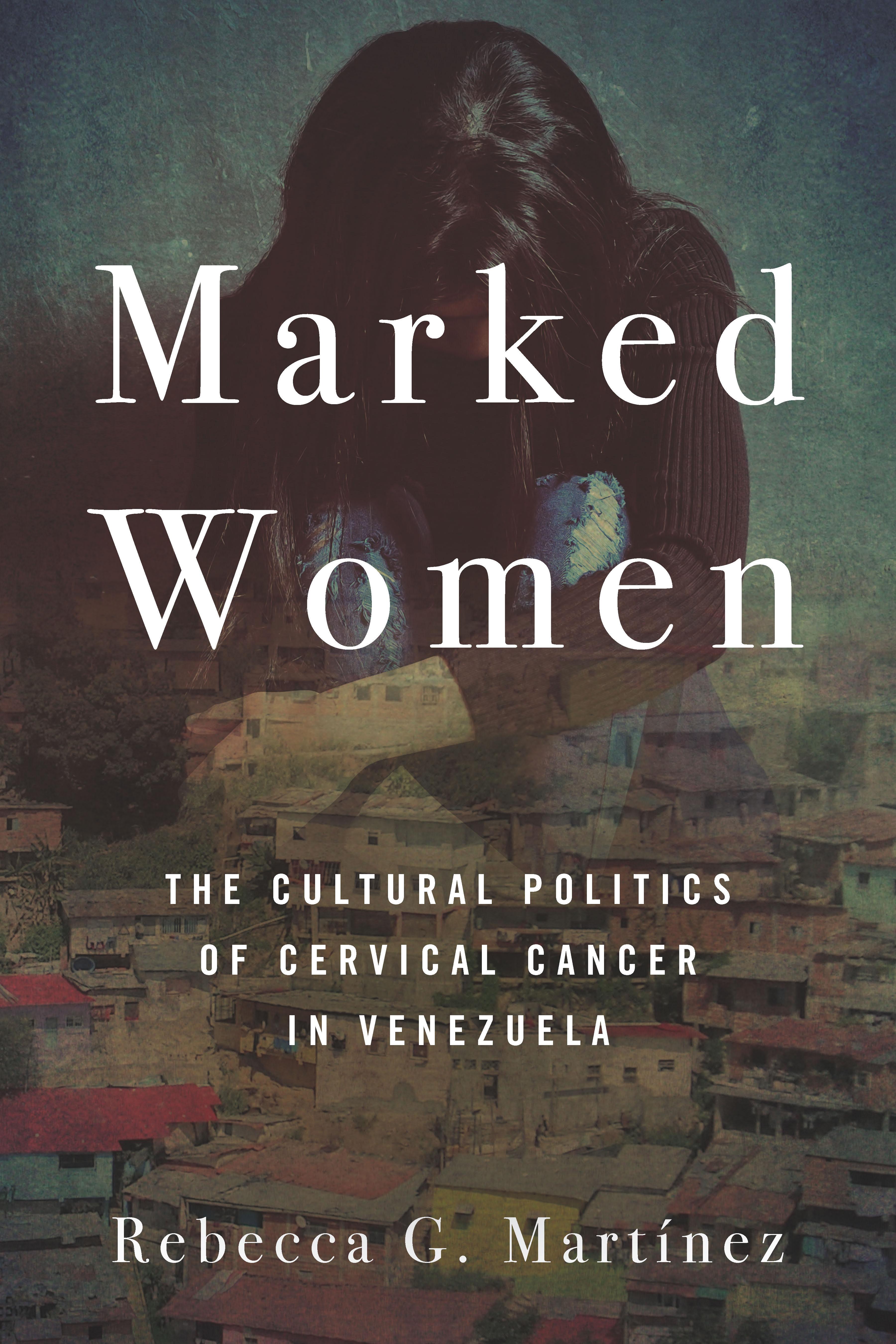
Cervical cancer is the third leading cause of death among women in Venezuela, with poor and working-class women bearing the brunt of it. Doctors and public health officials regard promiscuity and poor hygiene—coded indicators for low class, low culture, and bad morals—as risk factors for the disease.
Drawing on in-depth fieldwork conducted in two oncology hospitals in Caracas, Marked Women is an ethnography of women's experiences with cervical cancer, the doctors and nurses who treat them, and the public health officials and administrators who set up intervention programs to combat the disease. Rebecca G. Martínez contextualizes patient-doctor interactions within a historical arc of Venezuelan nationalism, modernity, neoliberalism, and Chavismo to understand the scientific, social, and political discourses surrounding the disease. The women, marked as deviant for their sexual transgressions, are not only characterized as engaging in unhygienic, uncultured, and promiscuous behaviors, but also become embodiments of these very behaviors. Ultimately, Marked Women explores how epidemiological risk is a socially, culturally, and historically embedded process—and how this enables cervical cancer to stigmatize women as socially marginal, burdens on society, and threats to the "health" of the modern nation.
Maksa helposti kortilla, Klarnalla, Apple Paylla tai Google Paylla. Etkö ole tyytyväinen? Sinulla on aina 14 päivän palautusoikeus. Lue lisää ehdoistamme. Jos sinulla on kysyttävää, lähetä meille sähköpostia osoitteeseen hello@memmo.org.
Memmo tekee opiskelusta helpompaa – missä päin maailmaa ikinä oletkin. Meillä yhdistät kurssikirjat ja fiksut opiskelutyökalut yhteen paikkaan: tiivistelmät, visat, podcastit ja muistikortit. Ja sitten Ted, opiskelukaverisi, joka vastaa kaikkeen, mitä ikinä mietitkin. Yli 50 000 opiskelijaa opiskelee jo täällä – rakennettu auttamaan sinua oppimaan nopeammin ja stressaamaan vähemmän.