
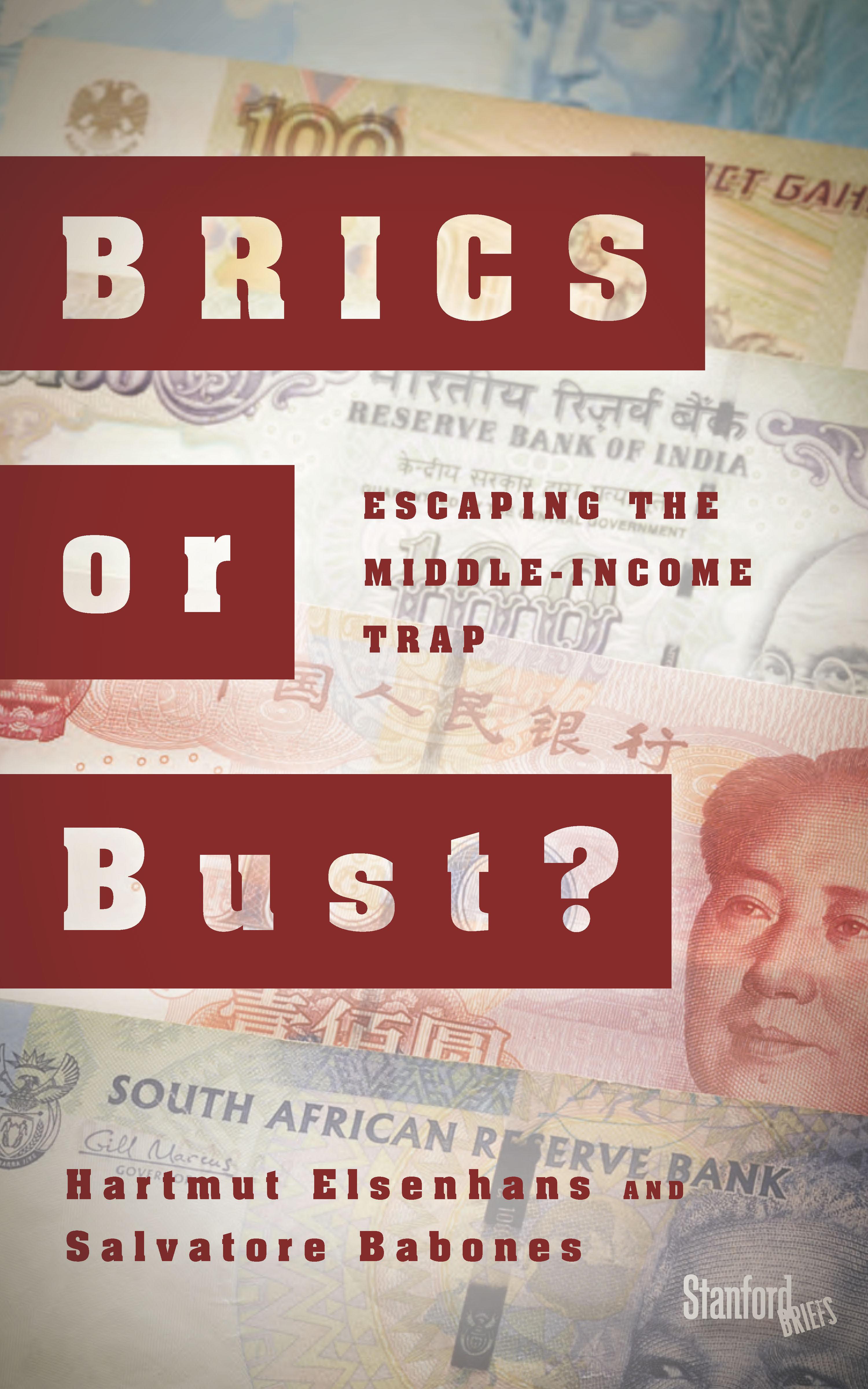
Once among the fastest developing economies, growth has slowed or stalled in Brazil, Russia, India, China, and South Africa. What policies can governments enact to jump-start the rise of these middle-income countries? Hartmut Elsenhans and Salvatore Babones argue that economic catch-up requires investment in the productivity of ordinary citizens.
Diverging from the popular narrative of increased liberalization, this book argues specifically for direct government investment in human infrastructure; policies that increase wages and the bargaining power of labor; and the strategic use of exchange rates to encourage export-led growth. These measures raise up the majority and finance future productivity by driving broader consumption and fostering investment within national borders.
Though strategies like full employment, mass education, and progressive taxation are not especially controversial, none of the BRICS have truly embraced them. Examining barriers to implementation, Elsenhans and Babones find that the main obstacle to such reforms is an absence of political will, stemming from closely guarded elite privilege under the current laws. BRICS or Bust? is a short, incisive read that underscores the need for demand-driven growth and why it has yet to be achieved.
Maksa helposti kortilla, Klarnalla, Apple Paylla tai Google Paylla. Etkö ole tyytyväinen? Sinulla on aina 14 päivän palautusoikeus. Lue lisää ehdoistamme. Jos sinulla on kysyttävää, lähetä meille sähköpostia osoitteeseen hello@memmo.org.
Memmo tekee opiskelusta helpompaa – missä päin maailmaa ikinä oletkin. Meillä yhdistät kurssikirjat ja fiksut opiskelutyökalut yhteen paikkaan: tiivistelmät, visat, podcastit ja muistikortit. Ja sitten Ted, opiskelukaverisi, joka vastaa kaikkeen, mitä ikinä mietitkin. Yli 50 000 opiskelijaa opiskelee jo täällä – rakennettu auttamaan sinua oppimaan nopeammin ja stressaamaan vähemmän.