
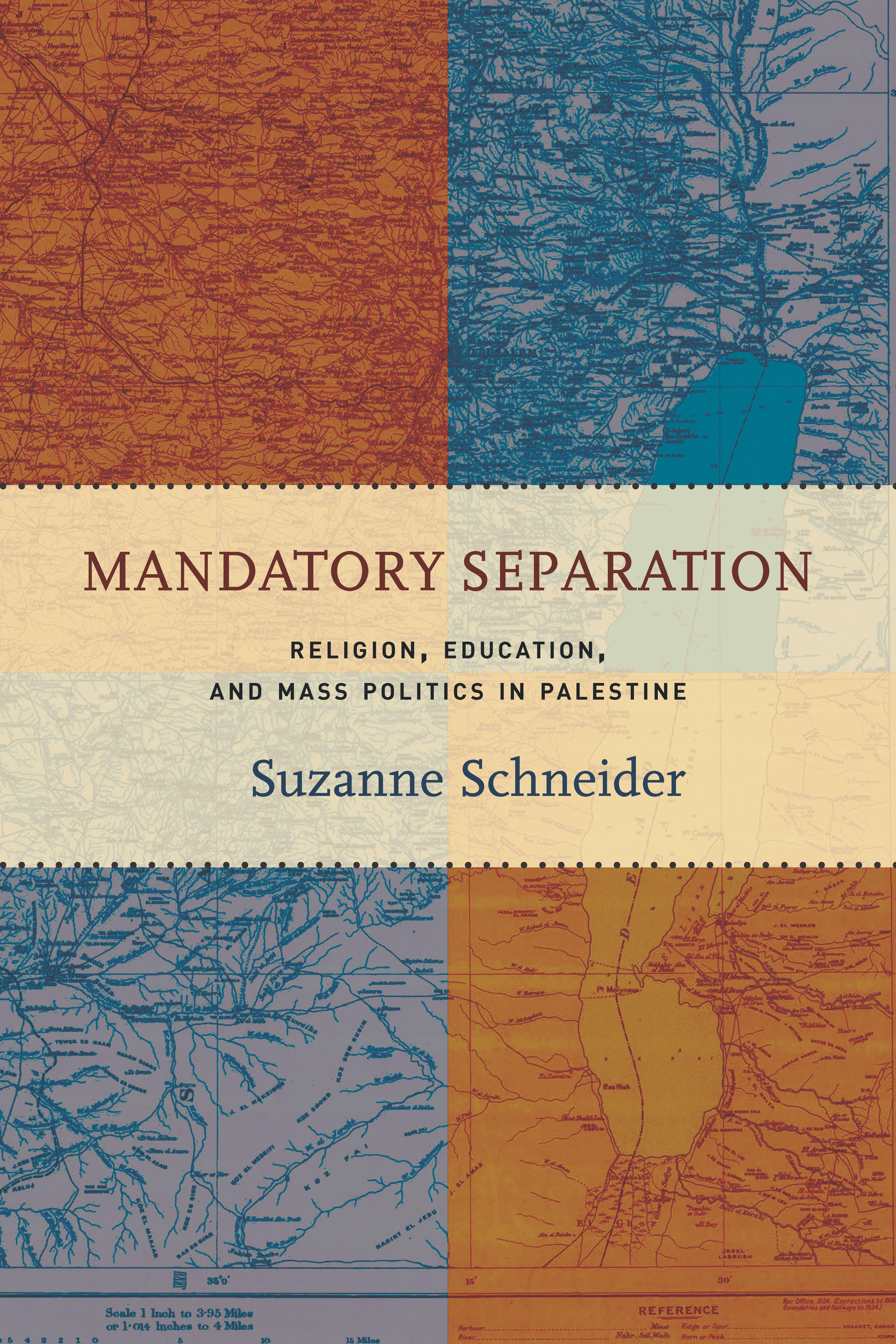
Is religion a source of political stability and social continuity, or an agent of radical change? This question, so central to contemporary conversations about religion and extremism, has generated varied responses over the last century. Taking Jewish and Islamic education as its objects of inquiry, Mandatory Separation sheds light on the contours of this debate in Palestine during the formative period of British rule, detailing how colonial, Zionist, and Palestinian-Muslim leaders developed competing views of the form and function of religious education in an age of mass politics.
Drawing from archival records, school syllabi, textbooks, newspapers, and personal narratives, Suzanne Schneider argues that the British Mandatory government supported religious education as a supposed antidote to nationalist passions at the precise moment when the administrative, pedagogic, and curricular transformation of religious schooling rendered it a vital tool for Zionist and Palestinian leaders. This study of their policies and practices illuminates the tensions, similarities, and differences among these diverse educational and political philosophies, revealing the lasting significance of these debates for thinking about religion and political identity in the modern Middle East.
Maksa helposti kortilla, Klarnalla, Apple Paylla tai Google Paylla. Etkö ole tyytyväinen? Sinulla on aina 14 päivän palautusoikeus. Lue lisää ehdoistamme. Jos sinulla on kysyttävää, lähetä meille sähköpostia osoitteeseen hello@memmo.org.
Memmo tekee opiskelusta helpompaa – missä päin maailmaa ikinä oletkin. Meillä yhdistät kurssikirjat ja fiksut opiskelutyökalut yhteen paikkaan: tiivistelmät, visat, podcastit ja muistikortit. Ja sitten Ted, opiskelukaverisi, joka vastaa kaikkeen, mitä ikinä mietitkin. Yli 50 000 opiskelijaa opiskelee jo täällä – rakennettu auttamaan sinua oppimaan nopeammin ja stressaamaan vähemmän.