
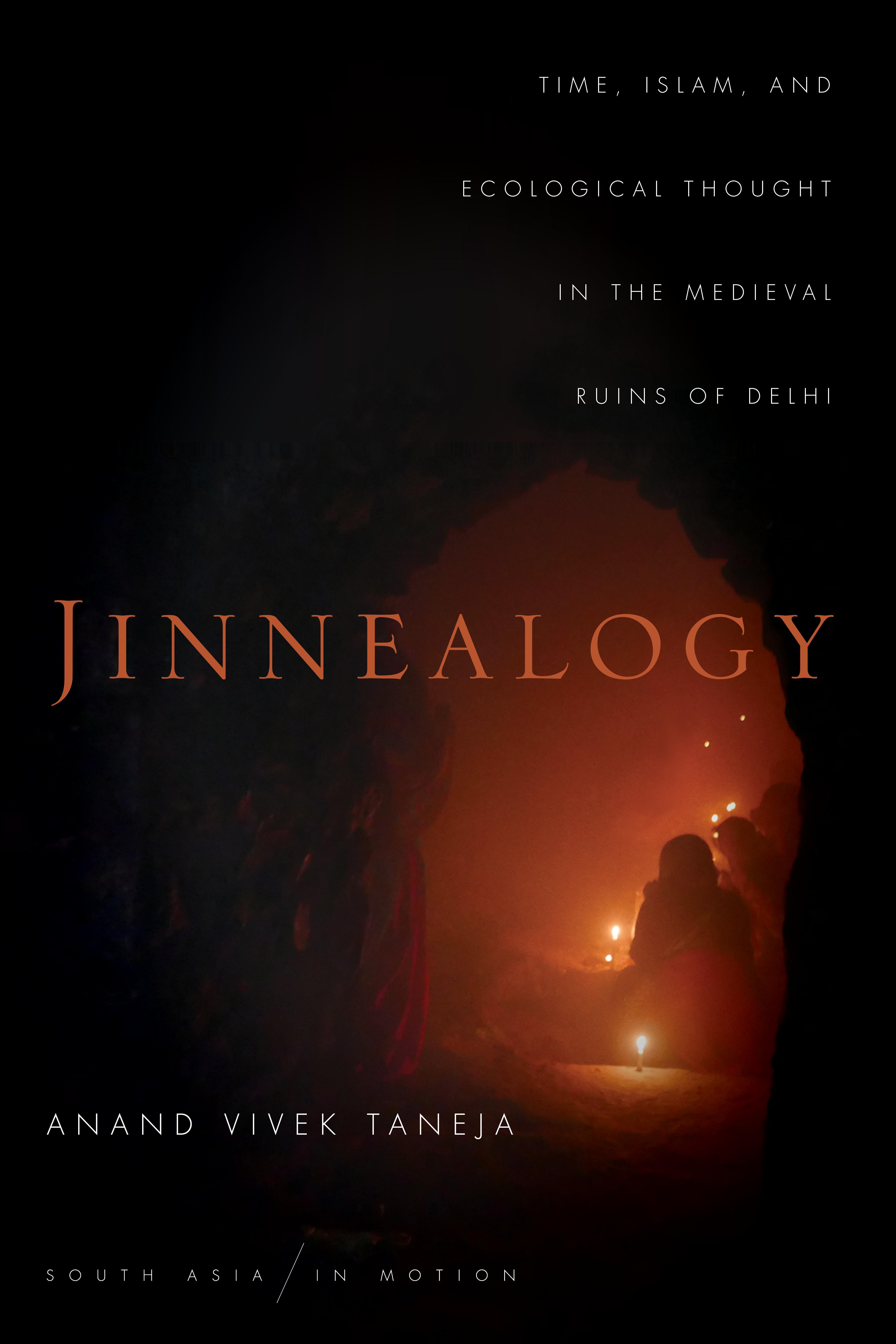
In the ruins of a medieval palace in Delhi, a unique phenomenon occurs: Indians of all castes and creeds meet to socialize and ask the spirits for help. The spirits they entreat are Islamic jinns, and they write out requests as if petitioning the state. At a time when a Hindu right wing government in India is committed to normalizing a view of the past that paints Muslims as oppressors, Anand Vivek Taneja's Jinnealogy provides a fresh vision of religion, identity, and sacrality that runs counter to state-sanctioned history.
The ruin, Firoz Shah Kotla, is an unusually democratic religious space, characterized by freewheeling theological conversations, DIY rituals, and the sanctification of animals. Taneja observes the visitors, who come mainly from the Muslim and Dalit neighborhoods of Delhi, and uses their conversations and letters to the jinns as an archive of voices so often silenced. He finds that their veneration of the jinns recalls pre-modern religious traditions in which spiritual experience was inextricably tied to ecological surroundings. In this enchanted space, Taneja encounters a form of popular Islam that is not a relic of bygone days, but a vibrant form of resistance to state repression and post-colonial visions of India.
Maksa helposti kortilla, Klarnalla, Apple Paylla tai Google Paylla. Etkö ole tyytyväinen? Sinulla on aina 14 päivän palautusoikeus. Lue lisää ehdoistamme. Jos sinulla on kysyttävää, lähetä meille sähköpostia osoitteeseen hello@memmo.org.
Memmo tekee opiskelusta helpompaa – missä päin maailmaa ikinä oletkin. Meillä yhdistät kurssikirjat ja fiksut opiskelutyökalut yhteen paikkaan: tiivistelmät, visat, podcastit ja muistikortit. Ja sitten Ted, opiskelukaverisi, joka vastaa kaikkeen, mitä ikinä mietitkin. Yli 50 000 opiskelijaa opiskelee jo täällä – rakennettu auttamaan sinua oppimaan nopeammin ja stressaamaan vähemmän.