
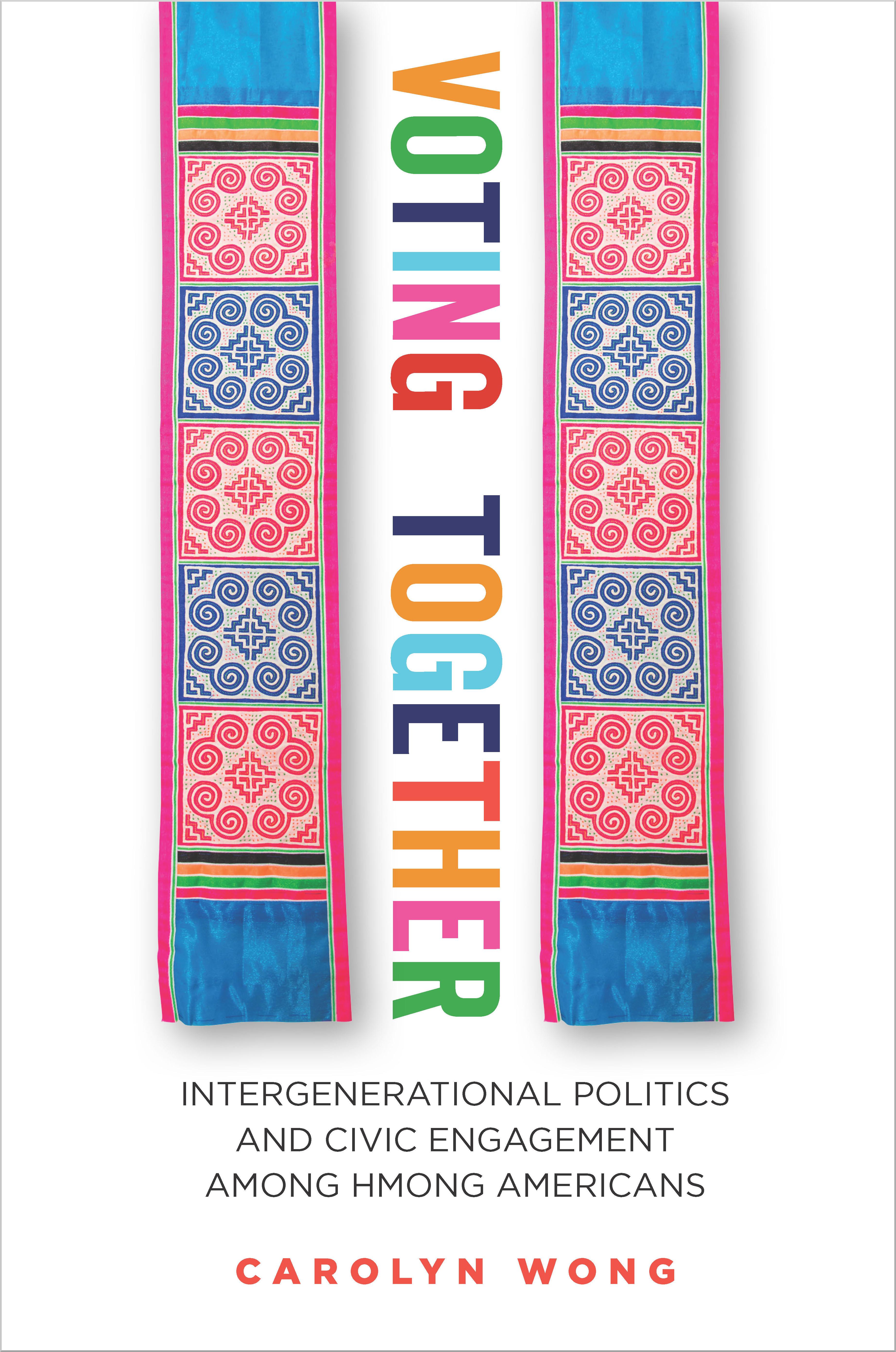
Hmong American immigrants first came to the United States as refugees of the Vietnam War. Forty years on, they have made a notable impact in American political life. They have voter participation rates higher than most other Asian American ethnic groups, and they have won seats in local and state legislative bodies. Yet the average level of education among Hmong Americans still lags behind that of the general U.S. population and high rates of poverty persist in their community, highlighting a curious disparity across the typical benchmarks of immigrant incorporation.
Carolyn Wong analyzes how the Hmong came to pursue politics as a key path to advancement and inclusion in the United States. Drawing on interviews with community leaders, refugees, and the second-generation children of immigrants, Wong shows that intergenerational mechanisms of social voting underlie the political participation of Hmong Americans. Younger Hmong Americans engage older community residents in grassroots elections and conversation about public affairs. And in turn, within families and communities, elders often transmit stories that draw connections between ancient Hmong aspirations for freedom and contemporary American egalitarian projects.
Maksa helposti kortilla, Klarnalla, Apple Paylla tai Google Paylla. Etkö ole tyytyväinen? Sinulla on aina 14 päivän palautusoikeus. Lue lisää ehdoistamme. Jos sinulla on kysyttävää, lähetä meille sähköpostia osoitteeseen hello@memmo.org.
Memmo tekee opiskelusta helpompaa – missä päin maailmaa ikinä oletkin. Meillä yhdistät kurssikirjat ja fiksut opiskelutyökalut yhteen paikkaan: tiivistelmät, visat, podcastit ja muistikortit. Ja sitten Ted, opiskelukaverisi, joka vastaa kaikkeen, mitä ikinä mietitkin. Yli 50 000 opiskelijaa opiskelee jo täällä – rakennettu auttamaan sinua oppimaan nopeammin ja stressaamaan vähemmän.