
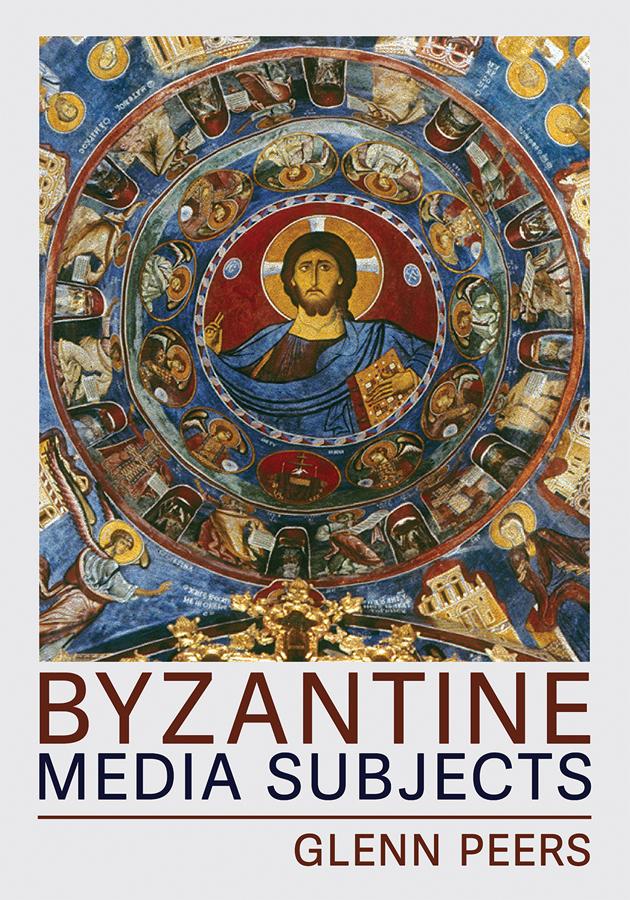
Byzantine Media Subjects invites readers into a world replete with images—icons, frescoes, and mosaics filling places of worship, politics, and community. Glenn Peers asks readers to think themselves into a world where representation reigned and humans followed, and indeed were formed. Interrogating the fundamental role of representation in the making of the Byzantine human, Peers argues that Byzantine culture was (already) posthuman.
The Byzantine experience reveals the extent to which media like icons, manuscripts, music, animals, and mirrors fundamentally determine humans. In the Byzantine world, representation as such was deeply persuasive, even coercive; it had the power to affect human relationships, produce conflict, and form self-perception. Media studies has made its subject the modern world, but this book argues for media having made historical subjects. Here, it is shown that media long ago also made Byzantine humans, defining them, molding them, mediating their relationship to time, to nature, to God, and to themselves.
Maksa helposti kortilla, Klarnalla, Apple Paylla tai Google Paylla. Etkö ole tyytyväinen? Sinulla on aina 14 päivän palautusoikeus. Lue lisää ehdoistamme. Jos sinulla on kysyttävää, lähetä meille sähköpostia osoitteeseen hello@memmo.org.
Memmo tekee opiskelusta helpompaa – missä päin maailmaa ikinä oletkin. Meillä yhdistät kurssikirjat ja fiksut opiskelutyökalut yhteen paikkaan: tiivistelmät, visat, podcastit ja muistikortit. Ja sitten Ted, opiskelukaverisi, joka vastaa kaikkeen, mitä ikinä mietitkin. Yli 50 000 opiskelijaa opiskelee jo täällä – rakennettu auttamaan sinua oppimaan nopeammin ja stressaamaan vähemmän.