
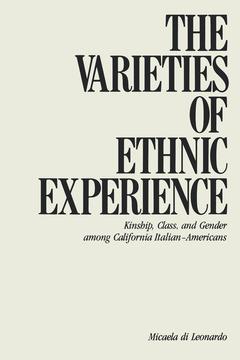
Taking a novel anthropological approach to the issue of white ethnicity in the United States, this book challenges the model of uniform ethnic family and community culture, and argues for a reconsideration of the meaning of class, kinship, and gender in America's past and present. Micaela di Leonardo focuses on a group of Italian-American families who live in Northern California and who range widely in economic status. Combining the methods of participant-observation, oral history, and economic-historical research, she breaks decisively with the tradition of viewing white ethnicity solely as Eastern, urban, and working class.
The author integrates lively narrative accounts with analysis to give a fresh interpretation of ethnic identity as both materially grounded and individually negotiated. She examines the ways in which different occupational experiences influence individual choice of family or community as the unit of collective ethnic identity, and she considers the boundaries at which individuals, particularly women, work out their personal ethnic identities. Her analysis illuminates the political meanings that the images of ethnic woman and family have taken on in popular discourse.
A provocative study that sets the reflections of a broad range of Italian-Americans in the context of their varied life histories, this book provides an informed commentary on family, class, culture, and gender in American life.
Maksa helposti kortilla, Klarnalla, Apple Paylla tai Google Paylla. Etkö ole tyytyväinen? Sinulla on aina 14 päivän palautusoikeus. Lue lisää ehdoistamme. Jos sinulla on kysyttävää, lähetä meille sähköpostia osoitteeseen hello@memmo.org.
Memmo tekee opiskelusta helpompaa – missä päin maailmaa ikinä oletkin. Meillä yhdistät kurssikirjat ja fiksut opiskelutyökalut yhteen paikkaan: tiivistelmät, visat, podcastit ja muistikortit. Ja sitten Ted, opiskelukaverisi, joka vastaa kaikkeen, mitä ikinä mietitkin. Yli 50 000 opiskelijaa opiskelee jo täällä – rakennettu auttamaan sinua oppimaan nopeammin ja stressaamaan vähemmän.