
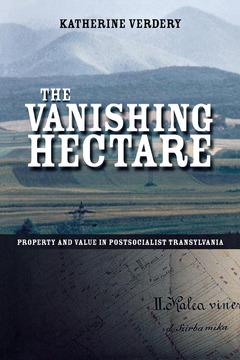
In most countries in Eastern Europe and the former Soviet Union, the fall of communism opened up the possibility for individuals to acquire land. Based on Katherine Verdery's extensive fieldwork between 1990 and 2001, The Vanishing Hectare explores the importance of land and land ownership to the people of one Transylvanian community, Aurel Vlaicu. Verdery traces how collectivized land was transformed into private property, how land was valued, what the new owners were able to do with it, and what it signified to each of the different groups vying for land rights.
Verdery tells this story about transforming socialist property forms in a global context, showing the fruitfulness of conceptualizing property as a political symbol, as a complex of social relations among people and things, and as a process of assigning value. This book is a window on rural life after socialism but it also provides a framework for assessing the neo-liberal economic policies that have prevailed elsewhere, such as in Latin America. Verdery shows how the trajectory of property after socialism was deeply conditioned by the forms property took in socialism itself; this is in contrast to the image of a "tabula rasa" that governed much thinking about post-socialist property reform.
Maksa helposti kortilla, Klarnalla, Apple Paylla tai Google Paylla. Etkö ole tyytyväinen? Sinulla on aina 14 päivän palautusoikeus. Lue lisää ehdoistamme. Jos sinulla on kysyttävää, lähetä meille sähköpostia osoitteeseen hello@memmo.org.
Memmo tekee opiskelusta helpompaa – missä päin maailmaa ikinä oletkin. Meillä yhdistät kurssikirjat ja fiksut opiskelutyökalut yhteen paikkaan: tiivistelmät, visat, podcastit ja muistikortit. Ja sitten Ted, opiskelukaverisi, joka vastaa kaikkeen, mitä ikinä mietitkin. Yli 50 000 opiskelijaa opiskelee jo täällä – rakennettu auttamaan sinua oppimaan nopeammin ja stressaamaan vähemmän.