
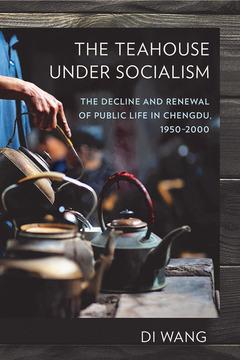
To understand a city fully, writes Di Wang, we must observe its most basic units of social life. In The Teahouse under Socialism, Wang does just that, arguing that the teahouses of Chengdu, the capital of Sichuan Province, are some of the most important public spaces—perfect sites for examining the social and economic activities of everyday Chinese.
Wang looks at the transformation of these teahouses from private businesses to collective ownership and how state policy and the proprietors' response to it changed the overall economic and social structure of the city. He uses this transformation to illuminate broader trends in China's urban public life from 1950 through the end of the Cultural Revolution and into the post-Mao reform era. In doing so, The Teahouse under Socialism charts the fluctuations in fortune of this ancient cultural institution and analyzes how it survived, and even thrived, under bleak conditions.
Throughout, Wang asks such questions as: Why and how did state power intervene in the operation of small businesses? How was "socialist entertainment" established in a local society? How did the well-known waves of political contestation and struggle in China change Chengdu's teahouses and public life? In the end, Wang argues, the answers to such questions enhance our understanding of public life and political culture in the Communist state.
Maksa helposti kortilla, Klarnalla, Apple Paylla tai Google Paylla. Etkö ole tyytyväinen? Sinulla on aina 14 päivän palautusoikeus. Lue lisää ehdoistamme. Jos sinulla on kysyttävää, lähetä meille sähköpostia osoitteeseen hello@memmo.org.
Memmo tekee opiskelusta helpompaa – missä päin maailmaa ikinä oletkin. Meillä yhdistät kurssikirjat ja fiksut opiskelutyökalut yhteen paikkaan: tiivistelmät, visat, podcastit ja muistikortit. Ja sitten Ted, opiskelukaverisi, joka vastaa kaikkeen, mitä ikinä mietitkin. Yli 50 000 opiskelijaa opiskelee jo täällä – rakennettu auttamaan sinua oppimaan nopeammin ja stressaamaan vähemmän.