
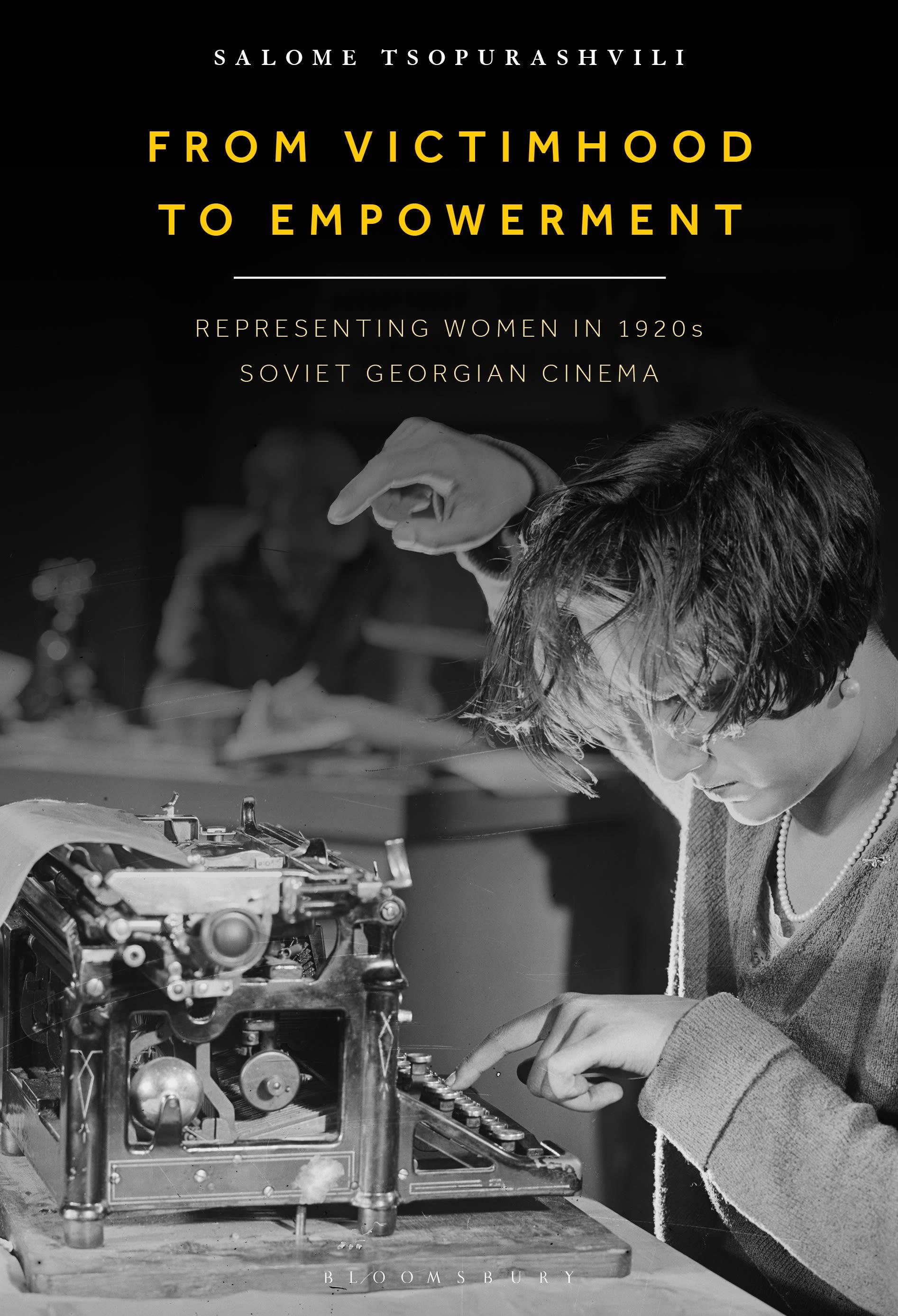
From Victimhood to Empowerment: Representing Women in 1920s Soviet Georgian Cinema brings the cinematographic works of Georgia's State Film Industry from the margins of the Soviet film studies to the centre. The book focuses on women's representations and explores how the gender roles were modified throughout the decade according to the new social and political ideals employing the discourse analysis, postcolonial perspectives and psychoanalytical feminist film theories.
Bringing together Soviet Georgia's most important films of the period, the book inspects the female body's symbolic function in the aspects of class dichotomy and ethnic hierarchies. It analyzes the construction of the 'Oriental other' by the Russian colonial imagination and its subsequent dismantling in the context of the Caucasus's de-Orientalization. It also examines the characteristics embodied by the 'heroine' and 'villain' of the new social order-the New Soviet Woman and the NEPwoman-and explores women's transformation within the revolutionary setting during the decade.
In the light of Bolsheviks' preoccupation and endeavour to improve 'woman question', the book surveys to what extent women's screen images were emancipated and whatthe functional meaning of this emancipation was in the given context; how the new ideals of the New Soviet woman were inscribed in the period's films and how these ideals were combined with Georgian nationality.
Bringing together Soviet Georgia's most important films of the period, the book inspects the female body's symbolic function in the aspects of class dichotomy and ethnic hierarchies. It analyzes the construction of the 'Oriental other' by the Russian colonial imagination and its subsequent dismantling in the context of the Caucasus's de-Orientalization. It also examines the characteristics embodied by the 'heroine' and 'villain' of the new social order-the New Soviet Woman and the NEPwoman-and explores women's transformation within the revolutionary setting during the decade.
In the light of Bolsheviks' preoccupation and endeavour to improve 'woman question', the book surveys to what extent women's screen images were emancipated and whatthe functional meaning of this emancipation was in the given context; how the new ideals of the New Soviet woman were inscribed in the period's films and how these ideals were combined with Georgian nationality.
Sivuja: 264
Kategoria: Kultur-, Genus- & Postkoloniala studier
e-ISBN: 9781501383168
Lähetyspaino: 1.2 kg
Toimitusaika: 1-2 päivää
Maksa helposti kortilla, Klarnalla, Apple Paylla tai Google Paylla. Etkö ole tyytyväinen? Sinulla on aina 14 päivän palautusoikeus. Lue lisää ehdoistamme. Jos sinulla on kysyttävää, lähetä meille sähköpostia osoitteeseen hello@memmo.org.
Memmo tekee opiskelusta helpompaa – missä päin maailmaa ikinä oletkin. Meillä yhdistät kurssikirjat ja fiksut opiskelutyökalut yhteen paikkaan: tiivistelmät, visat, podcastit ja muistikortit. Ja sitten Ted, opiskelukaverisi, joka vastaa kaikkeen, mitä ikinä mietitkin. Yli 50 000 opiskelijaa opiskelee jo täällä – rakennettu auttamaan sinua oppimaan nopeammin ja stressaamaan vähemmän.