
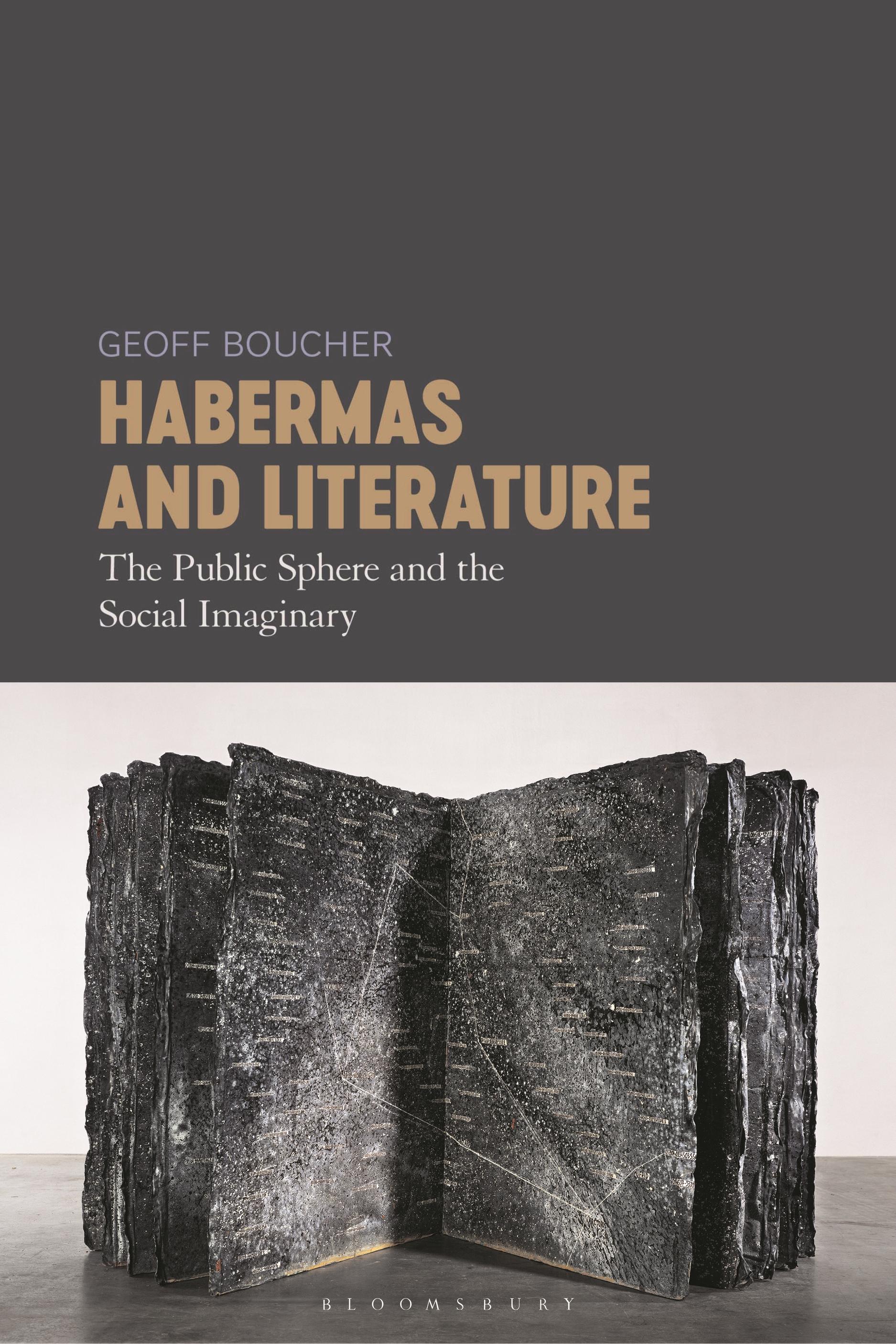
Although Habermas has written about the cultural role of literature and about literary works, he has not systematically articulated a literary-critical method as a component of either communicative reason or post-metaphysical thinking. Habermas and Literature brings Habermasian concepts and categories into contact with aesthetic and cultural theories in and around the Frankfurt School, and beyond. Its central claim is that Habermas' contribution to literary and cultural criticism is the concept of literary rationality and the notion that literature performs a key role in the formation of the modern social imaginary.
Habermas and Literature maintains that literary works have “two faces” – discursive intervention in the public sphere and personal integration of imaginative disclosures – that depend upon two modalities of literary reception: critique and identification. It develops the resulting literary theory through detailed discussion of the theories advanced by Habermas, followed in each case by synthetic and reconstructive argumentation that brings the framework of communicative reason into dialogue with literary methods, aesthetic theories and psychoanalytic categories. It does so through close engagement with debates around aesthetic rationality, world disclosure, social imaginaries, post-secular society and the utopian demand for happiness articulated by artworks. In the process, the Habermasian position is critically reconstructed when necessary, with reference to psychoanalytic and literary theories, and tested, in relation to demanding fiction and popular works.
Habermas and Literature maintains that literary works have “two faces” – discursive intervention in the public sphere and personal integration of imaginative disclosures – that depend upon two modalities of literary reception: critique and identification. It develops the resulting literary theory through detailed discussion of the theories advanced by Habermas, followed in each case by synthetic and reconstructive argumentation that brings the framework of communicative reason into dialogue with literary methods, aesthetic theories and psychoanalytic categories. It does so through close engagement with debates around aesthetic rationality, world disclosure, social imaginaries, post-secular society and the utopian demand for happiness articulated by artworks. In the process, the Habermasian position is critically reconstructed when necessary, with reference to psychoanalytic and literary theories, and tested, in relation to demanding fiction and popular works.
Sivuja: 288
Kategoria: Litteraturvetenskap & Teori
e-ISBN: 9781501344060
Lähetyspaino: 1.2 kg
Toimitusaika: 1-2 päivää
Maksa helposti kortilla, Klarnalla, Apple Paylla tai Google Paylla. Etkö ole tyytyväinen? Sinulla on aina 14 päivän palautusoikeus. Lue lisää ehdoistamme. Jos sinulla on kysyttävää, lähetä meille sähköpostia osoitteeseen hello@memmo.org.
Memmo tekee opiskelusta helpompaa – missä päin maailmaa ikinä oletkin. Meillä yhdistät kurssikirjat ja fiksut opiskelutyökalut yhteen paikkaan: tiivistelmät, visat, podcastit ja muistikortit. Ja sitten Ted, opiskelukaverisi, joka vastaa kaikkeen, mitä ikinä mietitkin. Yli 50 000 opiskelijaa opiskelee jo täällä – rakennettu auttamaan sinua oppimaan nopeammin ja stressaamaan vähemmän.