
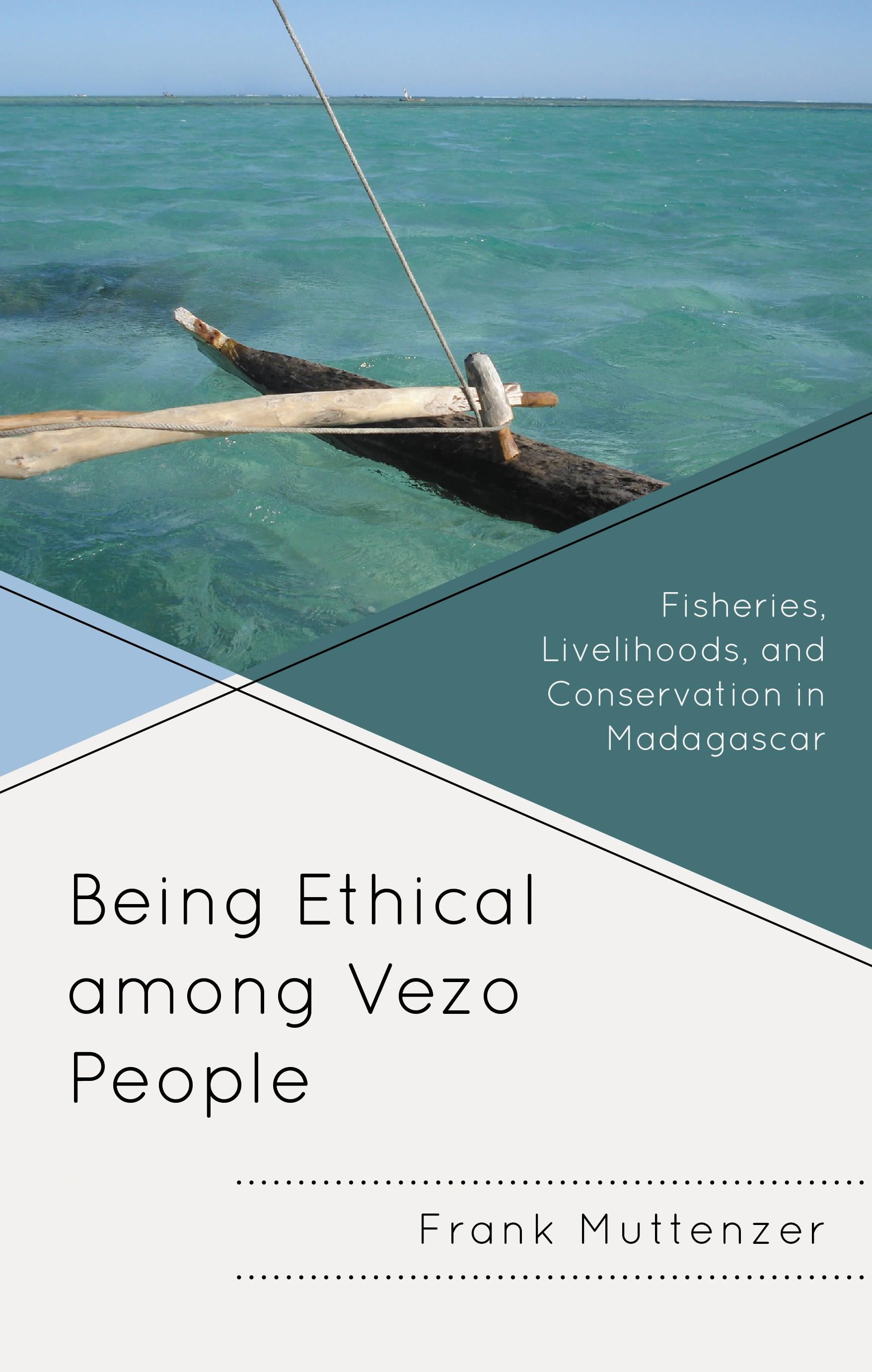
Being Ethical among Vezo People analyzes environmental change in reef ecosystems of southwest Madagascar and the impacts of global fishery markets on Vezo people’s well-being. The ethnography describes fishers’ changing perceptions of the physical environment in the context of livelihood and ritual practices and discusses their shared understandings of how Vezo persons should live.
Under new marine protected area regulations, each village is responsible for managing its octopus fishery with a temporal closure. Frank Muttenzer argues that locals’ willingness to improve well-being does not commit them to a conservationist ethos. To cope with resource depletion Vezo people migrate to distant resource-rich marine frontiers, target fast growing species, and perform rituals that purport to affect their luck in fishing and marine foraging. But they doubt conservationists’ opinion that coral reef ecosystems can be managed for sustainable yield.
The richly documented, elegantly theorized, and fresh ethnographic outlook on the Vezo addresses current issues in marine ecology and conservation, small-scale fisheries, and the semiotics of rural livelihoods and human well-being, particularly its expression in ritual. It will be of strong interest to environmental scientists, Madagascar specialists, and anthropology generalists alike; particularly those who are interested in what the modes of engagement with the environment of foraging peoples can teach us about the human condition at large, and the nature-culture debates in particular.
Under new marine protected area regulations, each village is responsible for managing its octopus fishery with a temporal closure. Frank Muttenzer argues that locals’ willingness to improve well-being does not commit them to a conservationist ethos. To cope with resource depletion Vezo people migrate to distant resource-rich marine frontiers, target fast growing species, and perform rituals that purport to affect their luck in fishing and marine foraging. But they doubt conservationists’ opinion that coral reef ecosystems can be managed for sustainable yield.
The richly documented, elegantly theorized, and fresh ethnographic outlook on the Vezo addresses current issues in marine ecology and conservation, small-scale fisheries, and the semiotics of rural livelihoods and human well-being, particularly its expression in ritual. It will be of strong interest to environmental scientists, Madagascar specialists, and anthropology generalists alike; particularly those who are interested in what the modes of engagement with the environment of foraging peoples can teach us about the human condition at large, and the nature-culture debates in particular.
Sivuja: 254
Kategoria: Samhällsvetenskap
e-ISBN: 9781498593304
Lähetyspaino: 1.2 kg
Toimitusaika: 1-2 päivää
Maksa helposti kortilla, Klarnalla, Apple Paylla tai Google Paylla. Etkö ole tyytyväinen? Sinulla on aina 14 päivän palautusoikeus. Lue lisää ehdoistamme. Jos sinulla on kysyttävää, lähetä meille sähköpostia osoitteeseen hello@memmo.org.
Memmo tekee opiskelusta helpompaa – missä päin maailmaa ikinä oletkin. Meillä yhdistät kurssikirjat ja fiksut opiskelutyökalut yhteen paikkaan: tiivistelmät, visat, podcastit ja muistikortit. Ja sitten Ted, opiskelukaverisi, joka vastaa kaikkeen, mitä ikinä mietitkin. Yli 50 000 opiskelijaa opiskelee jo täällä – rakennettu auttamaan sinua oppimaan nopeammin ja stressaamaan vähemmän.