
**Short-listed for the Society for Army Historical Research UK's Templer Medal Best First Book Prize, 2020**
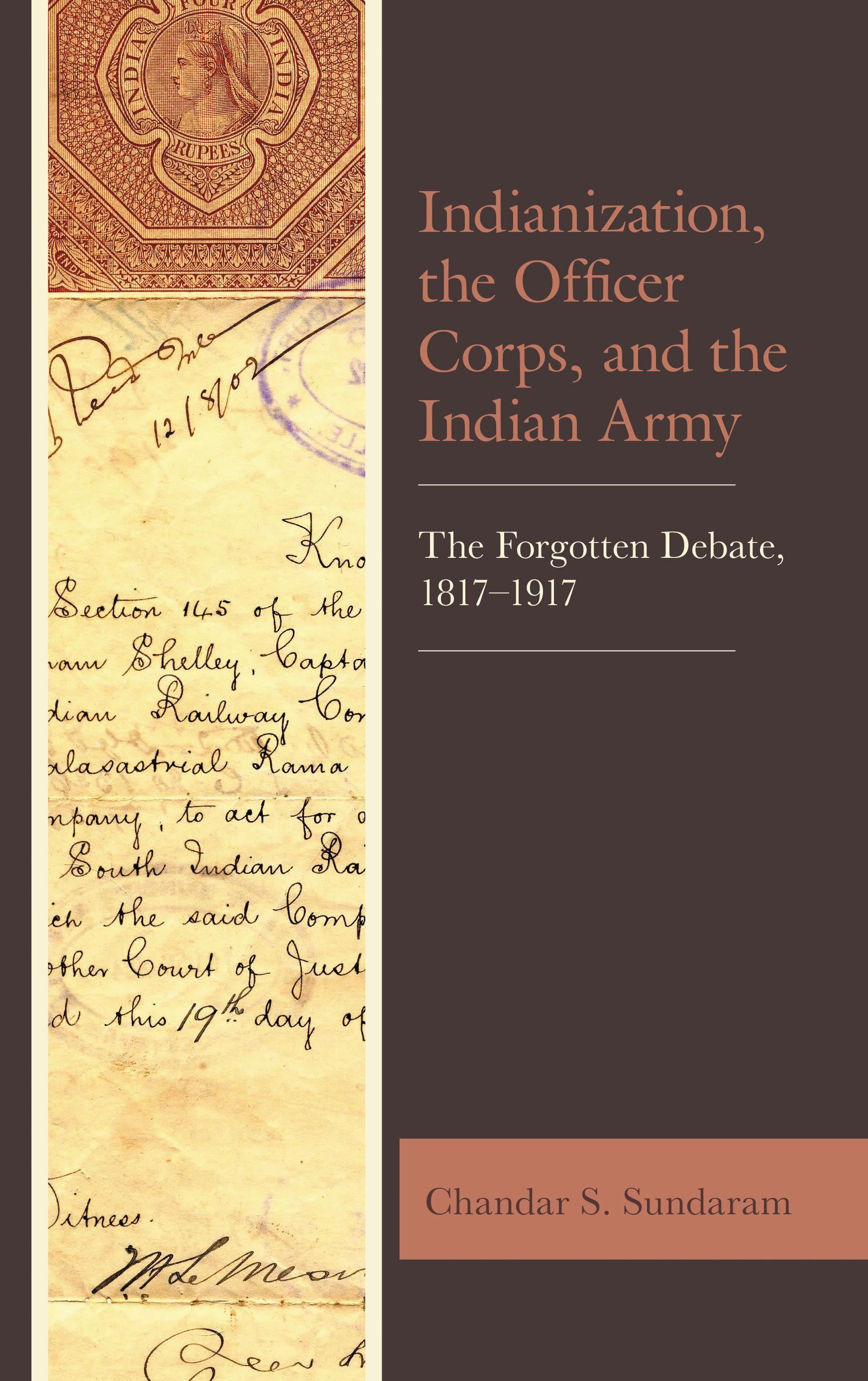
In the Indian Army of the British Raj, the officer corps was “reserved for the governing race”— in other words, the British. Only in 1917, a mere thirty years before India won its freedom, did the Raj permit Indians into the Army’s officer corps, thus slowly beginning its Indianization. Yet it is often forgotten that this decision was the culmination of a hundred-year-long debate. Based on meticulous archival research in Britain and India, Indianization, the Officer Corps, and the Indian Army breaks new ground by offering readers the first detailed account of this generally forgotten debate. It traces the myriad schemes and counter-schemes the debate generated, the complex twists and turns it took, and how it engaged both British policymakers anxious to maintain control as well as nationalist Indian leaders agitating for greater self-government. This work also offers insights into the martial races concept, the 1857 uprising, and the impact of Anglo-Indian ideology upon the Indian Army. Clearly written and carefully argued, it is an original and defining contribution to military/war and society history, the history of colonial India and its army, the history of British empire, the history of racism, and civil-military relations.
In the Indian Army of the British Raj, the officer corps was “reserved for the governing race”— in other words, the British. Only in 1917, a mere thirty years before India won its freedom, did the Raj permit Indians into the Army’s officer corps, thus slowly beginning its Indianization. Yet it is often forgotten that this decision was the culmination of a hundred-year-long debate. Based on meticulous archival research in Britain and India, Indianization, the Officer Corps, and the Indian Army breaks new ground by offering readers the first detailed account of this generally forgotten debate. It traces the myriad schemes and counter-schemes the debate generated, the complex twists and turns it took, and how it engaged both British policymakers anxious to maintain control as well as nationalist Indian leaders agitating for greater self-government. This work also offers insights into the martial races concept, the 1857 uprising, and the impact of Anglo-Indian ideology upon the Indian Army. Clearly written and carefully argued, it is an original and defining contribution to military/war and society history, the history of colonial India and its army, the history of British empire, the history of racism, and civil-military relations.
Maksa helposti kortilla, Klarnalla, Apple Paylla tai Google Paylla. Etkö ole tyytyväinen? Sinulla on aina 14 päivän palautusoikeus. Lue lisää ehdoistamme. Jos sinulla on kysyttävää, lähetä meille sähköpostia osoitteeseen hello@memmo.org.
Memmo tekee opiskelusta helpompaa – missä päin maailmaa ikinä oletkin. Meillä yhdistät kurssikirjat ja fiksut opiskelutyökalut yhteen paikkaan: tiivistelmät, visat, podcastit ja muistikortit. Ja sitten Ted, opiskelukaverisi, joka vastaa kaikkeen, mitä ikinä mietitkin. Yli 50 000 opiskelijaa opiskelee jo täällä – rakennettu auttamaan sinua oppimaan nopeammin ja stressaamaan vähemmän.