
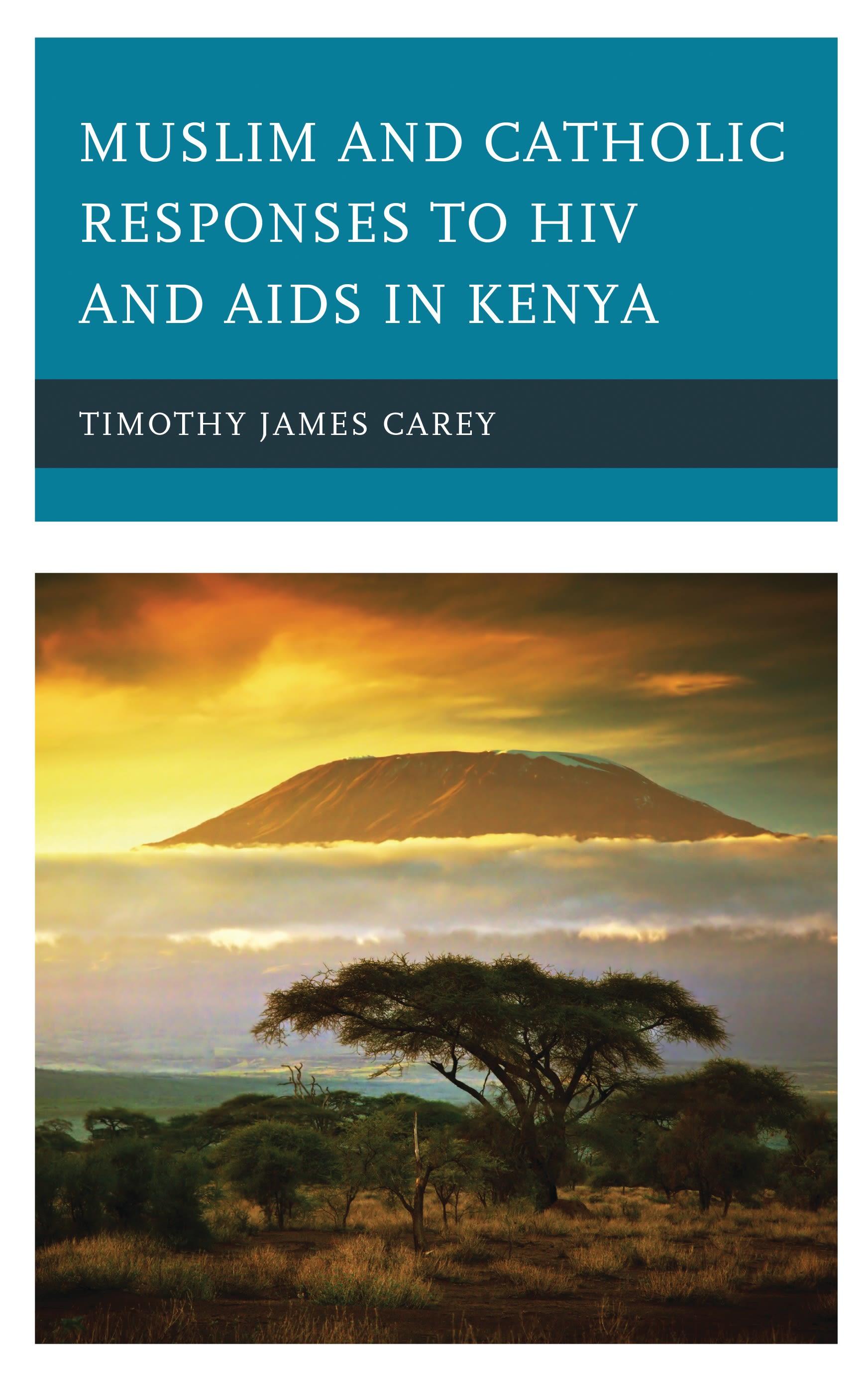
In the capital city of Nairobi, Kenya, African Catholic and Sunni Muslim leaders addressing HIV and AIDS are faced with a unique challenge. On the one hand, they are called to attend to the spiritual wellbeing of the infected individual; on the other hand, they are increasingly charged with serving as the stewards of the physical bodies of those negatively affected by such a physiologically debilitating and social stigmatized disease through certain identifiable interreligious traditions common to both faiths.
This book explores this development firsthand. While conducting fieldwork in Nairobi, Carey interviewed Muslim and Catholic leaders working in three areas—HIV and AIDS prevention, education, and destigmatization. These recorded observations and accounts help to illustrate that religious officials from within African Catholicism and Sunni Islam are attempting to provide the common inter-religious traditions of mercy, hospitality, and justice in a holistic manner for those living with the virus in the city.
The research that produced this book involved six weeks of fieldwork during the summer of 2014 to help fill in the interstices between anthropological, sociological, and ethnographic accounts provided by other leading academics in their respective fields. It presumed that religious traditions in Kenya exhibit a susceptibility to culture and context and a practical openness to its social environment which then affords this particular work a unique theological perspective in its attempt to identify and analyze patterns of social behavior and religious organization.
This book explores this development firsthand. While conducting fieldwork in Nairobi, Carey interviewed Muslim and Catholic leaders working in three areas—HIV and AIDS prevention, education, and destigmatization. These recorded observations and accounts help to illustrate that religious officials from within African Catholicism and Sunni Islam are attempting to provide the common inter-religious traditions of mercy, hospitality, and justice in a holistic manner for those living with the virus in the city.
The research that produced this book involved six weeks of fieldwork during the summer of 2014 to help fill in the interstices between anthropological, sociological, and ethnographic accounts provided by other leading academics in their respective fields. It presumed that religious traditions in Kenya exhibit a susceptibility to culture and context and a practical openness to its social environment which then affords this particular work a unique theological perspective in its attempt to identify and analyze patterns of social behavior and religious organization.
Maksa helposti kortilla, Klarnalla, Apple Paylla tai Google Paylla. Etkö ole tyytyväinen? Sinulla on aina 14 päivän palautusoikeus. Lue lisää ehdoistamme. Jos sinulla on kysyttävää, lähetä meille sähköpostia osoitteeseen hello@memmo.org.
Memmo tekee opiskelusta helpompaa – missä päin maailmaa ikinä oletkin. Meillä yhdistät kurssikirjat ja fiksut opiskelutyökalut yhteen paikkaan: tiivistelmät, visat, podcastit ja muistikortit. Ja sitten Ted, opiskelukaverisi, joka vastaa kaikkeen, mitä ikinä mietitkin. Yli 50 000 opiskelijaa opiskelee jo täällä – rakennettu auttamaan sinua oppimaan nopeammin ja stressaamaan vähemmän.