
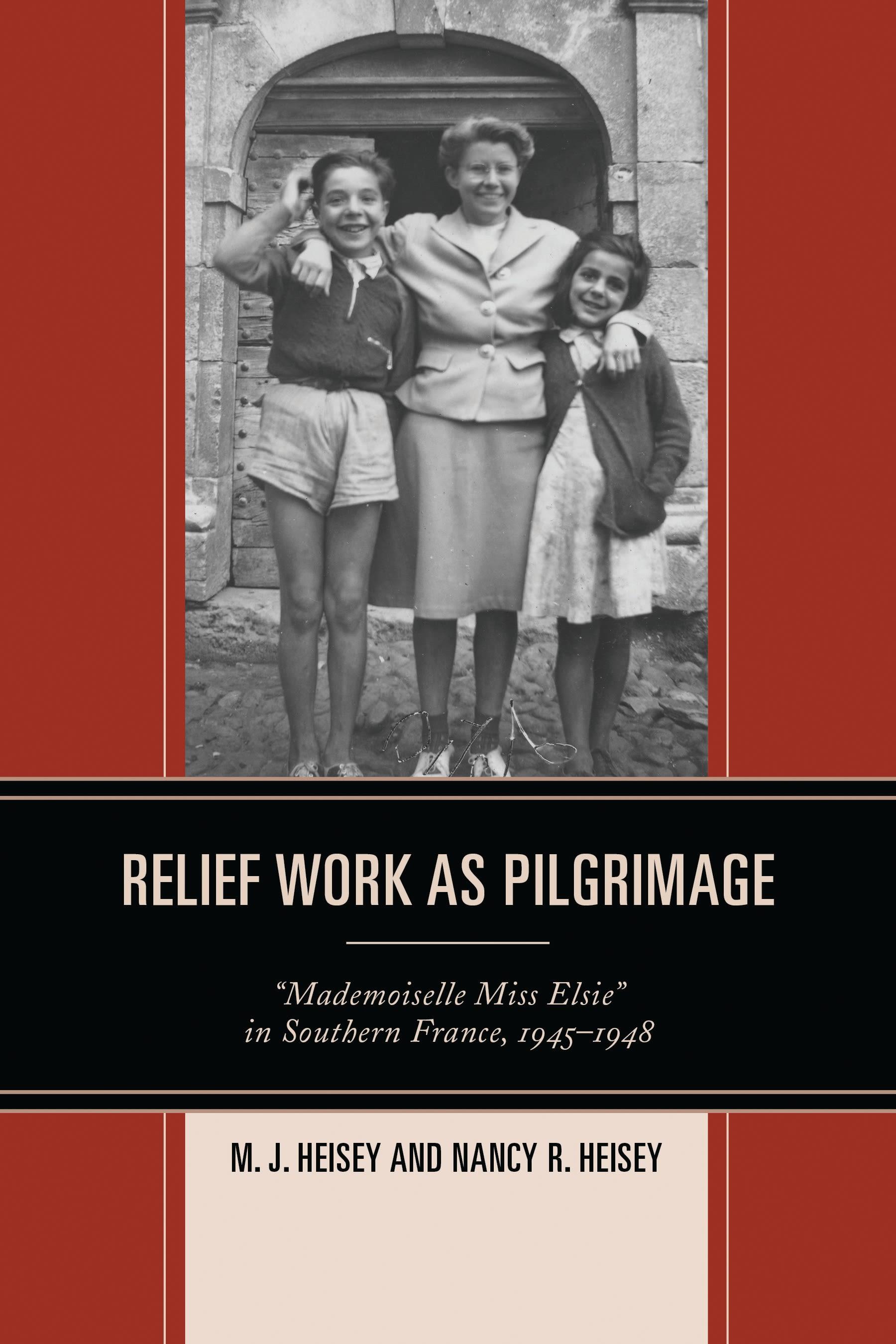
In 1945, Elsie C. Bechtel left her Ohio home for the tiny French commune of Lavercantière, where for nearly three years she cared for children displaced by the ravages of war. Bechtel’s diary, photographs, and letters home to her family provide the central texts of this study. From 1945 to 1948, she recorded her encounters with French society and her immersion in the spare beauty of rural France. From her daily work came passionate musings on the emotional world of human interactions and evocative observations of the American, Spanish, and French co-workers and children with whom she lived.
As a volunteer with the Mennonite Central Committee (MCC), Bechtel was part of the war relief efforts of pacifist Quakers and Anabaptists. In France between 1939 and 1948, MCC programs distributed clothing, shared food, and sheltered refugee children. The work began in the far southwest of France but, by the time Bechtel completed her service in 1948, had moved to the Alsace region, where French Mennonites clustered.
Bechtel’s writings emerged from a religious context that included much travel, but little reflection on the significance of that travel. Yet, religiously motivated travel—an old tradition in southwest France—shaped Bechtel’s life. The authors consider her experiences in terms of religious pilgrimage and reflect on their own pilgrimage to Lavercantière in 2006 for a reunion with some of the people marked by the broader effort that Bechtel joined.
To understand Bechtel’s experiences and prose, the authors examined archival sources on MCC’s work in France, gathered oral and written narratives of participants, and researched other war relief efforts in Spain and France in the 1930s and 1940s. Drawing on these various contexts, the authors establish the complexity, but also the significance, of pilgrimage and humanitarian service as intercultural exchanges.
As a volunteer with the Mennonite Central Committee (MCC), Bechtel was part of the war relief efforts of pacifist Quakers and Anabaptists. In France between 1939 and 1948, MCC programs distributed clothing, shared food, and sheltered refugee children. The work began in the far southwest of France but, by the time Bechtel completed her service in 1948, had moved to the Alsace region, where French Mennonites clustered.
Bechtel’s writings emerged from a religious context that included much travel, but little reflection on the significance of that travel. Yet, religiously motivated travel—an old tradition in southwest France—shaped Bechtel’s life. The authors consider her experiences in terms of religious pilgrimage and reflect on their own pilgrimage to Lavercantière in 2006 for a reunion with some of the people marked by the broader effort that Bechtel joined.
To understand Bechtel’s experiences and prose, the authors examined archival sources on MCC’s work in France, gathered oral and written narratives of participants, and researched other war relief efforts in Spain and France in the 1930s and 1940s. Drawing on these various contexts, the authors establish the complexity, but also the significance, of pilgrimage and humanitarian service as intercultural exchanges.
Sivuja: 194
Kategoria: Religion & Teologi
e-ISBN: 9781498508117
Lähetyspaino: 1.2 kg
Toimitusaika: 1-2 päivää
Maksa helposti kortilla, Klarnalla, Apple Paylla tai Google Paylla. Etkö ole tyytyväinen? Sinulla on aina 14 päivän palautusoikeus. Lue lisää ehdoistamme. Jos sinulla on kysyttävää, lähetä meille sähköpostia osoitteeseen hello@memmo.org.
Memmo tekee opiskelusta helpompaa – missä päin maailmaa ikinä oletkin. Meillä yhdistät kurssikirjat ja fiksut opiskelutyökalut yhteen paikkaan: tiivistelmät, visat, podcastit ja muistikortit. Ja sitten Ted, opiskelukaverisi, joka vastaa kaikkeen, mitä ikinä mietitkin. Yli 50 000 opiskelijaa opiskelee jo täällä – rakennettu auttamaan sinua oppimaan nopeammin ja stressaamaan vähemmän.