
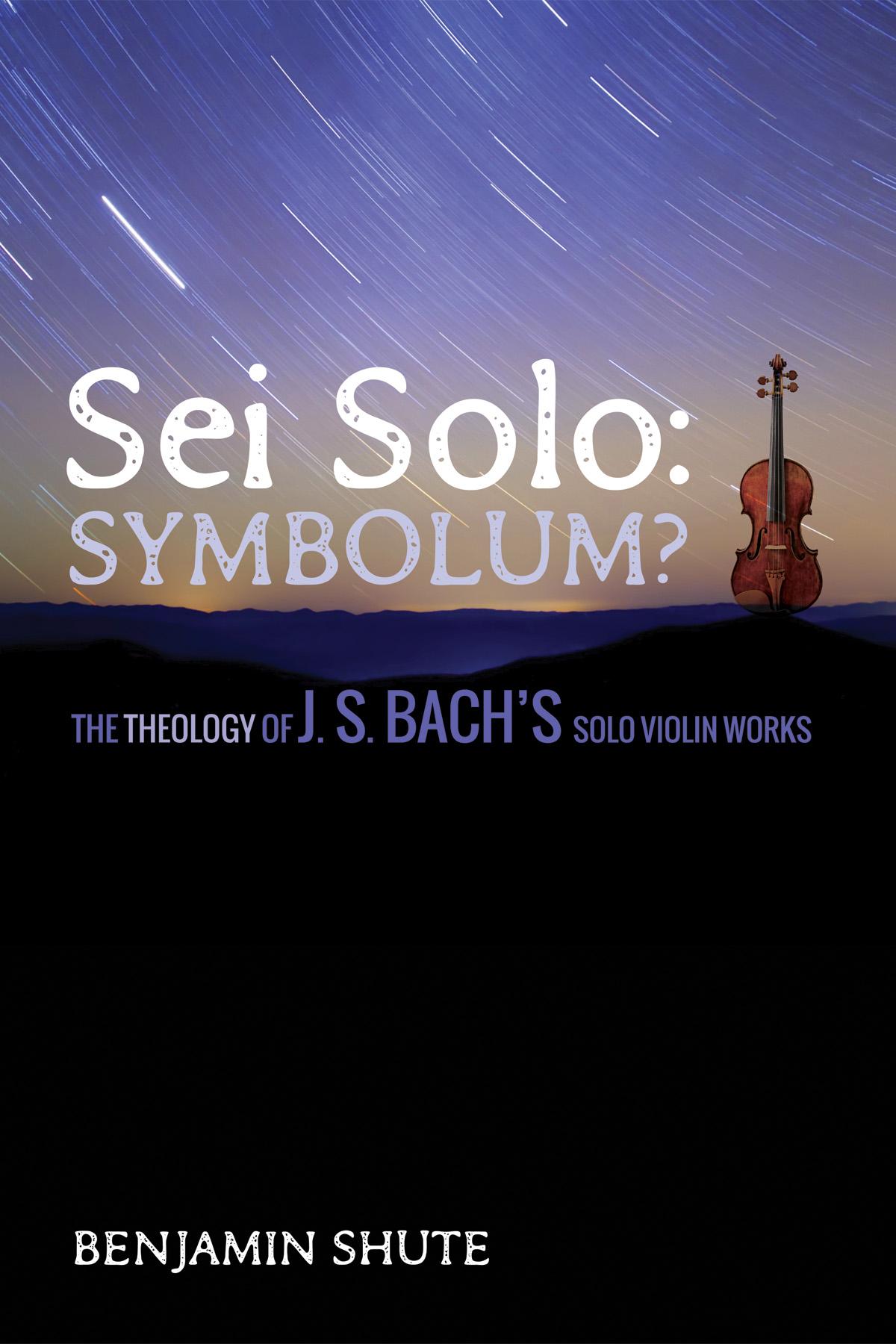
One of the jewels in the crown of Johann Sebastian Bach's sacred music is its use of astonishingly subtle and complex allegorical and representational devices. But when similar devices appear in the context of one of Bach's untexted, secular, instrumental collections such as the Six Solos (sonatas and partitas) for violin, the question arises whether he might be intending to embed discernible theological significances there as well, thus infusing the secular with the sacred. Such designs would be reasonably plausible within Bach's musical, cultural, and religious context.
Shute carefully investigates the extent to which musical features of the Six Solos that seem to invite theological parallels might indeed have been intended to do so. Although the precise extent of Bach's intentions cannot be ascertained with certainty, the degree of correlation among strong potential signifiers would seem to suggest that they, and many other features of the Six Solos, are best explained as the product of extensive theological-allegorical designs on Bach's part, like those evident in his texted vocal music.
Maksa helposti kortilla, Klarnalla, Apple Paylla tai Google Paylla. Etkö ole tyytyväinen? Sinulla on aina 14 päivän palautusoikeus. Lue lisää ehdoistamme. Jos sinulla on kysyttävää, lähetä meille sähköpostia osoitteeseen hello@memmo.org.
Memmo tekee opiskelusta helpompaa – missä päin maailmaa ikinä oletkin. Meillä yhdistät kurssikirjat ja fiksut opiskelutyökalut yhteen paikkaan: tiivistelmät, visat, podcastit ja muistikortit. Ja sitten Ted, opiskelukaverisi, joka vastaa kaikkeen, mitä ikinä mietitkin. Yli 50 000 opiskelijaa opiskelee jo täällä – rakennettu auttamaan sinua oppimaan nopeammin ja stressaamaan vähemmän.
Saatat pitää myös näistä
Osta kirja0