
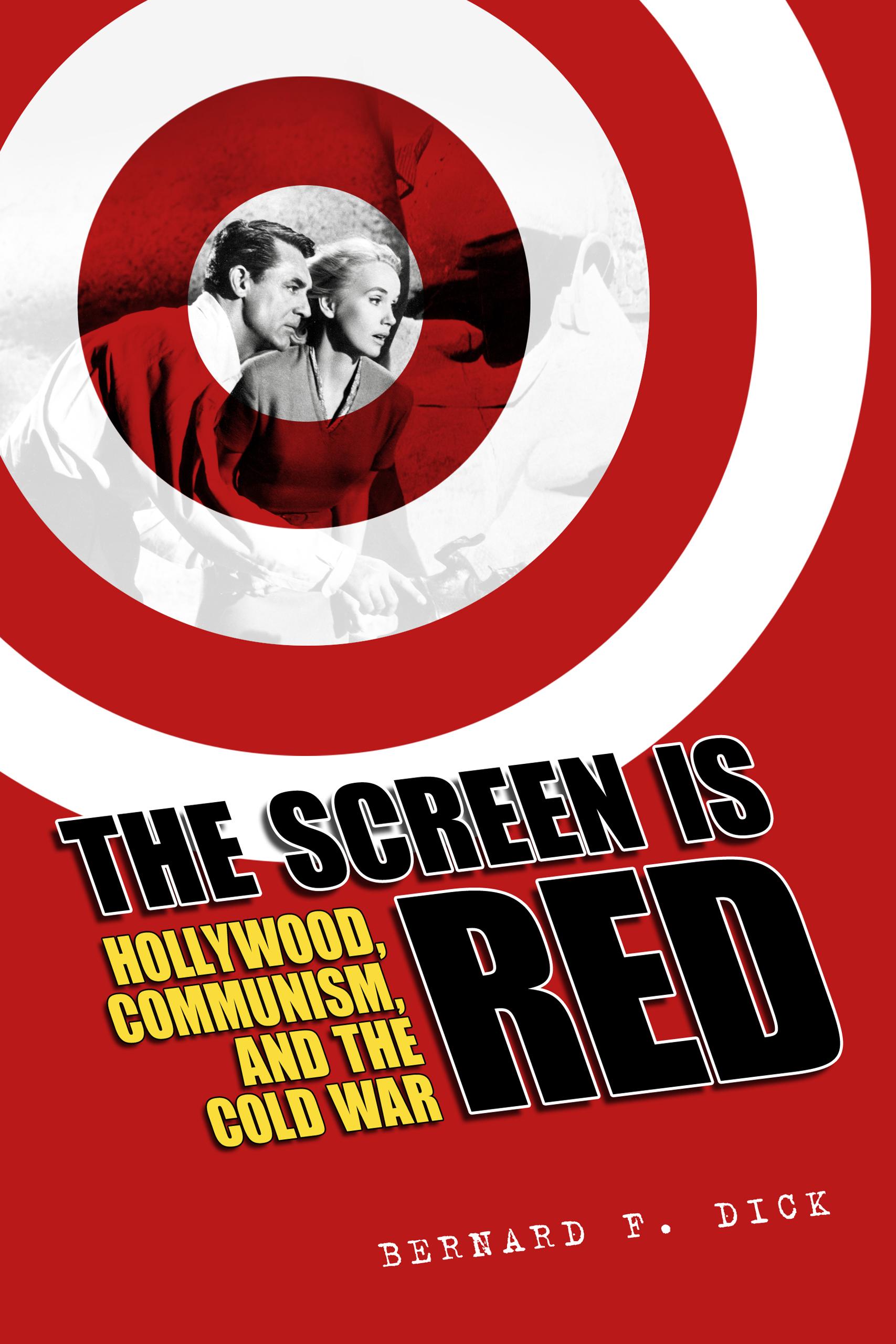
The Screen Is Red portrays Hollywood's ambivalence toward the former Soviet Union before, during, and after the Cold War. In the 1930s, communism combated its alter ego, fascism, yet both threatened to undermine the capitalist system, the movie industry's foundational core value. Hollywood portrayed fascism as the greater threat and communism as an aberration embraced by young idealists unaware of its dark side. In Ninotchka, all a female commissar needs is a trip to Paris to convert her to capitalism and the luxuries it can offer.
The scenario changed when Nazi Germany invaded the Soviet Union in 1941, making Russia a short-lived ally. The Soviets were quickly glorified in such films as Song of Russia, The North Star, Mission to Moscow, Days of Glory, and Counter-Attack. But once the Iron Curtain fell on Eastern Europe, the scenario changed again. America was now swarming with Soviet agents attempting to steal some crucial piece of microfilm. On screen, the atomic detonations in the Southwest produced mutations in ants, locusts, and spiders, and revived long-dead monsters from their watery tombs. The movies did not blame the atom bomb specifically but showed what horrors might result in addition to the iconic mushroom cloud.
Through the lens of Hollywood, a nuclear war might leave a handful of survivors (Five), none (On the Beach, Dr. Strangelove), or cities in ruins (Fail-Safe). Today the threat is no longer the Soviet Union, but international terrorism. Author Bernard F. Dick argues, however, that the Soviet Union has not lost its appeal, as evident from the popular and critically acclaimed television series The Americans. More than eighty years later, the screen is still red.
The scenario changed when Nazi Germany invaded the Soviet Union in 1941, making Russia a short-lived ally. The Soviets were quickly glorified in such films as Song of Russia, The North Star, Mission to Moscow, Days of Glory, and Counter-Attack. But once the Iron Curtain fell on Eastern Europe, the scenario changed again. America was now swarming with Soviet agents attempting to steal some crucial piece of microfilm. On screen, the atomic detonations in the Southwest produced mutations in ants, locusts, and spiders, and revived long-dead monsters from their watery tombs. The movies did not blame the atom bomb specifically but showed what horrors might result in addition to the iconic mushroom cloud.
Through the lens of Hollywood, a nuclear war might leave a handful of survivors (Five), none (On the Beach, Dr. Strangelove), or cities in ruins (Fail-Safe). Today the threat is no longer the Soviet Union, but international terrorism. Author Bernard F. Dick argues, however, that the Soviet Union has not lost its appeal, as evident from the popular and critically acclaimed television series The Americans. More than eighty years later, the screen is still red.
Sivuja: 288
Kategoria: Film- & Medievetenskap
e-ISBN: 9781496805409
Lähetyspaino: 1.2 kg
Toimitusaika: 1-2 päivää
Maksa helposti kortilla, Klarnalla, Apple Paylla tai Google Paylla. Etkö ole tyytyväinen? Sinulla on aina 14 päivän palautusoikeus. Lue lisää ehdoistamme. Jos sinulla on kysyttävää, lähetä meille sähköpostia osoitteeseen hello@memmo.org.
Memmo tekee opiskelusta helpompaa – missä päin maailmaa ikinä oletkin. Meillä yhdistät kurssikirjat ja fiksut opiskelutyökalut yhteen paikkaan: tiivistelmät, visat, podcastit ja muistikortit. Ja sitten Ted, opiskelukaverisi, joka vastaa kaikkeen, mitä ikinä mietitkin. Yli 50 000 opiskelijaa opiskelee jo täällä – rakennettu auttamaan sinua oppimaan nopeammin ja stressaamaan vähemmän.
Saatat pitää myös näistä
Osta kirja0