
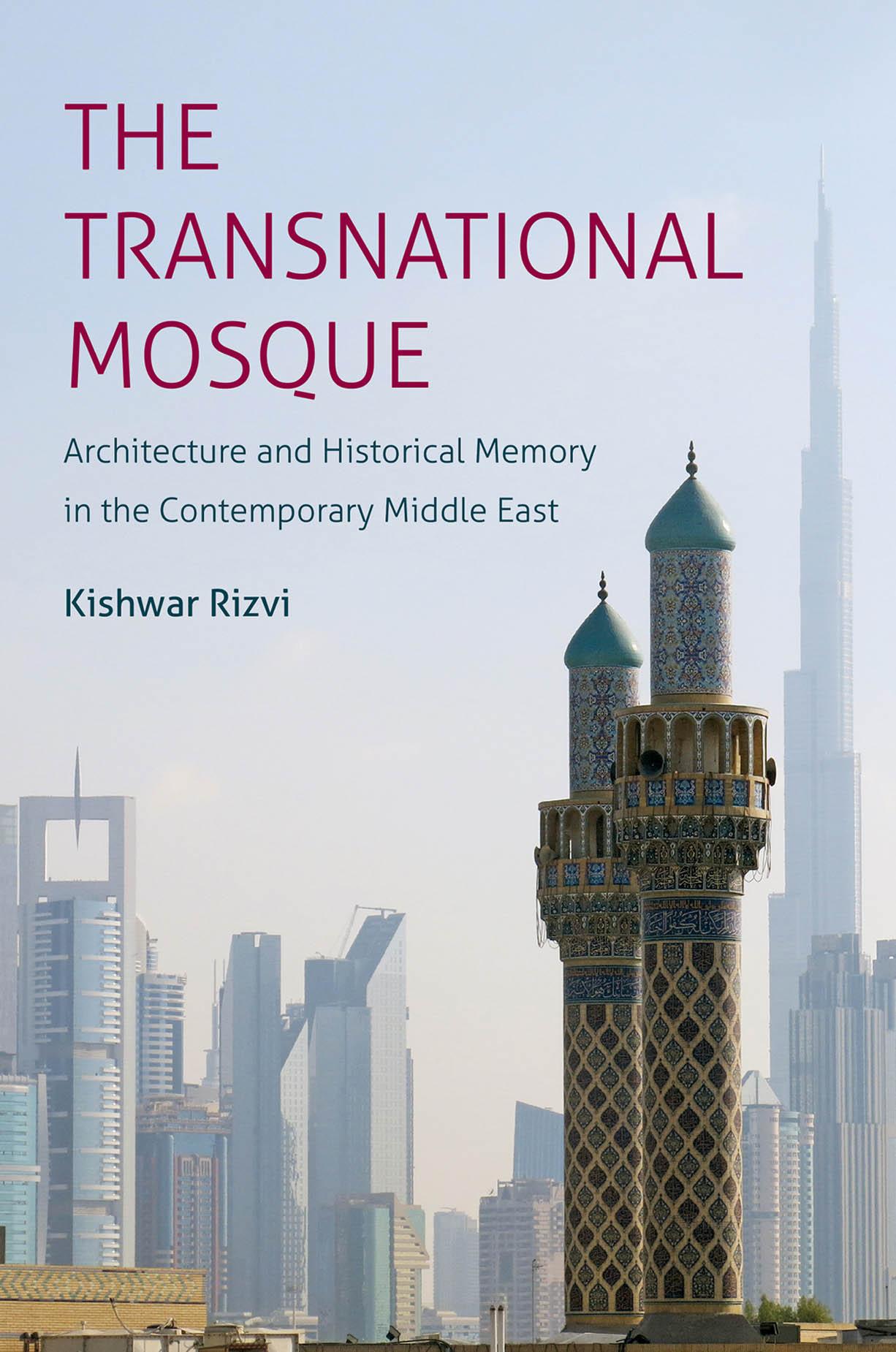
Kishwar Rizvi, drawing on the multifaceted history of the Middle East, offers a richly illustrated analysis of the role of transnational mosques in the construction of contemporary Muslim identity. As Rizvi explains, transnational mosques are structures built through the support of both government sponsorship, whether in the home country or abroad, and diverse transnational networks. By concentrating on mosques—especially those built at the turn of the twenty-first century—as the epitome of Islamic architecture, Rizvi elucidates their significance as sites for both the validation of religious praxis and the construction of national and religious ideologies.
Rizvi delineates the transnational religious, political, economic, and architectural networks supporting mosques in Saudi Arabia, Iran, Turkey, and the United Arab Emirates, as well as in countries within their spheres of influence, such as Pakistan, Syria, and Turkmenistan. She discerns how the buildings feature architectural designs that traverse geographic and temporal distances, gesturing to far-flung places and times for inspiration. Digging deeper, however, Rizvi reveals significant diversity among the mosques—whether in a Wahabi-Sunni kingdom, a Shi‛i theocratic government, or a republic balancing secularism and moderate Islam—that repudiates representations of Islam as a monolith. Mosques reveal alliances and contests for influence among multinational corporations, nations, and communities of belief, Rizvi shows, and her work demonstrates how the built environment is a critical resource for understanding culture and politics in the contemporary Middle East and the Islamic world.
Rizvi delineates the transnational religious, political, economic, and architectural networks supporting mosques in Saudi Arabia, Iran, Turkey, and the United Arab Emirates, as well as in countries within their spheres of influence, such as Pakistan, Syria, and Turkmenistan. She discerns how the buildings feature architectural designs that traverse geographic and temporal distances, gesturing to far-flung places and times for inspiration. Digging deeper, however, Rizvi reveals significant diversity among the mosques—whether in a Wahabi-Sunni kingdom, a Shi‛i theocratic government, or a republic balancing secularism and moderate Islam—that repudiates representations of Islam as a monolith. Mosques reveal alliances and contests for influence among multinational corporations, nations, and communities of belief, Rizvi shows, and her work demonstrates how the built environment is a critical resource for understanding culture and politics in the contemporary Middle East and the Islamic world.
Maksa helposti kortilla, Klarnalla, Apple Paylla tai Google Paylla. Etkö ole tyytyväinen? Sinulla on aina 14 päivän palautusoikeus. Lue lisää ehdoistamme. Jos sinulla on kysyttävää, lähetä meille sähköpostia osoitteeseen hello@memmo.org.
Memmo tekee opiskelusta helpompaa – missä päin maailmaa ikinä oletkin. Meillä yhdistät kurssikirjat ja fiksut opiskelutyökalut yhteen paikkaan: tiivistelmät, visat, podcastit ja muistikortit. Ja sitten Ted, opiskelukaverisi, joka vastaa kaikkeen, mitä ikinä mietitkin. Yli 50 000 opiskelijaa opiskelee jo täällä – rakennettu auttamaan sinua oppimaan nopeammin ja stressaamaan vähemmän.
Saatat pitää myös näistä
Osta kirja0