
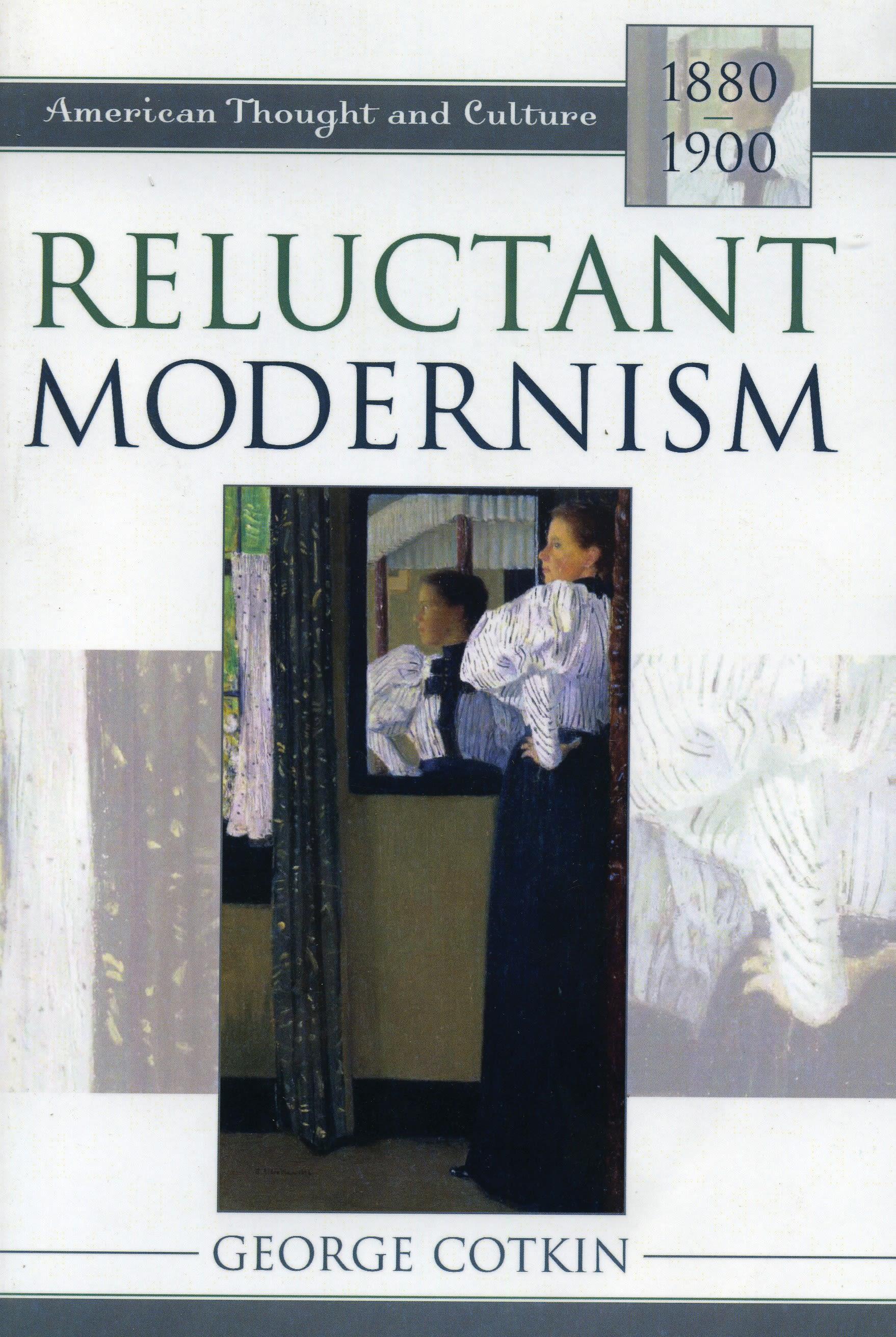
In the last two decades of the nineteenth century, Americans were faced with the challenges and uncertainties of a new era. The comfortable Victorian values of continuity, progress, and order clashed with the unsettling modern notions of constant change, relative truth, and chaos. Attempting to embrace the intellectual challenges of modernism, American thinkers of the day were yet reluctant to welcome the wholesale rejection of the past and destruction of traditional values.
In Reluctant Modernism: American Thought and Culture, 1880–1900, George Cotkin surveys the intellectual life of this crucial transitional period. His story begins with the Darwinian controversies, since the mainstream of American culture was just beginning to come to grips with the implications of the Origins of Species, published in 1859. Cotkin demonstrates the effects of this shift in thinking on philosophy, anthropology, and the newly developing field of psychology. Drawing on his extensive knowledge of these fields, he explains clearly and concisely the essential tenets of such major thinkers and writers as William James, Franz Boas, Charlotte Perkins Gilman, Henry Adams, and Kate Chopin. Throughout this fascinating, readable history of the American fin de siècle run the contrasting themes of continuity and change, faith and rationalism, despair over the meaninglessness of life and, ultimately, a guarded optimism about the future.
In Reluctant Modernism: American Thought and Culture, 1880–1900, George Cotkin surveys the intellectual life of this crucial transitional period. His story begins with the Darwinian controversies, since the mainstream of American culture was just beginning to come to grips with the implications of the Origins of Species, published in 1859. Cotkin demonstrates the effects of this shift in thinking on philosophy, anthropology, and the newly developing field of psychology. Drawing on his extensive knowledge of these fields, he explains clearly and concisely the essential tenets of such major thinkers and writers as William James, Franz Boas, Charlotte Perkins Gilman, Henry Adams, and Kate Chopin. Throughout this fascinating, readable history of the American fin de siècle run the contrasting themes of continuity and change, faith and rationalism, despair over the meaninglessness of life and, ultimately, a guarded optimism about the future.
Maksa helposti kortilla, Klarnalla, Apple Paylla tai Google Paylla. Etkö ole tyytyväinen? Sinulla on aina 14 päivän palautusoikeus. Lue lisää ehdoistamme. Jos sinulla on kysyttävää, lähetä meille sähköpostia osoitteeseen hello@memmo.org.
Memmo tekee opiskelusta helpompaa – missä päin maailmaa ikinä oletkin. Meillä yhdistät kurssikirjat ja fiksut opiskelutyökalut yhteen paikkaan: tiivistelmät, visat, podcastit ja muistikortit. Ja sitten Ted, opiskelukaverisi, joka vastaa kaikkeen, mitä ikinä mietitkin. Yli 50 000 opiskelijaa opiskelee jo täällä – rakennettu auttamaan sinua oppimaan nopeammin ja stressaamaan vähemmän.