
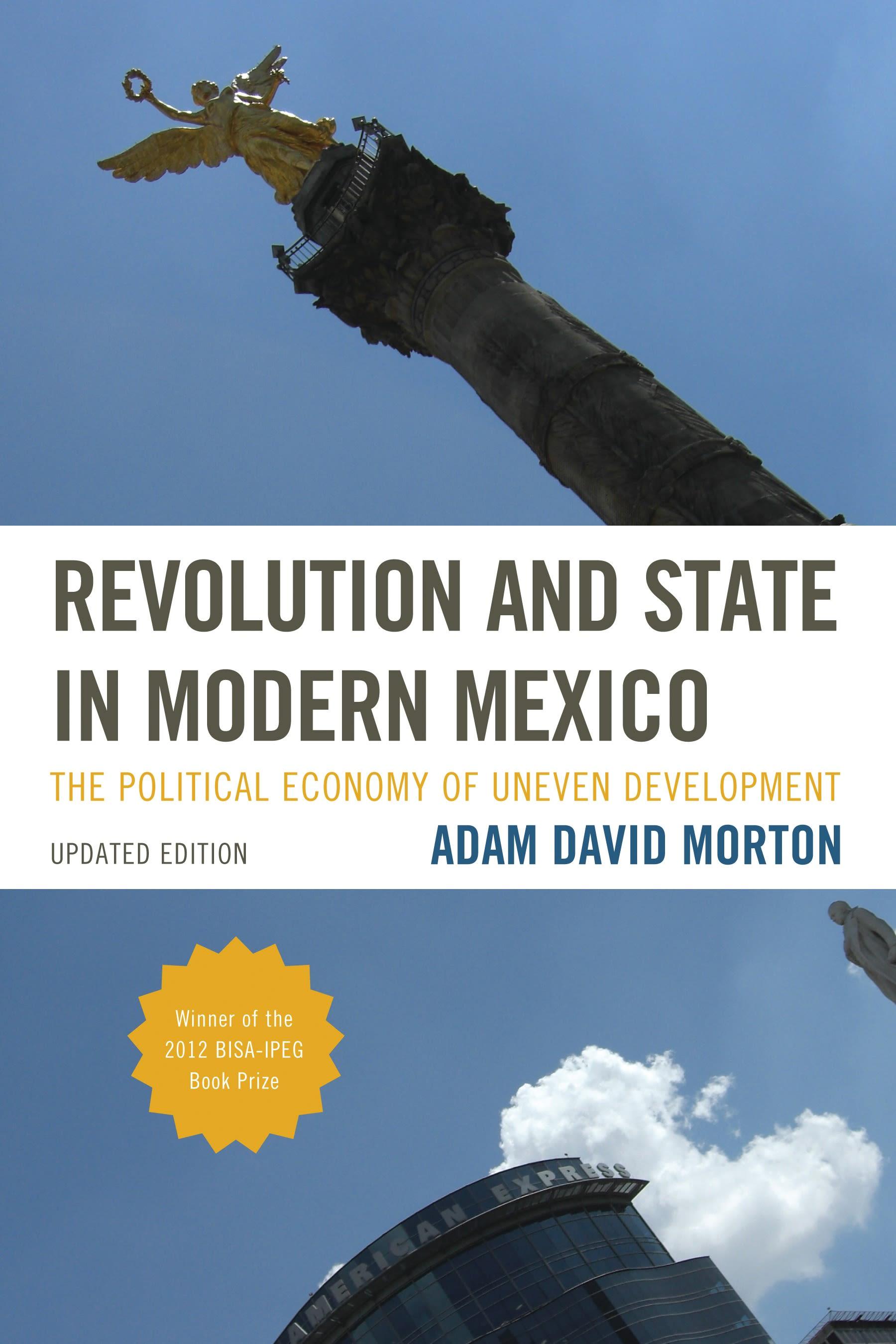
Now in an updated edition, this groundbreaking study develops a new approach to understanding the formation of the postrevolutionary state in Mexico. In a shift away from dominant interpretations, Adam David Morton considers the construction of the revolution and the modern Mexican state through a fresh analysis of the Mexican Revolution, the era of import substitution industrialization, and neoliberalism. Throughout, the author makes interdisciplinary links among geography, political economy, postcolonialism, and Latin American studies in order to provide a new framework for analyzing the development of state power in Mexico. He also explores key processes in the contestation of the modern state, specifically through studies of the role of intellectuals, democratization and democratic transition, and spaces of resistance. As Morton argues, all these themes can only be fully understood through the lens of uneven development in Latin America.
Centrally, the book shows how the history of modern state formation and uneven development in Mexico is best understood as a form of passive revolution, referring to the ongoing class strategies that have shaped relations between state and civil society. As such, Morton makes an important interdisciplinary contribution to debates on state formation relevant to Mexican studies, postcolonial and development studies, historical sociology, and international political economy by revitalizing the debate on the uneven and combined character of development in Mexico and throughout Latin America. In so doing, he convincingly contends that uneven development can once again become a tool for radical political economy analysis in and beyond the region.
A substantive new epilogue engages the main theoretical debates that have emerged since the book was first published, while also exploring the dominant geographies of power and resistance that are shaping state space in Mexico in the twenty-first century. And now a Spanish edition, Revolución y Estado en México moderno (México, D.F.: Siglo XXI, 2017), is available as well.
Click here to see the book trailer.
Centrally, the book shows how the history of modern state formation and uneven development in Mexico is best understood as a form of passive revolution, referring to the ongoing class strategies that have shaped relations between state and civil society. As such, Morton makes an important interdisciplinary contribution to debates on state formation relevant to Mexican studies, postcolonial and development studies, historical sociology, and international political economy by revitalizing the debate on the uneven and combined character of development in Mexico and throughout Latin America. In so doing, he convincingly contends that uneven development can once again become a tool for radical political economy analysis in and beyond the region.
A substantive new epilogue engages the main theoretical debates that have emerged since the book was first published, while also exploring the dominant geographies of power and resistance that are shaping state space in Mexico in the twenty-first century. And now a Spanish edition, Revolución y Estado en México moderno (México, D.F.: Siglo XXI, 2017), is available as well.
Click here to see the book trailer.
Sivuja: 346
Kategoria: Statsvetenskap & Politik
e-ISBN: 9781442229457
Lähetyspaino: 1.2 kg
Toimitusaika: 1-2 päivää
Maksa helposti kortilla, Klarnalla, Apple Paylla tai Google Paylla. Etkö ole tyytyväinen? Sinulla on aina 14 päivän palautusoikeus. Lue lisää ehdoistamme. Jos sinulla on kysyttävää, lähetä meille sähköpostia osoitteeseen hello@memmo.org.
Memmo tekee opiskelusta helpompaa – missä päin maailmaa ikinä oletkin. Meillä yhdistät kurssikirjat ja fiksut opiskelutyökalut yhteen paikkaan: tiivistelmät, visat, podcastit ja muistikortit. Ja sitten Ted, opiskelukaverisi, joka vastaa kaikkeen, mitä ikinä mietitkin. Yli 50 000 opiskelijaa opiskelee jo täällä – rakennettu auttamaan sinua oppimaan nopeammin ja stressaamaan vähemmän.