
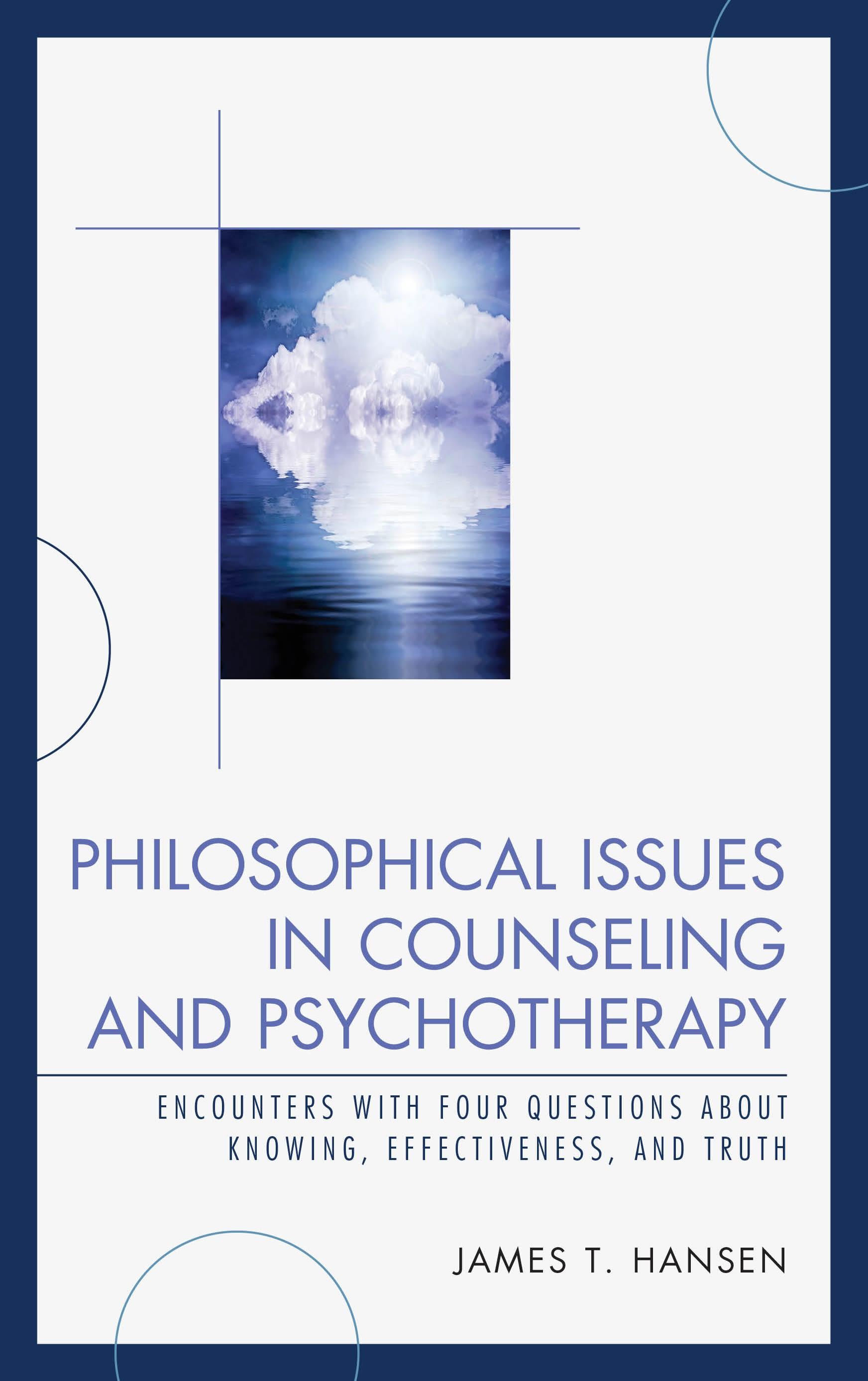
To become a counselor or psychotherapist, one must learn a confusing and conceptually disconnected array of theories, techniques, and ideologies. For instance, CBT, humanistic, and psychodynamic interventions have virtually opposite conceptual foundations, but they are all used to help clients. What principles, however, connect the various movements, trends, and methods of helping? In Philosophical Issues in Counseling and Psychotherapy: Encounters with Four Questions about Knowing, Effectiveness, and Truth, James T. Hansen asks and proposes beginning resolutions to four fundamental philosophical questions about knowing, effectiveness, and truth that are designed to unite and give meaning to diverse and seemingly contradictory models of helping: What does it mean to know a client? What makes counseling effective? Are truths discovered or created in the counseling relationship? Should counselors abandon the idea of truth? Although these questions are complex, Hansen provides plain language answers that make the material accessible to readers who have no formal education in philosophy. Furthermore, he addresses these questions in the context of his personal struggles to find meaning—making the book an engaging and highly enjoyable reading experience.
Maksa helposti kortilla, Klarnalla, Apple Paylla tai Google Paylla. Etkö ole tyytyväinen? Sinulla on aina 14 päivän palautusoikeus. Lue lisää ehdoistamme. Jos sinulla on kysyttävää, lähetä meille sähköpostia osoitteeseen hello@memmo.org.
Memmo tekee opiskelusta helpompaa – missä päin maailmaa ikinä oletkin. Meillä yhdistät kurssikirjat ja fiksut opiskelutyökalut yhteen paikkaan: tiivistelmät, visat, podcastit ja muistikortit. Ja sitten Ted, opiskelukaverisi, joka vastaa kaikkeen, mitä ikinä mietitkin. Yli 50 000 opiskelijaa opiskelee jo täällä – rakennettu auttamaan sinua oppimaan nopeammin ja stressaamaan vähemmän.