
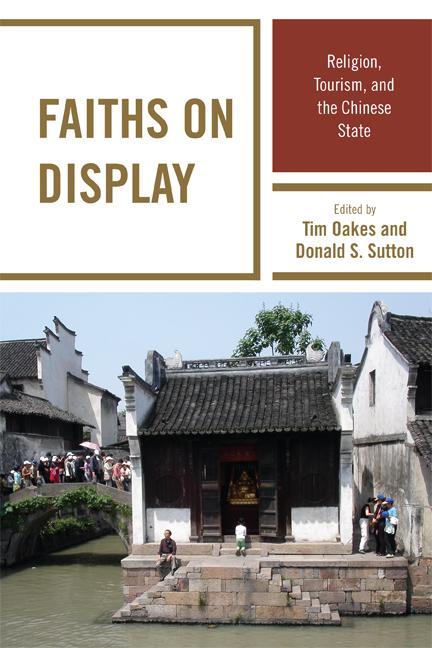
By providing a unique perspective on China's changing relationship with religion, this groundbreaking book explores the role the Chinese state continues to play in religious revival today. Over the past several decades, China has experienced a rapid expansion of religious spaces and activities. More recently, a growing middle-class urban society has fueled an upsurge in Chinese domestic tourism. Faiths on Display challenges the common separation of religious and tourist activities, showing how these practices overlap and blend together. A group of leading scholars explores the unlikely interaction between these exuberant phenomena, finding a surprisingly clear lens through which to view a rapidly transforming society. Even the most casual observer is struck by the Chinese rediscovery of traditional culture, particularly at revived religious festivals and pilgrimages in suburbs, rural areas, and at China's margins where religious practices of ethnic minorities attract particular tourist attention.
A set of fascinating case studies shows how state organizations are helping revive "sacred spaces" as exploitable sites for tourism development and revenue generation. While this may appear to be a straightforward collision of Chinese tradition with modernization, the contributors argue that the results of combining religion and tourism offer important insights not only into the practice of religion and the rise of "leisure culture" in contemporary China, but also into the changing and contested nature of state governance. The policies of an authoritarian, modernizing state obviously influence both religion and tourism, but religious practices, the book clearly illustrates, tend to slip out of state control, and tourist tastes push development into directions not anticipated or welcomed by the state.
Contributions by: Kenneth Dean, Brian R. Dott, Xiaofei Kang, Charlene Makley, Susan K. McCarthy, Charles F. McKhann, Tim Oakes, Yu Luo Rioux, Donald S. Sutton, Marina Svensson, and Rubie Watson.
A set of fascinating case studies shows how state organizations are helping revive "sacred spaces" as exploitable sites for tourism development and revenue generation. While this may appear to be a straightforward collision of Chinese tradition with modernization, the contributors argue that the results of combining religion and tourism offer important insights not only into the practice of religion and the rise of "leisure culture" in contemporary China, but also into the changing and contested nature of state governance. The policies of an authoritarian, modernizing state obviously influence both religion and tourism, but religious practices, the book clearly illustrates, tend to slip out of state control, and tourist tastes push development into directions not anticipated or welcomed by the state.
Contributions by: Kenneth Dean, Brian R. Dott, Xiaofei Kang, Charlene Makley, Susan K. McCarthy, Charles F. McKhann, Tim Oakes, Yu Luo Rioux, Donald S. Sutton, Marina Svensson, and Rubie Watson.
Sivuja: 292
Kategoria: Religion & Teologi
e-ISBN: 9781442205086
Lähetyspaino: 1.2 kg
Toimitusaika: 1-2 päivää
Maksa helposti kortilla, Klarnalla, Apple Paylla tai Google Paylla. Etkö ole tyytyväinen? Sinulla on aina 14 päivän palautusoikeus. Lue lisää ehdoistamme. Jos sinulla on kysyttävää, lähetä meille sähköpostia osoitteeseen hello@memmo.org.
Memmo tekee opiskelusta helpompaa – missä päin maailmaa ikinä oletkin. Meillä yhdistät kurssikirjat ja fiksut opiskelutyökalut yhteen paikkaan: tiivistelmät, visat, podcastit ja muistikortit. Ja sitten Ted, opiskelukaverisi, joka vastaa kaikkeen, mitä ikinä mietitkin. Yli 50 000 opiskelijaa opiskelee jo täällä – rakennettu auttamaan sinua oppimaan nopeammin ja stressaamaan vähemmän.