
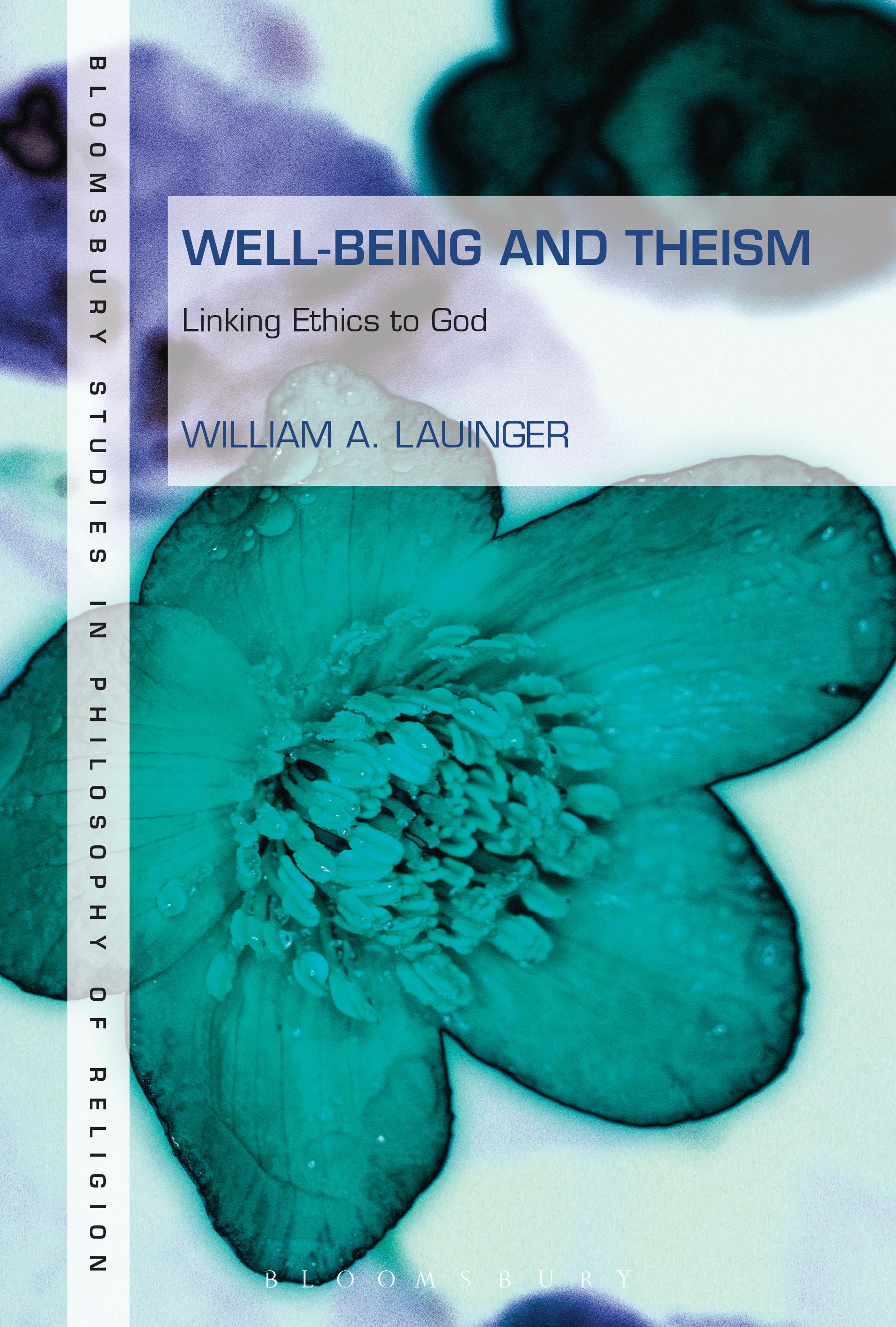
Well-Being and Theism is divided into two distinctive parts. The first part argues that desire-fulfillment welfare theories fail to capture the 'good' part of 'good for', and that objective list welfare theories fail to capture the 'for' part of 'good for'. Then, with the aim of capturing both of these parts of 'good for', a conjunctive theory-one which places both a value constraint and a desire constraint on well-being-is advanced. Lauinger then defends this proposition, which he calls the desire-perfectionism theory, against possible objections.
In the second part, Lauinger explores the question "What metaphysics best supports the claim that the vast majority of humans have the desires for friendship, accomplishment, health, etc., built into themselves?" It is argued that there are two general metaphysical routes that might convincingly be taken here, and that each one leads us toward theism.
In the second part, Lauinger explores the question "What metaphysics best supports the claim that the vast majority of humans have the desires for friendship, accomplishment, health, etc., built into themselves?" It is argued that there are two general metaphysical routes that might convincingly be taken here, and that each one leads us toward theism.
Maksa helposti kortilla, Klarnalla, Apple Paylla tai Google Paylla. Etkö ole tyytyväinen? Sinulla on aina 14 päivän palautusoikeus. Lue lisää ehdoistamme. Jos sinulla on kysyttävää, lähetä meille sähköpostia osoitteeseen hello@memmo.org.
Memmo tekee opiskelusta helpompaa – missä päin maailmaa ikinä oletkin. Meillä yhdistät kurssikirjat ja fiksut opiskelutyökalut yhteen paikkaan: tiivistelmät, visat, podcastit ja muistikortit. Ja sitten Ted, opiskelukaverisi, joka vastaa kaikkeen, mitä ikinä mietitkin. Yli 50 000 opiskelijaa opiskelee jo täällä – rakennettu auttamaan sinua oppimaan nopeammin ja stressaamaan vähemmän.