
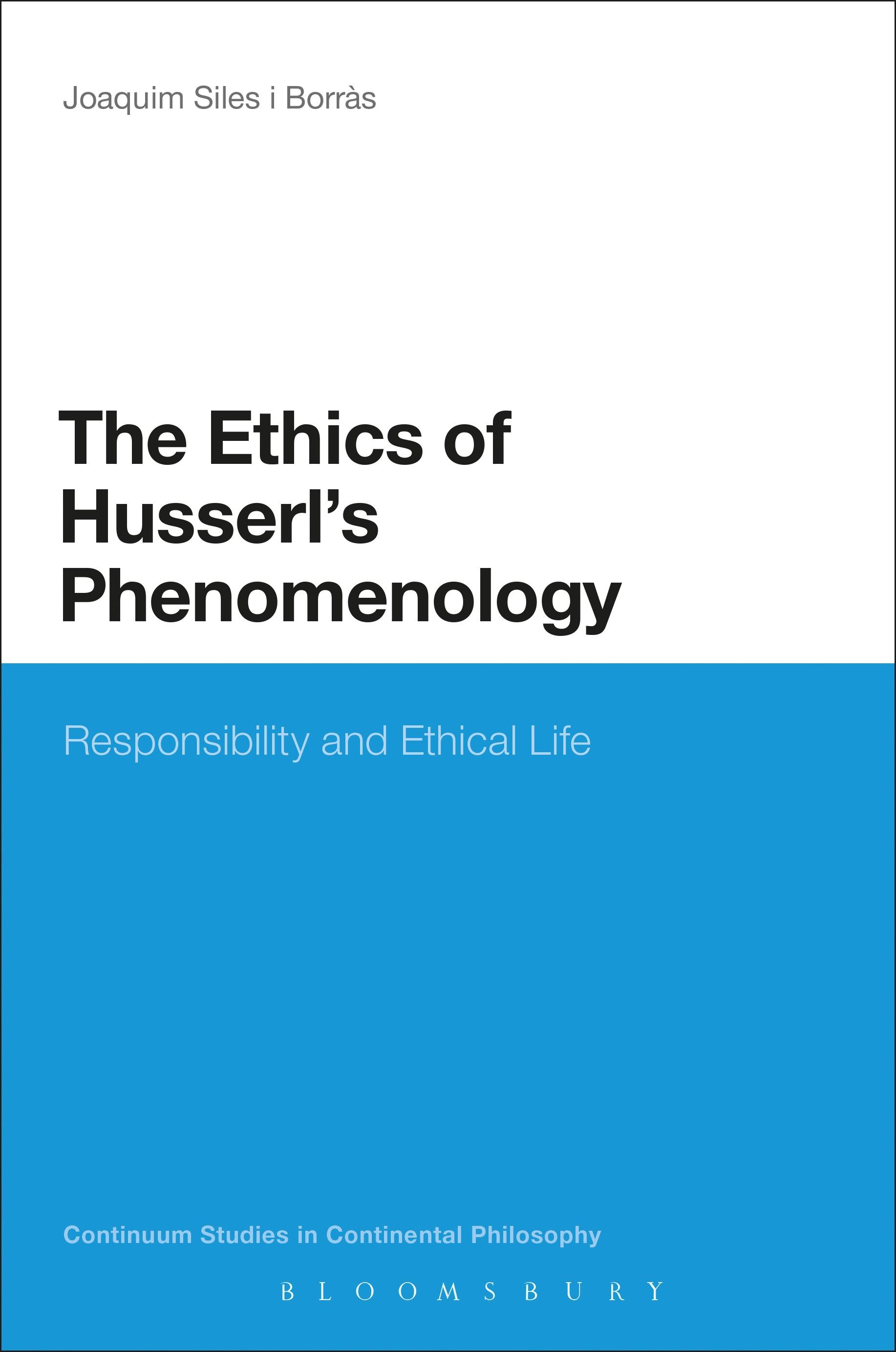
The Ethics of Husserl's Phenomenology aims to relocate the question of ethics at the very heart of Husserl's phenomenology. This is based on the idea that Husserl's phenomenology is an epistemological inquiry ultimately motivated by an ethical demand that pervades his writing from the publication of Logical Investigations (1900-1901) up to The Crisis of European Sciences and Transcendental Phenomenology (1935).
Joaquim Siles-Borràs traces the ethical concepts apparent throughout Husserl's main body of work and argues that Husserl's phenomenology of consciousness, experience and meaning is ultimately motivated by an ethical demand, by means of which Husserl aims to re-define philosophy and re-found science, with the aim of making philosophy and science capable of dealing with the most pressing questions concerning the meaningfulness of human existence.
Joaquim Siles-Borràs traces the ethical concepts apparent throughout Husserl's main body of work and argues that Husserl's phenomenology of consciousness, experience and meaning is ultimately motivated by an ethical demand, by means of which Husserl aims to re-define philosophy and re-found science, with the aim of making philosophy and science capable of dealing with the most pressing questions concerning the meaningfulness of human existence.
Maksa helposti kortilla, Klarnalla, Apple Paylla tai Google Paylla. Etkö ole tyytyväinen? Sinulla on aina 14 päivän palautusoikeus. Lue lisää ehdoistamme. Jos sinulla on kysyttävää, lähetä meille sähköpostia osoitteeseen hello@memmo.org.
Memmo tekee opiskelusta helpompaa – missä päin maailmaa ikinä oletkin. Meillä yhdistät kurssikirjat ja fiksut opiskelutyökalut yhteen paikkaan: tiivistelmät, visat, podcastit ja muistikortit. Ja sitten Ted, opiskelukaverisi, joka vastaa kaikkeen, mitä ikinä mietitkin. Yli 50 000 opiskelijaa opiskelee jo täällä – rakennettu auttamaan sinua oppimaan nopeammin ja stressaamaan vähemmän.