
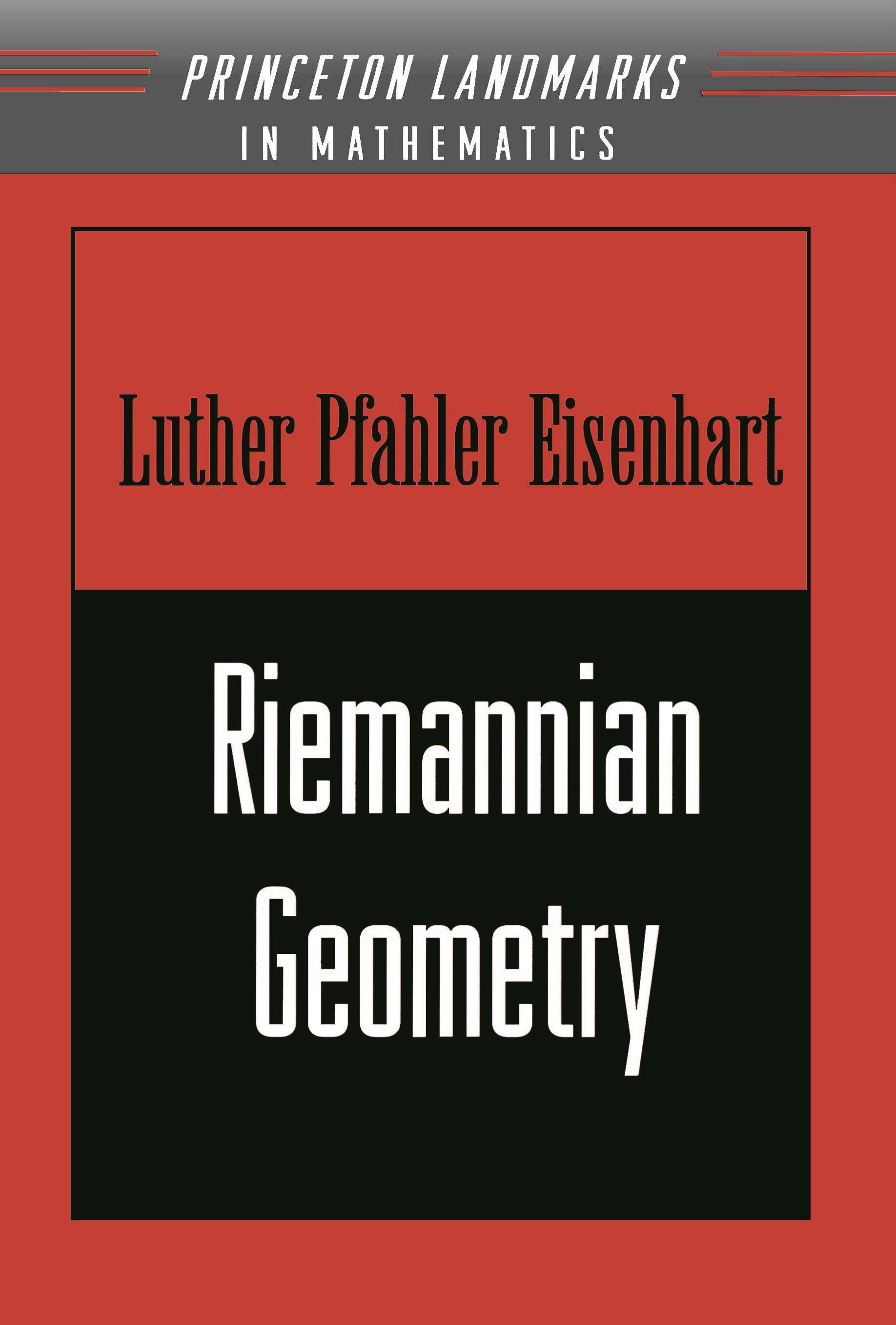
In his classic work of geometry, Euclid focused on the properties of flat surfaces. In the age of exploration, mapmakers such as Mercator had to concern themselves with the properties of spherical surfaces. The study of curved surfaces, or non-Euclidean geometry, flowered in the late nineteenth century, as mathematicians such as Riemann increasingly questioned Euclid's parallel postulate, and by relaxing this constraint derived a wealth of new results. These seemingly abstract properties found immediate application in physics upon Einstein's introduction of the general theory of relativity.
In this book, Eisenhart succinctly surveys the key concepts of Riemannian geometry, addressing mathematicians and theoretical physicists alike.
Maksa helposti kortilla, Klarnalla, Apple Paylla tai Google Paylla. Etkö ole tyytyväinen? Sinulla on aina 14 päivän palautusoikeus. Lue lisää ehdoistamme. Jos sinulla on kysyttävää, lähetä meille sähköpostia osoitteeseen hello@memmo.org.
Memmo tekee opiskelusta helpompaa – missä päin maailmaa ikinä oletkin. Meillä yhdistät kurssikirjat ja fiksut opiskelutyökalut yhteen paikkaan: tiivistelmät, visat, podcastit ja muistikortit. Ja sitten Ted, opiskelukaverisi, joka vastaa kaikkeen, mitä ikinä mietitkin. Yli 50 000 opiskelijaa opiskelee jo täällä – rakennettu auttamaan sinua oppimaan nopeammin ja stressaamaan vähemmän.