
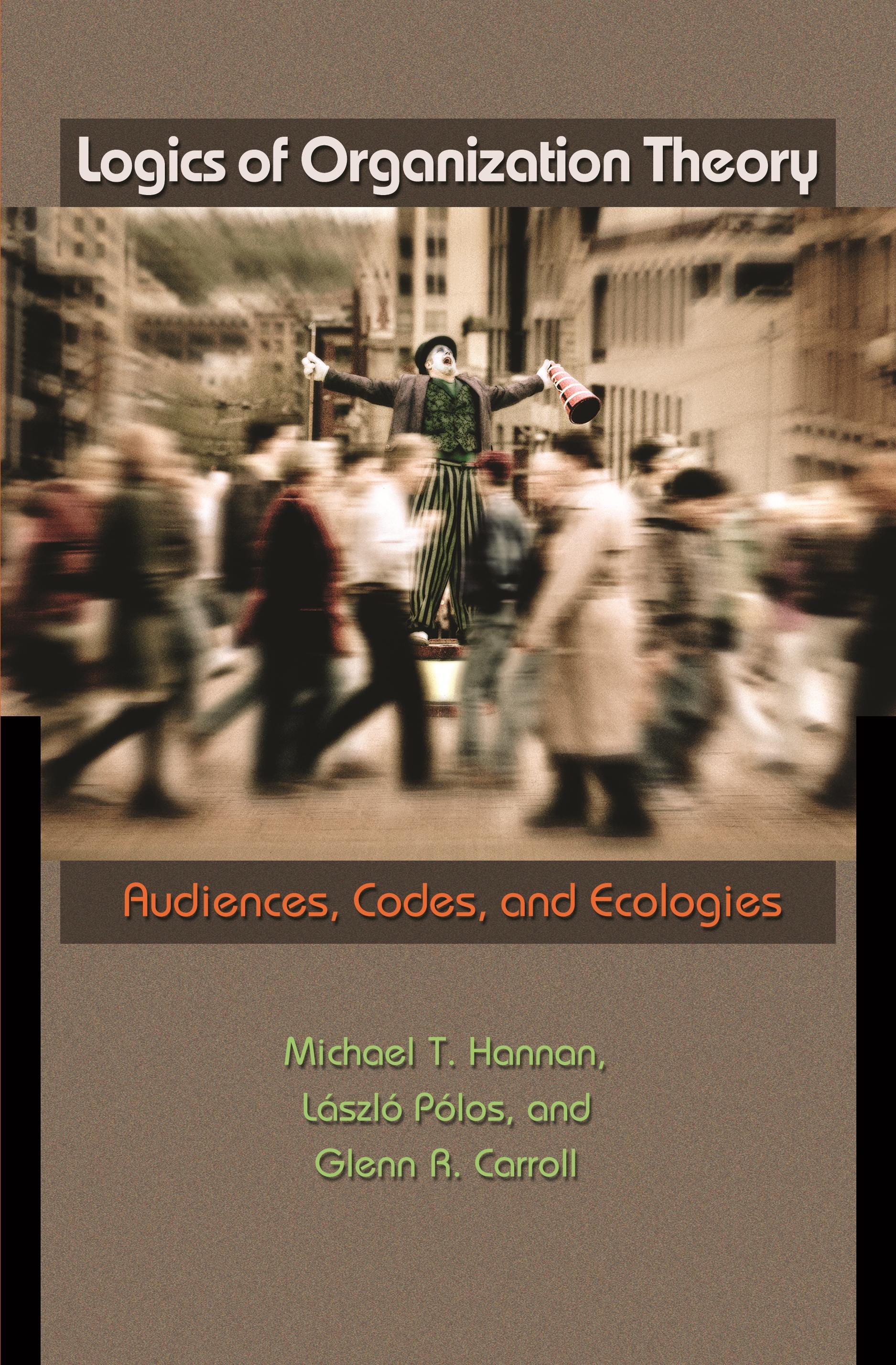
Building theories of organizations is challenging: theories are partial and "folk" categories are fuzzy. The commonly used tools--first-order logic and its foundational set theory--are ill-suited for handling these complications. Here, three leading authorities rethink organization theory. Logics of Organization Theory sets forth and applies a new language for theory building based on a nonmonotonic logic and fuzzy set theory. In doing so, not only does it mark a major advance in organizational theory, but it also draws lessons for theory building elsewhere in the social sciences.
Organizational research typically analyzes organizations in categories such as "bank," "hospital," or "university." These categories have been treated as crisp analytical constructs designed by researchers. But sociologists increasingly view categories as constructed by audiences. This book builds on cognitive psychology and anthropology to develop an audience-based theory of organizational categories. It applies this framework and the new language of theory building to organizational ecology. It reconstructs and integrates four central theory fragments, and in so doing reveals unexpected connections and new insights.
Maksa helposti kortilla, Klarnalla, Apple Paylla tai Google Paylla. Etkö ole tyytyväinen? Sinulla on aina 14 päivän palautusoikeus. Lue lisää ehdoistamme. Jos sinulla on kysyttävää, lähetä meille sähköpostia osoitteeseen hello@memmo.org.
Memmo tekee opiskelusta helpompaa – missä päin maailmaa ikinä oletkin. Meillä yhdistät kurssikirjat ja fiksut opiskelutyökalut yhteen paikkaan: tiivistelmät, visat, podcastit ja muistikortit. Ja sitten Ted, opiskelukaverisi, joka vastaa kaikkeen, mitä ikinä mietitkin. Yli 50 000 opiskelijaa opiskelee jo täällä – rakennettu auttamaan sinua oppimaan nopeammin ja stressaamaan vähemmän.